Quick answer
For a dining room, choose a chandelier if you want a classic, layered glow that spreads across the whole table, and a pendant if you prefer a focused, modern beam that highlights the center. Both can make a statement, but your ceiling height, table shape, and lighting needs will tip the scale. If you have a long rectangular table and want even light, a multi-lite pendant or a linear chandelier works well; for a round table, a single dramatic pendant or a traditional chandelier often fits better.
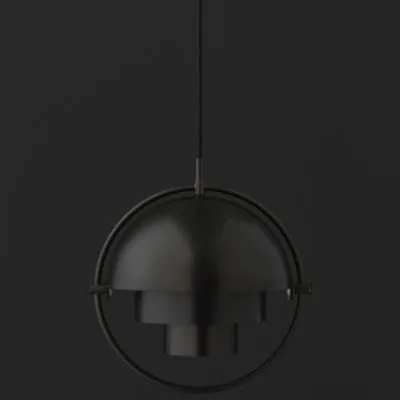
multi-lite pendant
When you're redesigning a dining room, the fixture above the table does more than illuminate your meals—it sets the mood and anchors the whole space. Chandeliers and pendant lights are two of the most popular statement options, but they're not interchangeable. Each has its own personality, light distribution, and practical considerations.
This guide breaks down the differences so you can choose with confidence. We'll look at light spread, style, ceiling height, and table shape, and we'll mention a few specific fixtures that show how each type can shine in a dining room.
Light Distribution: Wash vs Focus
A chandelier typically spreads light in all directions, creating a warm, ambient glow that fills the room. Many designs, like the Bridgette Semi-Flushmount, use an upward-flared shade to bounce light off the ceiling, softening shadows and making the space feel open. This makes chandeliers ideal for dining rooms where you want conversation-friendly illumination rather than a harsh spotlight.
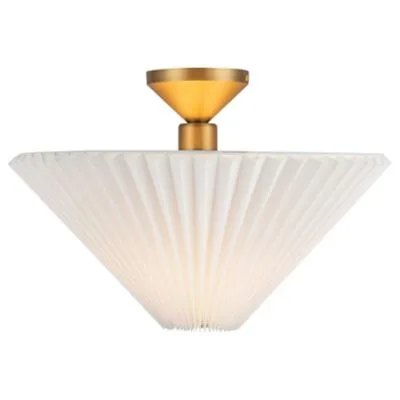
Bridgette Semi-Flushmount
Pendant lights, on the other hand, direct light downward in a focused pool. The Pose LED Task Light, with its adjustable cones, can be angled to highlight a specific area—perfect for a dining table where you want to see your food clearly without flooding the whole room. If you often host dinner parties, a pendant's focused beam can create an intimate, theatrical atmosphere.
- For even, room-filling light, choose a chandelier or a semi-flushmount like the Bridgette.
- For a directed beam that highlights the table center, a pendant like the Pose LED Task Light is more effective.
Style and Statement: Classic vs Modern
Chandeliers have a long history of elegance, often featuring intricate arms, crystals, or sculptural forms. They can be traditional or contemporary, but they always read as a 'centerpiece' in a room. The Swell Flushmount, for example, offers a modern take with its undulating conical shade and brass interior, adding a refined, sculptural element that still feels like a chandelier's presence.
Pendants are more versatile in style, ranging from minimalist to industrial. The Tiny Mini Table Lamp, though technically a table lamp, shares the pendant's compact, focused design ethos—its tiltable shade lets you direct light along a wall, much like a pendant can be angled over a table. For a modern dining room with clean lines, a pendant like the Pose LED Task Light brings a bold, architectural statement without the formality of a chandelier.
- If your dining room has traditional furniture or high ceilings, a chandelier can elevate the classic look.
- For a sleek, modern space, a pendant offers a more understated but still striking focal point.
Ceiling Height and Table Shape
Ceiling height is a major factor. Chandeliers often hang lower and require more vertical clearance to avoid feeling cramped. For standard 8-foot ceilings, a flushmount or semi-flushmount like the Bridgette Semi-Flushmount is a safe choice, as it sits close to the ceiling while still providing a decorative element. If you have higher ceilings, you can hang a chandelier lower to create a dramatic focal point over the table.
Table shape also matters. A long rectangular table benefits from a linear chandelier or a multi-lite pendant that spans the length, ensuring even light distribution. The FollowMe Plus Table Lamp, with its compact dome and handle, illustrates how a single pendant can serve a smaller round table, casting a cozy pool of light. For a round table, a single pendant or a round chandelier centers the light beautifully.
- Measure your ceiling height before choosing; low ceilings call for flushmounts or semi-flushmounts.
- Match the fixture's length or spread to your table's longest dimension for balanced lighting.
Chandelier vs Pendant: The Tradeoffs
- Light spread: Chandeliers (like the Bridgette Semi-Flushmount) cast a wide, ambient wash that fills the room. Pendants (like the Pose LED Task Light) focus light downward, creating a pool on the table. Choose a chandelier for overall room ambiance; choose a pendant for task-focused illumination.
- Style and formality: Chandeliers often feel more formal and classic, even in modern designs. Pendants are more casual and can be playful or industrial, suiting a contemporary dining room. If your dining room leans traditional, a chandelier elevates the look; if it's modern, a pendant adds a stylish focal point.
- Ceiling height and installation: Chandeliers typically hang lower and need more clearance. Semi-flushmounts like the Swell Flushmount offer a chandelier-like look without the drop, while pendants can be installed at varying heights. For low ceilings, consider a semi-flushmount; for higher ceilings, both options work, but pendants allow more precise height adjustment.
- Table shape and size: A long table benefits from a linear chandelier or a multi-lite pendant to distribute light evenly. A round table works well with a single pendant or a round chandelier that centers the light. Match the fixture's shape and width to your table to avoid dark corners or overly concentrated light.
How specific fixtures compare
- Bridgette Semi-Flushmount: The Bridgette Semi-Flushmount from Alora Mood brings a refined touch of whimsy to overhead lighting. Designed by Peyton Fox, this design pairs a clean steel frame with an upward-flared linen shade that diffuses light softly throughout the room. If you have a low ceiling or want a chandelier-like presence without the drop, this semi-flushmount gives you soft, ambient light that feels elegant but doesn't dominate the room.
- Pose LED Task Light: The Pose LED Task Light from Tom Dixon features a bold, conical design that is adjustable at multiple points. The connection points of the three eye-catching cones have the options of swiveling on a horizontal axis as well as angling up and down, letting you position the light in the optimal direction. For a dining table where you want to direct light exactly where you need it—like over a serving area or to avoid glare—this pendant's adjustability gives you control that a fixed chandelier can't match.
- Swell Flushmount: The Swell Flushmount from Pablo Designs is an elegant, modular design that flexes to meet your lighting needs. This fixture features a conical shade with an undulating outer line that descends from a low-profile circular canopy, supporting damp-listed LED lighting at its center. If you want a chandelier's sculptural impact but need a flushmount for ceiling height, the Swell offers a modern silhouette with a brass interior that reflects light downward, giving a focused yet ambient feel.
Which fixture fits your dining room?
Best for
- Dining rooms with low ceilings that need ambient light without a hanging fixture
- Tables where you want to create a warm, conversational glow across the whole surface
- Traditional or classic interiors that call for an elegant, formal centerpiece
Not for
- Modern, minimalist spaces that prefer a sleek, focused beam over the table
- Dining areas where you need to direct light to specific spots (like a buffet or bar)
Ultimately, the choice between a chandelier and a pendant light comes down to the atmosphere you want to create and the practical constraints of your room. If you value even, ambient light and a classic statement, a chandelier—or a semi-flushmount like the Bridgette—will serve you well. If you prefer a focused, adjustable beam that suits a contemporary table, a pendant like the Pose LED Task Light offers flexibility and style. Measure your ceiling, consider your table shape, and let your lighting reflect how you actually use the space.