Quick answer
For 1-year-olds, choose a light-up toy that rewards simple actions, like a Glo Pals Light-Up Cube dropped in water. For 2-year-olds, add a character toy such as Blair or Sammy so they can connect a figure to the glow. For 3-year-olds, combine both: characters plus extra cubes for pretend play. If your child still mouths toys, stick with light-up cubes alone and wait on characters.
Toys that light up grab attention fast, but the real question is whether your child is ready to use them. Character toys add a story layer that some toddlers love and others ignore. The right pick depends less on the toy and more on your child's age and stage.
This guide breaks down character toys vs light up toys by age, with concrete rules for 1, 2, and 3-year-olds. You'll see how Glo Pals characters and cubes fit each stage, and when to skip one type entirely.
What each toy type actually asks of your child
Light-up toys are cause-and-effect tools. Your child does something, and the toy responds. A Glo Pals Light-Up Cube works this way: place it in water and it glows. That single action gives instant feedback, which is why these cubes suit young toddlers who are still learning that their actions matter.
Character toys ask for a bit more imagination. A character like Blair or Lumi is a figure your child can name, carry, and include in pretend play. The toy itself may not do much until your child gives it a role. That's a higher-level skill, so character toys tend to fit older toddlers and preschoolers better than 1-year-olds.
- If your child repeats an action to see it happen again, a light-up toy is the better first pick.
- If your child already talks to toys or gives them names, a character toy will get more use.
Age 1: light-up toys win
At 1, children explore with their hands and mouths. They need toys that survive dropping, squeezing, and chewing. A light-up cube that reacts to water gives them a clear result without small parts to lose or assemble. Keep the play simple and supervised.
Character toys are usually not the best fit yet. A 1-year-old may enjoy grabbing a figure, but they won't use the character's back slot or pretend it has a personality. Save the character for later and start with cubes alone.
- Choose one or two cubes in different colors to keep the cause-and-effect loop fresh.
- Always supervise water play, even with a toy designed for it.
Age 2: add a character to the glow
By 2, many children can follow a two-step routine: put the cube in the character, then put the character in water. That sequence builds memory and sequencing skills. It also gives them a figure to point at and name, which supports early language.
This is where character toys vs light up toys stops being either-or. A character like Sammy or Pippa includes two Light-Up Cubes, so your child gets both the figure and the glow in one box. If they lose interest in the character, the cubes still work on their own.
- Pick a character with a simple shape your child can hold easily.
- Keep a spare cube ready so play doesn't stop when one is drying.
Age 3: combine characters and cubes for pretend play
At 3, pretend play takes off. Your child may give a character a voice, a home, or a job. Light-up cubes become props in that story: treasure, a lantern, or a magic stone. This is the stage where a small collection pays off, because more characters mean more roles.
If you want to expand without buying one item at a time, a bundle can cover several characters and cubes at once. The Ocean Explorer Bundle includes best-sellers and limited edition Ocean Light-Up Cubes, which gives a 3-year-old a ready-made cast for underwater stories.
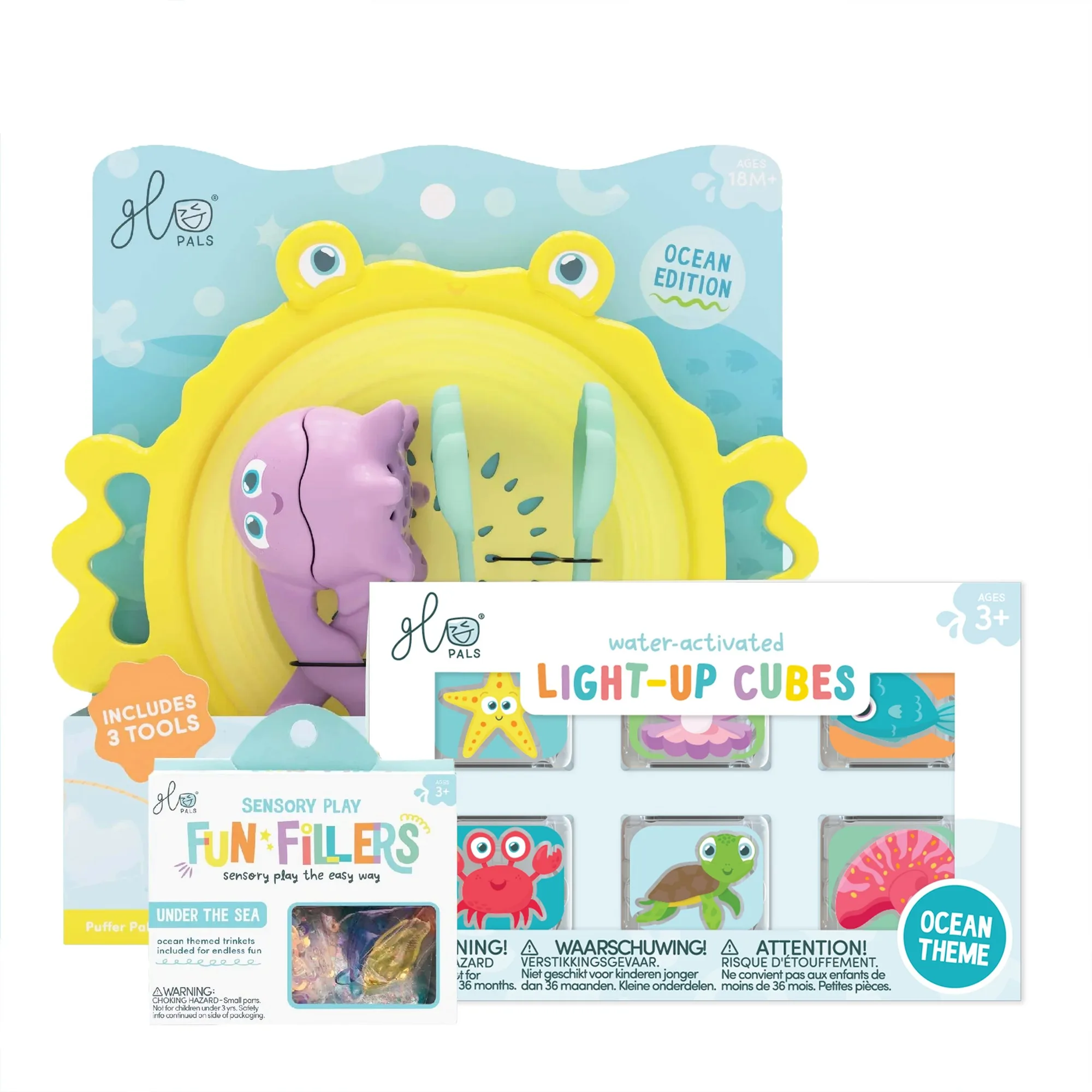
Ocean Explorer Bundle
- Rotate characters weekly to keep pretend play from going stale.
- Let your child decide the story; avoid directing the play.
When to skip one type
Skip character toys if your child only wants to press, drop, and watch. Some toddlers are sensory seekers, not storytellers. They'll get more from cubes alone, and you can revisit characters in six months.
Skip light-up toys if your child is easily overstimulated by flashing or glowing objects, or if they prefer quiet, open-ended play. A plain figure or building toy may hold attention better. There's no rule that every child needs a light-up toy.
- Watch one play session before buying. What does your child do with a new object first?
- If a toy causes frustration rather than focus, it's not the right stage yet.
Decision rules for buying character vs light-up toys
- If your child is 1 and mouths toys: Buy light-up cubes only. Skip characters until your child stops putting everything in their mouth. Start with a single cube to test reaction before buying more.
- If your child is 2 and can follow two steps: Buy a character that includes cubes, such as Blair or Sammy. The two-step routine builds sequencing. Check that the character's size fits your child's grip.
- If your child is 3 and invents stories: Buy a character plus extra cubes, or a bundle like Ocean Explorer, to give pretend play enough pieces. Add one new character at a time to keep novelty without clutter.
- If your child ignores figures and only wants action: Stay with light-up cubes. Characters add cost without adding play value for this child right now. Reassess in a few months; preferences shift quickly.
- If your child is sensitive to light or flashing: Choose non-light-up toys. A glowing toy may overstimulate rather than calm. Observe one session with a borrowed or existing light-up toy first.
Glo Pals products by age fit
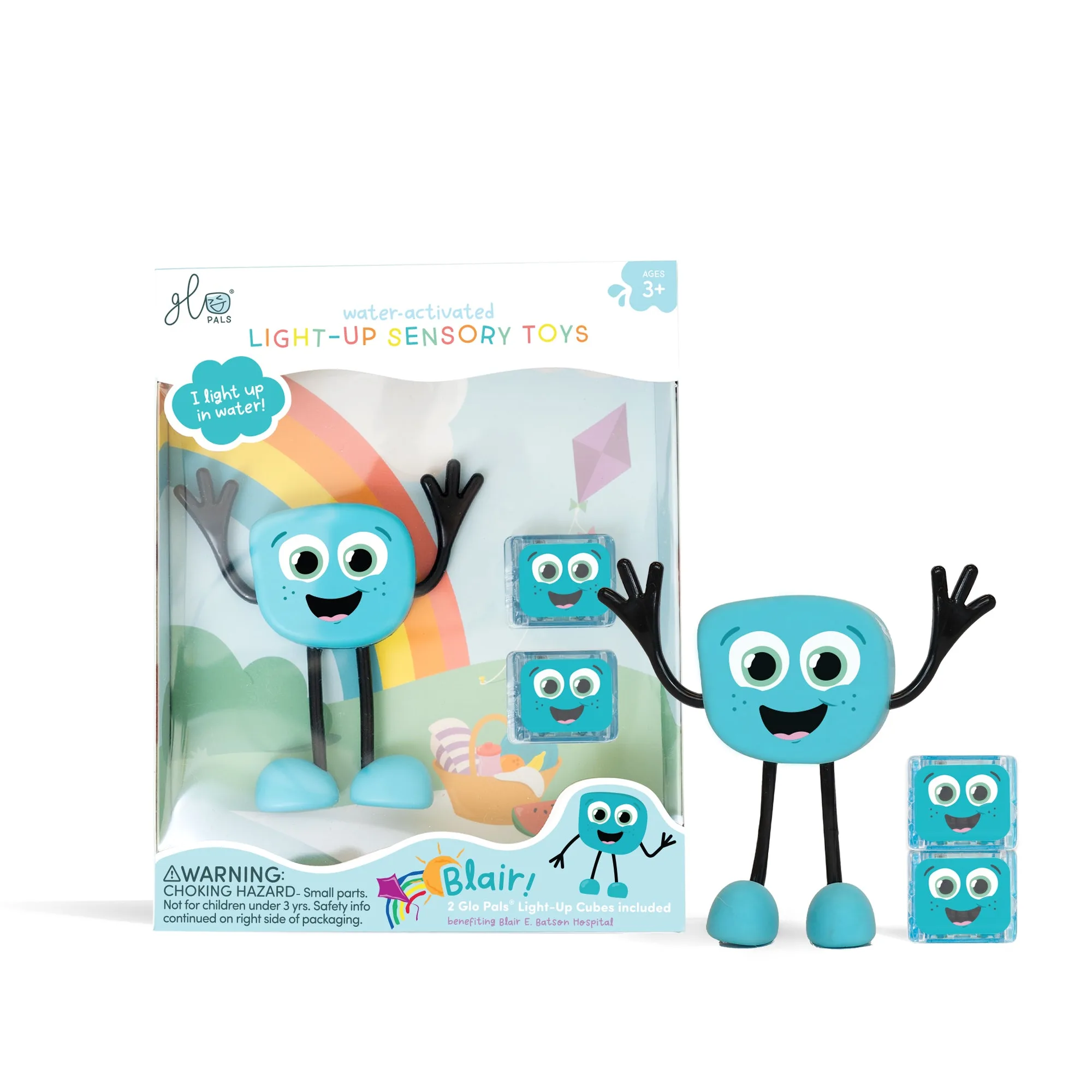
- Blair® Light-Up Character: Includes 2 Liquid-Activated Light-Up Cubes. Place a cube in Blair's back, drop it in water, and it glows. A 2 or 3-year-old gets both a character and cubes in one purchase, so the toy works even if they ignore the figure.
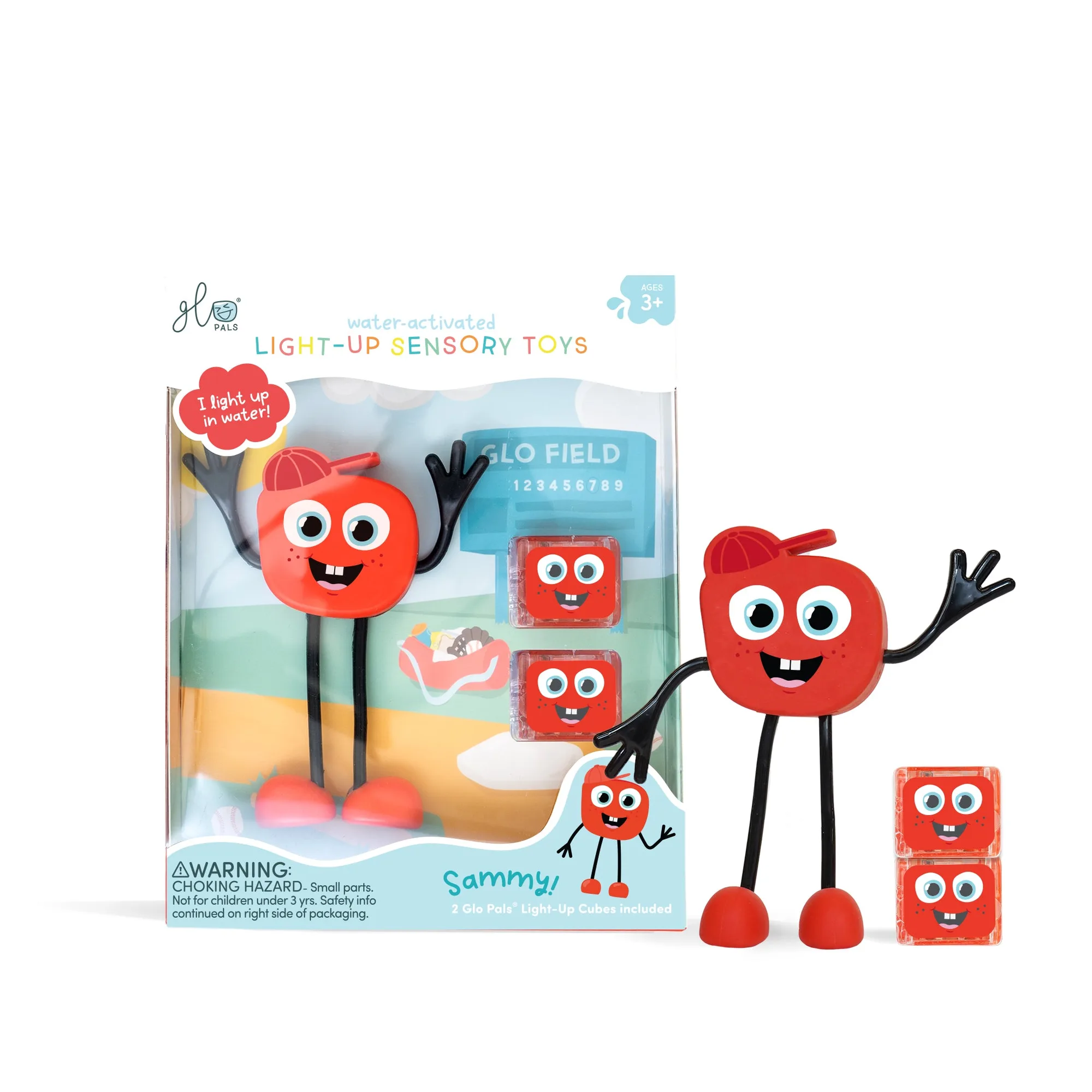
- Sammy® Light-Up Character: Includes 2 Liquid-Activated Light-Up Cubes and works in baths, water tables, and sensory bins. Useful if you want one toy that moves across different play setups without buying separate pieces.
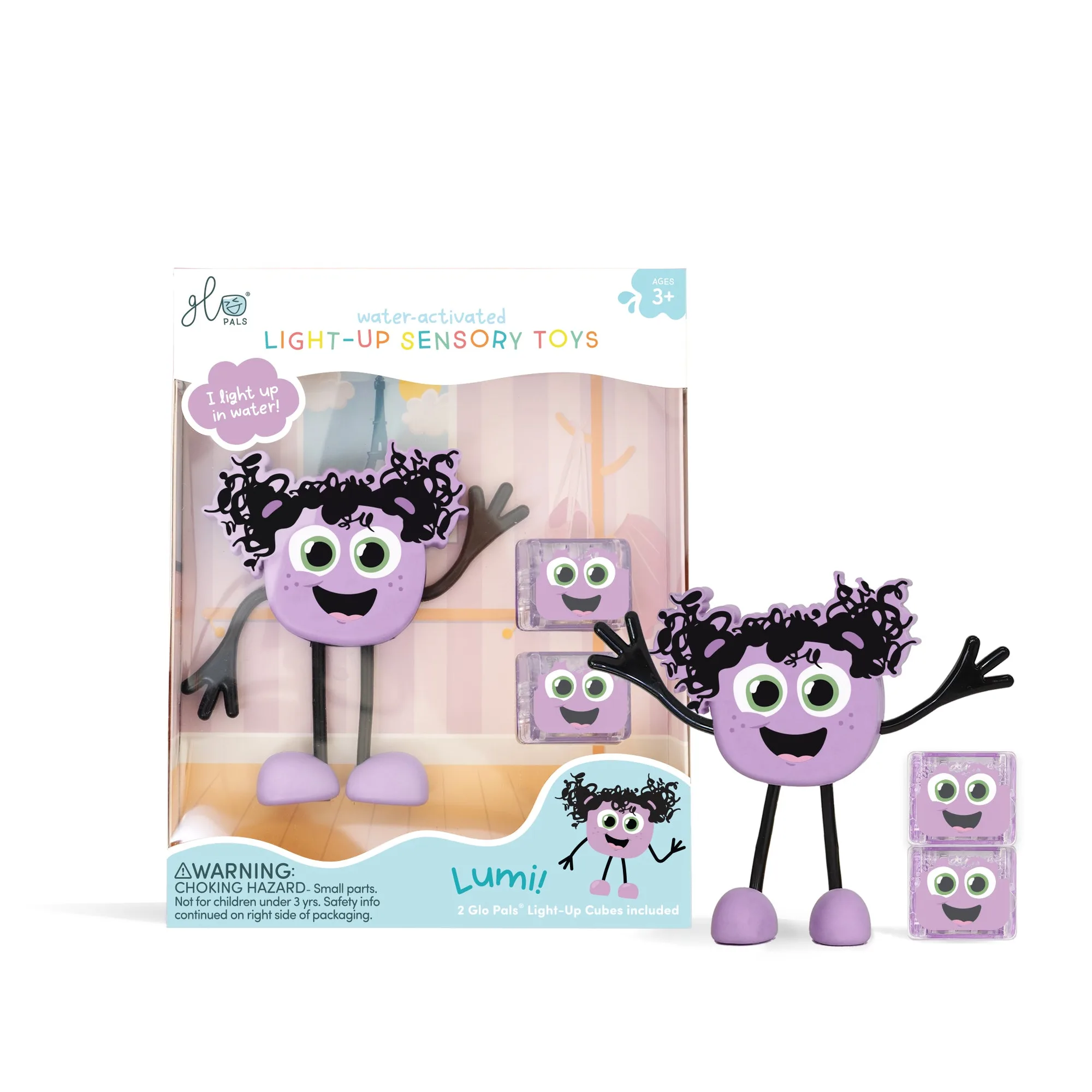
- Lumi® Light-Up Character: Includes 2 Liquid-Activated Light-Up Cubes and has bendable parts. The bendable feature gives 3-year-olds an extra way to pose the character during pretend play.
- Ocean Explorer Bundle: A bundle of Glo Pals best-sellers including limited edition Ocean Light-Up Cubes, with bonus savings. Best for a 3-year-old who already enjoys characters and needs more pieces for storytelling.
Who these toys fit
Best for
- Parents of 1-year-olds who want a simple cause-and-effect water toy
- Parents of 2-year-olds ready to connect a character to a glowing cube
- Parents of 3-year-olds who enjoy pretend play and underwater stories
Not for
- Children who still mouth toys and should not use character figures with small parts
- Children who are easily overstimulated by glowing or flashing objects
- Families looking for screen-based or app-connected toys
Match the toy to the stage, not the other way around. Start with light-up cubes for 1-year-olds, add a character at 2, and combine both at 3. If you're unsure, buy one character that includes cubes and see which part your child reaches for first.