The short answer: a compact top-up bank, not a trip-wide power source
The Charge 20 PD is built for phones, headlamps, earbuds and similar small devices. Its USB-C Power Delivery output is designed to make those charges faster and more flexible than a basic USB bank, and the compact body is meant to disappear into a pack or pocket. That makes it a strong choice for daily carry, a commute, or a lightweight travel kit where you want a safety net rather than a full charging station.
The trade-off is capacity. The supplied product information does not state a battery capacity in mAh or Wh, so you cannot calculate an exact number of phone charges from the listing alone. What the record does confirm is the intended device range and the charging standard. If you need to keep a tablet, laptop, or multiple devices running for days, this is not the bank those jobs point to.
What the Charge 20 PD is actually specified to do
-
Charge 20 PD: Ready for phones, headlamps, earbuds and more, with USB-C Power Delivery for faster, more flexible charging. This defines the realistic job: small personal electronics, not high-draw gear.
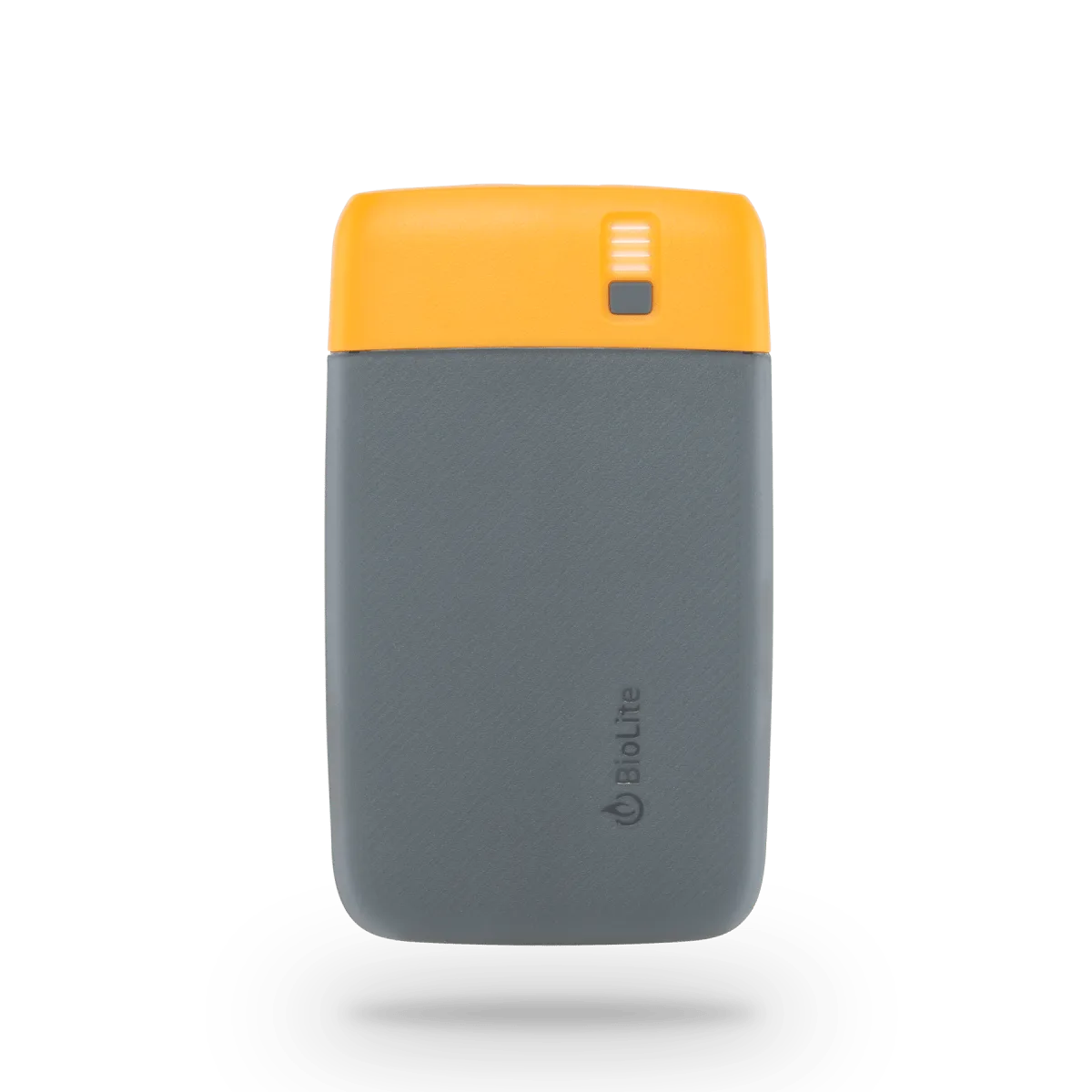
Charge 20 PD
-
Charge 20 PD: Compact design that is easily packable and ready for travel or life away from an outlet. Size and packability are the main reasons to choose this bank over a larger one.
Devices that fit the Charge 20 PD's intended use
The catalog names phones, headlamps and earbuds directly. Treat that as the core list and think of similar small USB-C devices as the likely extension, while checking your own device's charging requirements before relying on any bank.
- Phones: The primary use case. USB-C Power Delivery is the relevant spec here, and it is the standard many current phones use for faster charging.
- Headlamps: A natural pairing for camping and outage kits. A small bank that lives in the same pouch as your light keeps the light usable without a wall outlet.
- Earbuds: Low-draw devices like these are a comfortable fit for a compact bank and are the kind of thing you notice running out on a travel day.
- Other small USB-C devices: The catalog says 'and more' but does not list them. Check your device's input spec rather than assuming compatibility.
Where a small power bank for travel earns its place
The Charge 20 PD makes the most sense when the alternative is no power at all. A long transit day, a festival, a campsite without hookups, or a workday that runs longer than your phone battery are all situations where a pocketable bank changes the outcome. Because it is compact and packable, it is easy to keep in a daypack or jacket pocket without deciding whether it is worth the weight.
It is less compelling as your only power source for a multi-day trip with several devices. For that, the honest advice is to look at a larger power station or a higher-capacity bank, and treat the Charge 20 PD as the light, always-with-you layer. The two roles are different, and the catalog does not present this model as a replacement for the bigger units.
Charge 20 PD versus a larger power bank: a simple decision
Use this as a quick sort, not a spec sheet. The Charge 20 PD column reflects only what the supplied record confirms.
- Choose the Charge 20 PD if...: You want a compact, packable bank for a phone, headlamp, earbuds, or a short trip, and you value size over total capacity.
- Choose a larger bank or station if...: You need to recharge multiple devices repeatedly, power a tablet or laptop, or cover several days away from an outlet.
- What the record does not settle: Exact capacity, number of recharges per device, charge time for the bank itself, port count, and weight are not stated in the supplied information. Confirm those before buying if they are decisive for you.
Everyday use habits that get more from a compact bank
Because capacity is limited, timing matters more than with a big battery. Charge the bank when you are near an outlet, and spend its output on the devices you will actually need soon rather than topping up everything at once. Keep the bank in a consistent pocket or pouch so it does not become the item you forgot to bring.
The supplied information does not include care, storage temperature, or charging-time instructions for this model, so this article does not invent them. Follow the documentation that comes with the unit for those details. What the catalog does support is the basic pattern: pair the bank with the small devices it names, keep it packed and ready, and do not expect it to carry a trip on its own.
A fair summary before you buy
The Charge 20 PD is a focused product: a compact USB-C Power Delivery bank for phones, headlamps, earbuds and similar gear. It is a good fit for travel and daily carry where packability is the priority, and a poor fit as a primary power source for heavy or multi-device use. The catalog price shown is USD 30.97 against a comparison price of USD 49.95, which puts it in impulse-buy territory for a backup bank. If your plan depends on capacity numbers the listing does not provide, ask before you buy rather than guessing.