Quick answer
Cheap sunglasses can protect your eyes if they block 100% of UVA and UVB rays, but many budget pairs don't. The real danger is dark lenses without UV protection: they cause your pupils to dilate, letting in more harmful radiation than if you wore no sunglasses at all. Always check for a UV400 label or equivalent, regardless of price.
The pupil-dilation trap: why dark lenses without UV are worse than nothing
When you put on dark lenses, your pupils naturally widen to compensate for the reduced light. If those lenses lack UV protection, that wider opening allows more UV radiation to reach the lens and retina. Over time, this can increase the risk of photokeratitis (sunburn of the eye), cataracts, and macular degeneration. The fix is simple: never assume dark equals safe. Look for a UV400 label, which means the lenses block wavelengths up to 400 nanometers—the entire UV spectrum.
What UV400 actually means (and what it doesn't)
UV400 is a technical standard, not a marketing gimmick. It indicates that the lenses block at least 99% of UVA and UVB rays. It says nothing about lens quality, clarity, or durability—those are separate factors. A $25 pair can carry UV400, and a $250 pair can lack it. The label is your only reliable signal. If a pair doesn't state UV400 or 100% UV protection, treat it as unprotected.
Price vs. protection: where your money actually goes
Expensive sunglasses often cost more because of frame materials, brand name, and lens coatings like polarization or scratch resistance—not because they block more UV. UV protection comes from a chemical treatment or the lens material itself, which is inexpensive to apply. So are expensive sunglasses worth it? Only if you value those extras. For pure UV safety, a budget pair with a UV400 label does the job. What you shouldn't do is buy a cheap pair with dark lenses and no UV claim.
How to spot safe sunglasses at any price
Check the tag, sticker, or product description for 'UV400' or '100% UV protection.' If you're shopping in person, bring a UV flashlight or a UV test card—many optical shops have them. Online, read the specs carefully; if UV protection isn't mentioned, assume it's absent. Reputable brands list it prominently because it's a basic safety feature, not a premium upgrade.
Myth vs. fact: UV protection verdicts
- Myth: Cheap sunglasses always lack UV protection.: UV400 treatment is inexpensive, so many budget pairs do block 100% of UVA/UVB. Price alone doesn't determine safety. Verdict: False. Check the label, not the price.
- Myth: Darker lenses mean better UV protection.: Lens darkness affects visible light, not UV. A dark lens without UV400 can be more harmful than clear lenses because it dilates your pupils. Verdict: False. UV400 is the only reliable indicator.
- Myth: Expensive sunglasses are always safer for your eyes.: Higher cost often reflects frame materials, brand, or coatings like polarization—not UV blocking. A $25 UV400 pair protects your eyes just as well. Verdict: False. Safety depends on UV400, not price.
Examples of UV-protective sunglasses
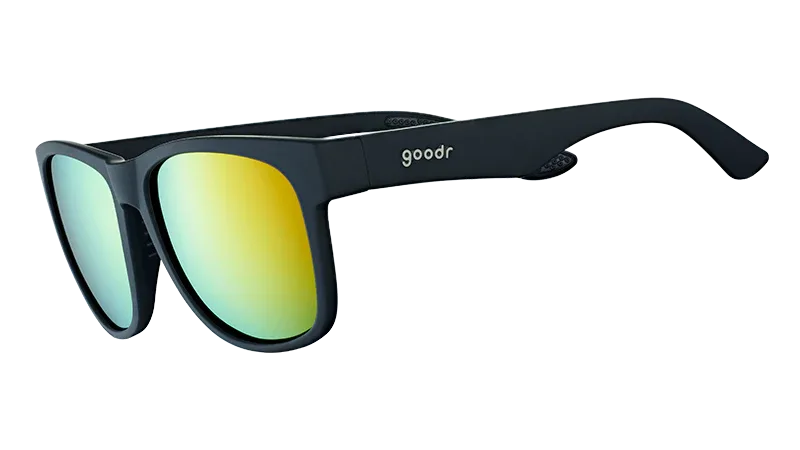
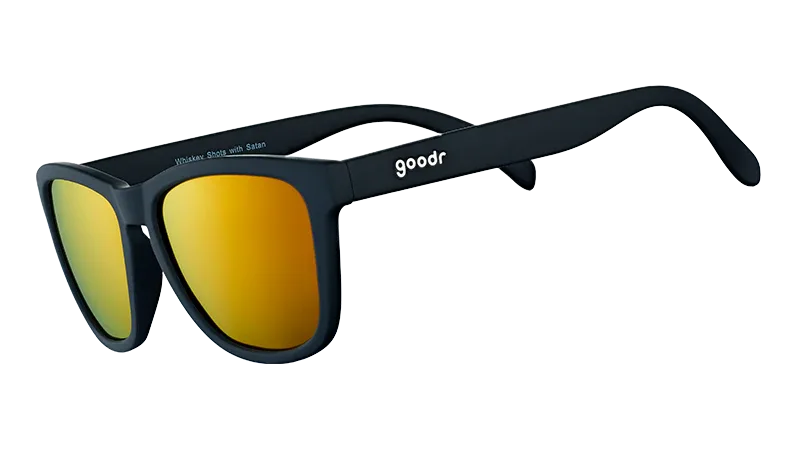
- Voight-Kampff Vision: Polarized gray and red single-lens futuristic sunglasses with UV400 protection and no-slip, no-bounce fit. Shows that a stylish, performance-oriented pair can include UV400 without a luxury price tag.
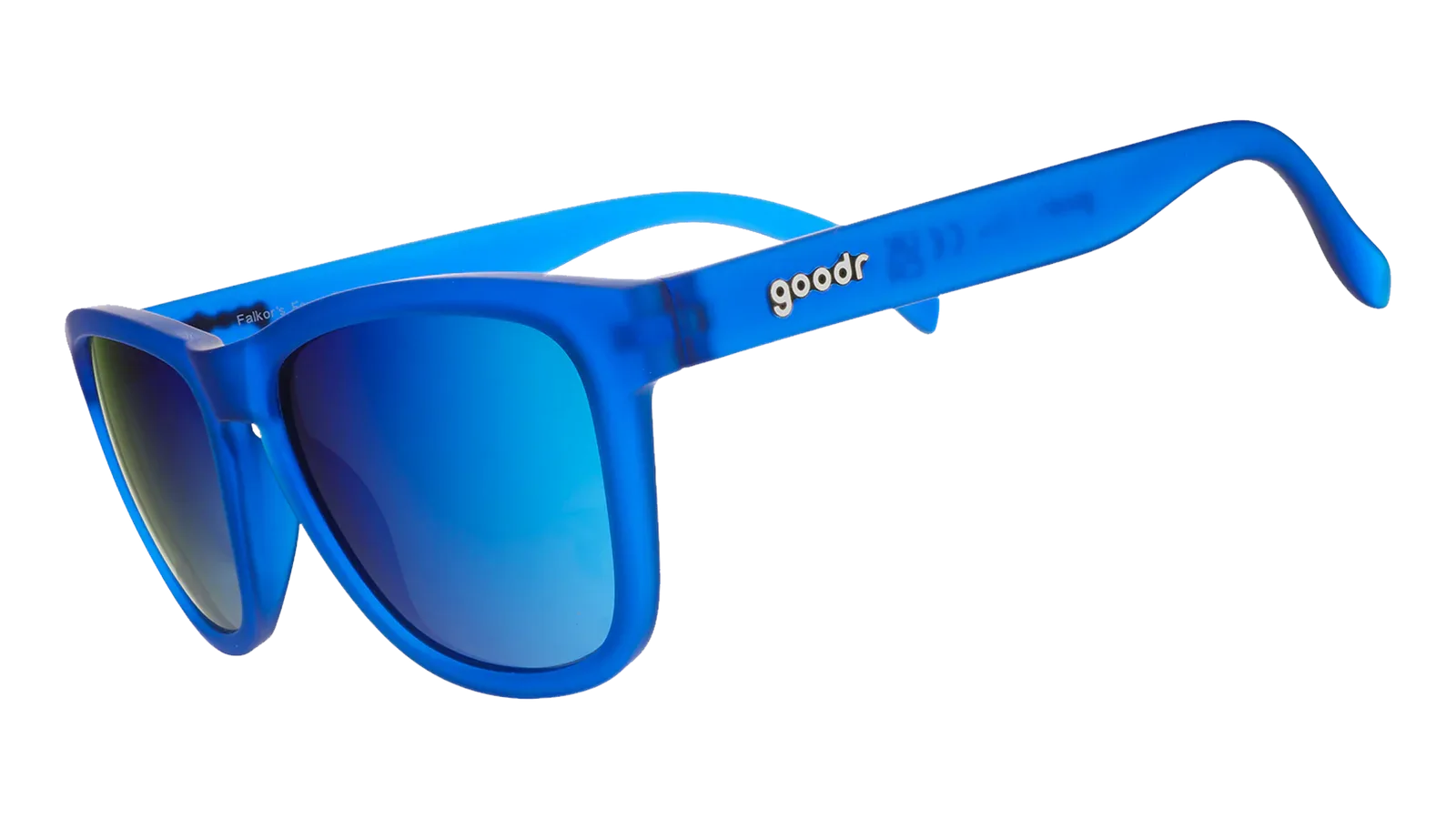
- Best Dystopia Ever: Blue and purple VRG sunglasses with mirrored reflective lenses. Mirrored lenses reduce glare, but always confirm UV400 separately—reflective coatings alone don't guarantee UV blockage.
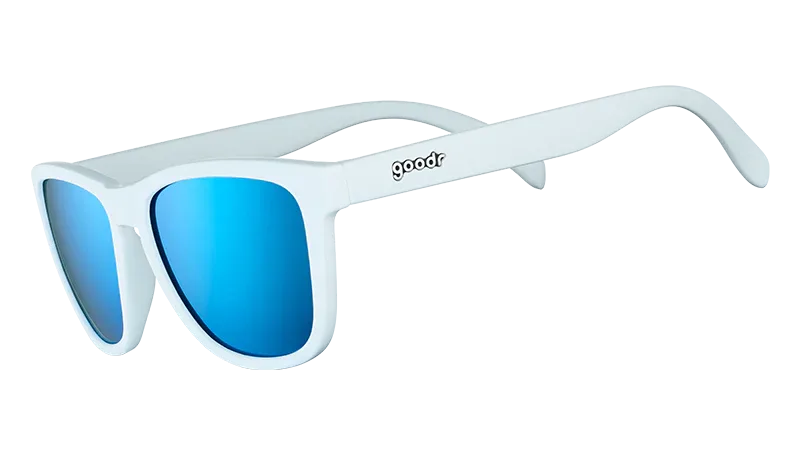
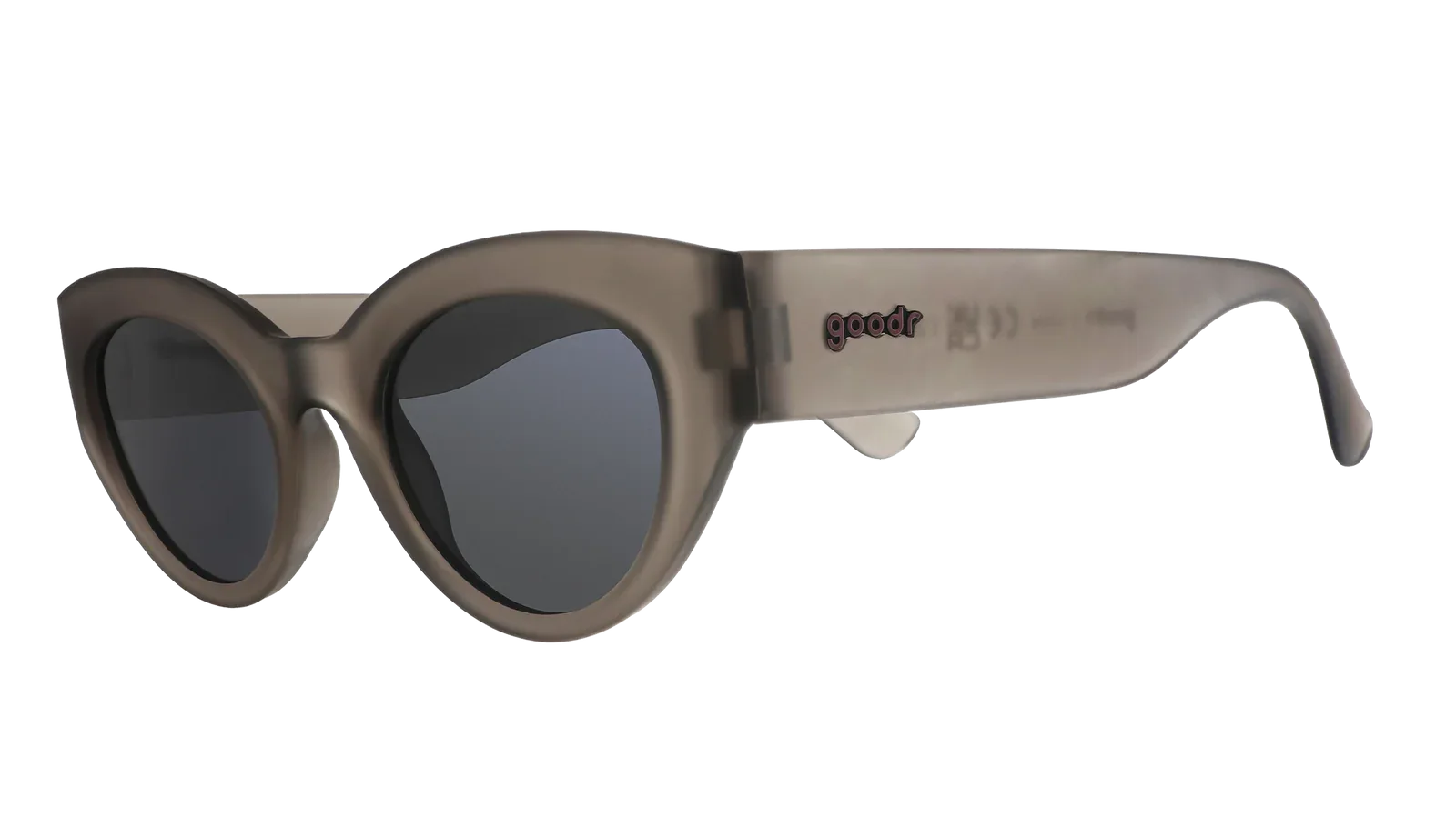
- Moonbeam Daydream: Translucent dark gray cat-eye frames with non-reflective black lenses and no-slip, no-bounce fit. Non-reflective lenses cut glare without polarization; pair with UV400 for full protection.