Quick answer
Choose a checklist notepad when your main goal is finishing tasks, because the printed checkboxes and prompts keep you moving. Choose a regular notepad when you need open space for notes, sketches, or mixed writing. If you do both, start with a checklist notepad and keep a plain pad nearby for freeform ideas.
How the format changes what you actually write
A checklist notepad pre-structures the page. The Things To Do After Coffee Checklist To Do List Notepad, for example, has boxes to check off and a title that sets the day's focus. That structure reduces the blank-page pause and nudges you toward actionable items.
A regular notepad gives you no prompts. You decide the layout, which is better for meeting notes, sketches, or lists that change shape as you think. The trade-off is that without a built-in system, you may spend more time organizing and less time doing.
When a checklist notepad outperforms a regular pad
If your day revolves around recurring tasks, a checklist notepad turns planning into a quick scan-and-check routine. The pre-printed boxes make progress visible, which helps you stay motivated and spot what is left.
For errands, chores, or work sprints, the to do list notepad format keeps each item small and countable. You are less likely to merge unrelated thoughts into one giant note.
When a regular notepad is the better tool
Regular notepads win for open-ended work: brainstorming, journaling, client call notes, or sketching a layout. There are no boxes competing with your own system, so you can use the full page however you like.
They also work better when your tasks change daily and do not fit a standard checklist. You can draw your own columns or ignore structure entirely without wasting printed prompts.
Paper and binding details that affect daily use
The Things To Do After Coffee pad uses 70lb. text weight smooth opaque paper and a chipboard backing. That combination gives you a firm writing surface and reduces show-through, which matters if you write with gel pens or markers.
It has 50 sheets and comes in a cellophane sleeve. That is enough for several weeks of daily lists, and the sleeve makes it easy to gift or store without bending the corners.
Trade-offs at a glance
- Structure vs. flexibility: A checklist notepad gives you ready-made boxes and a prompt at the top. A regular notepad gives you an empty page. Pick structure if you stall on where to start; pick flexibility if your notes change shape often. If you often rewrite your list because the format fights your workflow, switch to a regular pad.
- Task completion vs. idea capture: Checklist pads are built for finishing items. Regular pads are built for capturing anything. Neither is better at both jobs in the same session. Keep both on your desk if your day mixes errands and creative work.
- Paper and portability: The Things To Do After Coffee pad is about 5 x 7 inches with a chipboard back and 70lb. opaque paper. That size fits a tote or backpack, but it is larger than a pocket notebook. Measure your bag or planner pocket before buying if you plan to carry it daily.
Product facts
-
Things To Do After Coffee Checklist To Do List Notepad: Approximately 5 x 7 inches with full-color printing on 70lb. text weight smooth opaque paper and a chipboard backing. The mid-size page and firm backing make it comfortable to write on your lap or desk, while the opaque paper helps keep ink from bleeding through.
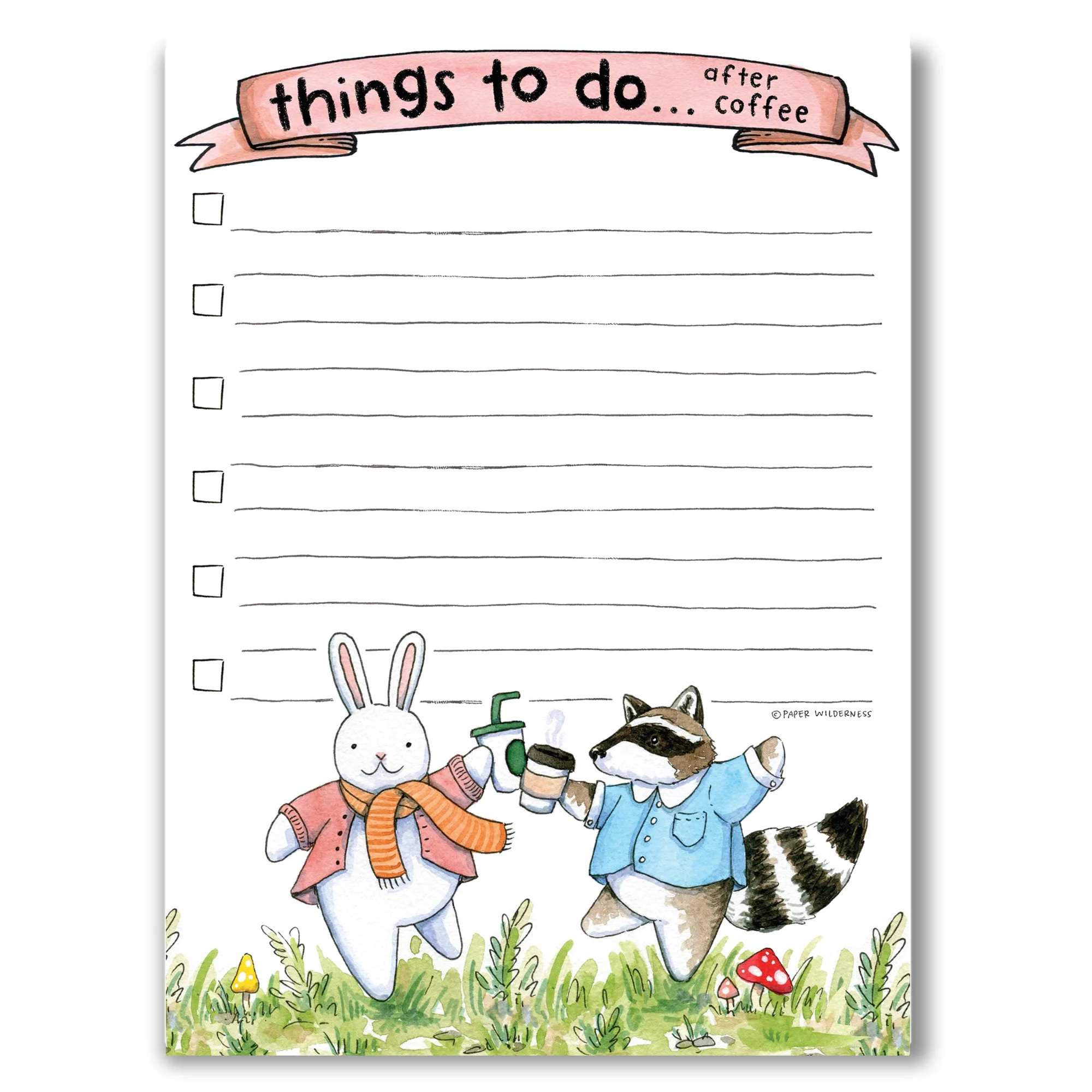
Things To Do After Coffee Checklist To Do List Notepad
-
Things To Do After Coffee Checklist To Do List Notepad: 50 sheets, packaged in a cellophane sleeve. That sheet count lasts about two months of daily lists, and the sleeve protects the pad for gifting or tossing in a bag.
Which should you choose?
Best for
- People who want a daily task list with checkboxes and a clear starting prompt
- Coffee lovers who enjoy a themed pad that makes planning feel lighter
- Anyone who writes with gel pens and wants opaque paper with a firm backing
Not for
- Writers who need a full blank page for journaling or sketching
- Users who prefer a pocket-size pad for quick notes on the go
- People who already have a digital task system and only need scratch paper