Quick answer
Match firmness to chewing style, not to age. Light gnawers and kids who chew for comfort do best with soft or medium silicone. Heavy, aggressive chewers need a firm, thick pendant with a safety clasp. If your child chews through soft items quickly, move up a firmness level rather than buying more of the same.
Most chew pendant listings tell you the color and the price. Almost none tell you how firm the silicone actually is, even though firmness is the single biggest reason a chew necklace gets used daily or abandoned in a drawer.
This guide breaks firmness into three practical levels, explains what each one does well, and gives you decision rules you can apply before you buy. It also covers the safety features that matter more than firmness once a child is chewing hard.
Why firmness matters more than shape or color
Chewing provides deep pressure feedback to the jaw, and the amount of resistance a child feels is what makes chewing calming. A pendant that is too soft gives almost no resistance, so a heavy chewer keeps going and may bite through it. A pendant that is too firm feels unpleasant to a light chewer, who then stops using it altogether.
Firmness also affects durability. Soft silicone flexes easily and tends to wear at the edges first. Firm silicone holds its shape under repeated pressure, which is why it suits kids who chew with real force. Neither is better in general. The right level is the one that matches the jaw, not the age on the box.
- Soft: light resistance, best for comfort chewing and teething-adjacent gnawing.
- Medium: a middle ground for kids who chew steadily but not forcefully.
- Firm: maximum resistance for heavy, repetitive, aggressive chewing.
Soft: comfort chewing and light gnawing
Soft silicone gives way easily under the back teeth. That makes it a good fit for children who chew briefly when they are anxious, bored, or winding down, and for younger children still exploring with their mouths. The gentle give is soothing rather than effortful.
The tradeoff is lifespan. A determined chewer can compress and eventually tear soft silicone, especially at the point where the pendant meets the cord. If you notice flattening, cracking, or a change in texture, that is your signal to step up a level rather than replace like for like.
- Check soft pendants weekly for thinning or small tears near the cord attachment.
- Soft is a poor match if your child already destroys soft plastic toys.
Medium: the everyday default
Medium firmness covers the widest range of kids. It offers enough resistance to feel satisfying during a long chew session without being so dense that it tires the jaw. If you are buying your first chew pendant and genuinely do not know your child's chewing style, medium is the safest starting point.
Watch how your child uses it for the first week. If they chew for a minute and move on, medium is working. If they press hard, grind, and seek it constantly, treat that as evidence you should move to firm. If they barely bite down, soft may suit them better.
- Buy one medium pendant first, observe for a week, then adjust.
- Medium works well for kids who chew while reading, riding in the car, or watching screens.
Firm: for aggressive and repetitive chewers
Firm silicone resists the back molars, which is exactly what a heavy chewer is looking for. Kids who chew pencils, shirt collars, fingernails, or hair until they break need that resistance, or they will keep hunting for something tougher. A firm pendant redirects that urge onto a safe object.
Firmness only solves half the problem. A hard-chewing child also needs a pendant thick enough to survive repeated compression and a cord that releases under strain. Look for a safety clasp that separates with a firm pull, and inspect the pendant often, because even firm silicone is not indestructible.
- Firm is the right call when soft and medium pendants show bite marks within days.
- Never leave a child unsupervised with any chew necklace, regardless of firmness.
How to read a listing when firmness is not stated
Many brands simply do not publish a firmness rating, and you should treat that as a gap rather than a hint. What you can do is read the description for signals: language about withstanding strenuous chewing points toward a firmer product, while language about gentle comfort points toward soft.
You can also judge by shape and thickness in the photos. Chunky, thick pendants are usually designed for harder chewing, while thin, flat shapes are typically softer. When a listing gives you nothing to work with, buy the smallest size first and test it before committing to a full set.
- Absence of a firmness spec is a limitation, not a guarantee of medium.
- When in doubt, start firmer for a known heavy chewer and softer for a light one.
Decision rules: pick a firmness in under a minute
- If your child chews through soft items quickly: Move straight to firm silicone with a thick pendant body and a safety clasp. Do not buy another soft pendant hoping it lasts longer. Firm, with a clasp, is the starting point for aggressive chewers.
- If your child chews briefly for comfort: Choose soft or medium. Soft suits younger children and light gnawing; medium suits steady but gentle chewing. Start at medium if you are unsure, then adjust down if they lose interest.
- If you cannot find a firmness rating: Use the description and photos as clues, buy one pendant, and test it for a week before buying more. One test purchase beats a set of the wrong firmness.
- If the pendant shows bite marks or thinning: Replace it and step up one firmness level. Wear at the cord attachment is the earliest warning sign. Inspect weekly; replace at the first sign of damage.
- If your child refuses the pendant entirely: The firmness is probably wrong in one direction or the other. Try the opposite level before concluding chew pendants do not work. Refusal is data, not a dead end.
Products that show firmness in practice
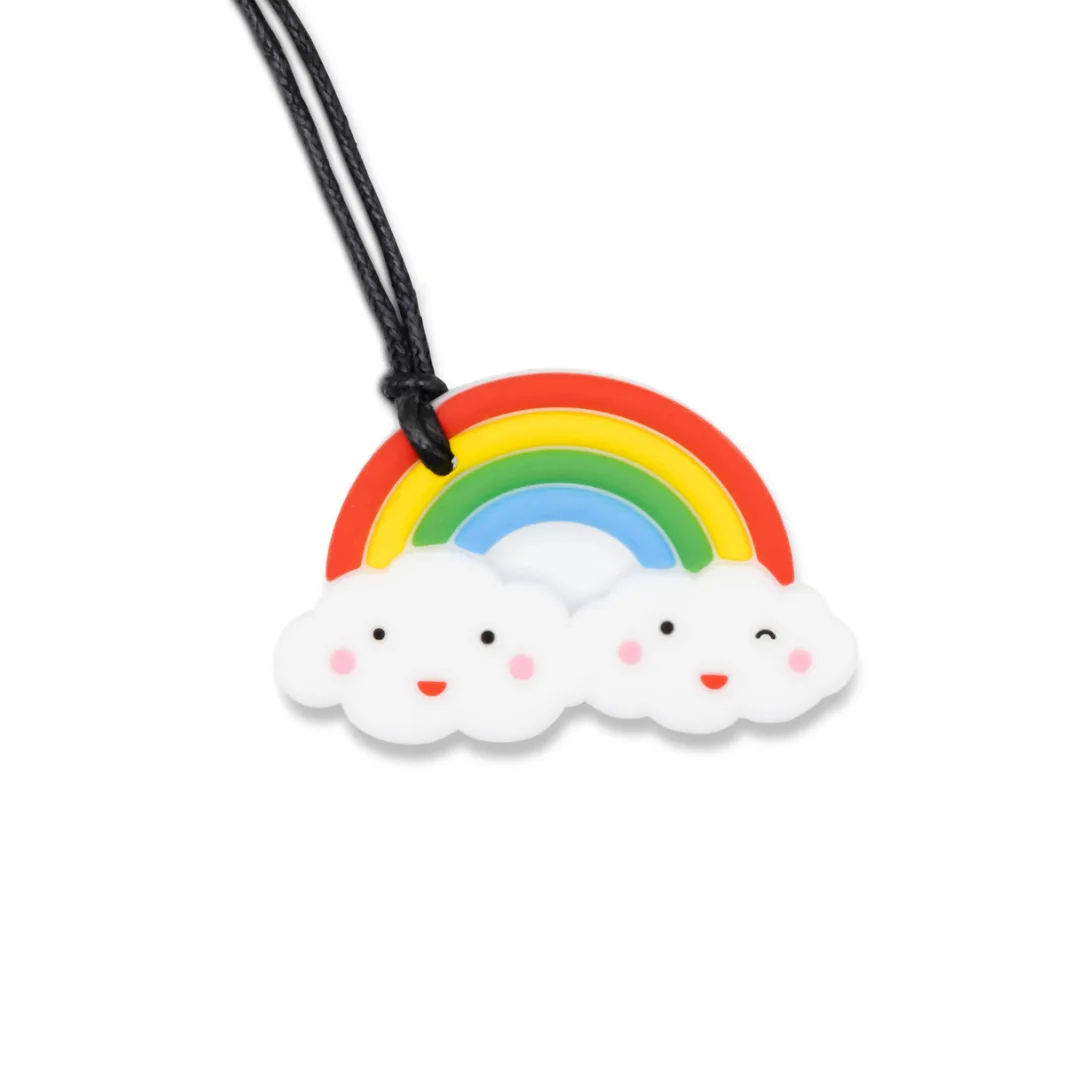
- Rainbow Pendant: Features a BPA-free, 100% non-toxic food-grade silicone pendant on a black necklace with a custom safety clasp that separates easily when gently pulled. The safety clasp is the feature that matters most for a firm, heavily chewed pendant, because it gives the cord a release point under strain.
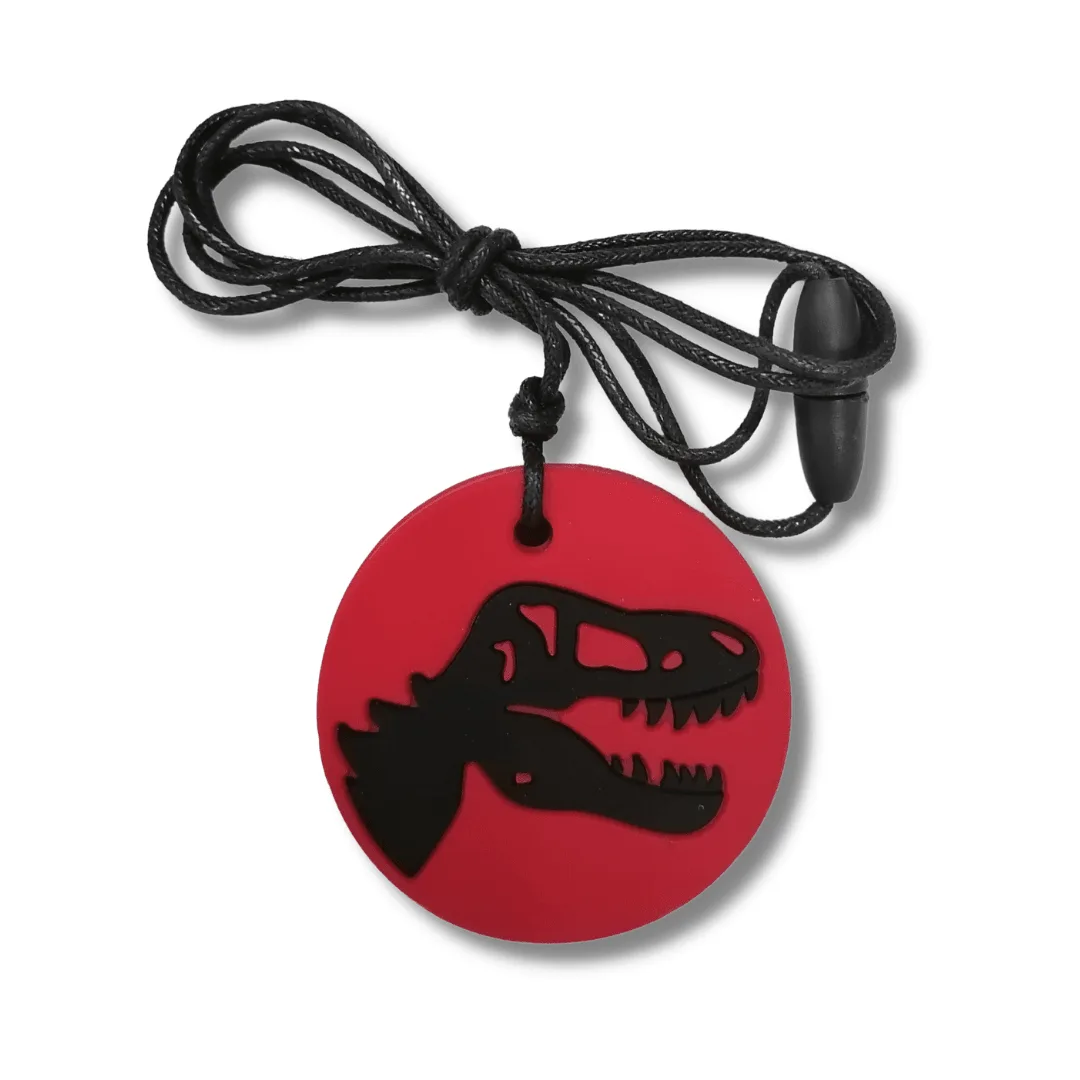
- Dino Pendant: A silicone chew pendant recommended by Occupational Therapists, available in a range of colors, designed as a comforting tool for kids when big emotions hit. A pendant kids actually want to wear gets used, and consistent use is what makes any firmness level effective for self-regulation.
- Princess & the Pea Necklace: Made from food-grade silicone beads in different colors, doubling as a sensory tool to redirect chewing from fingers, nails, hair, and pencils. Beaded pendants let a child chew different spots, which spreads wear and can suit kids who rotate where they bite.
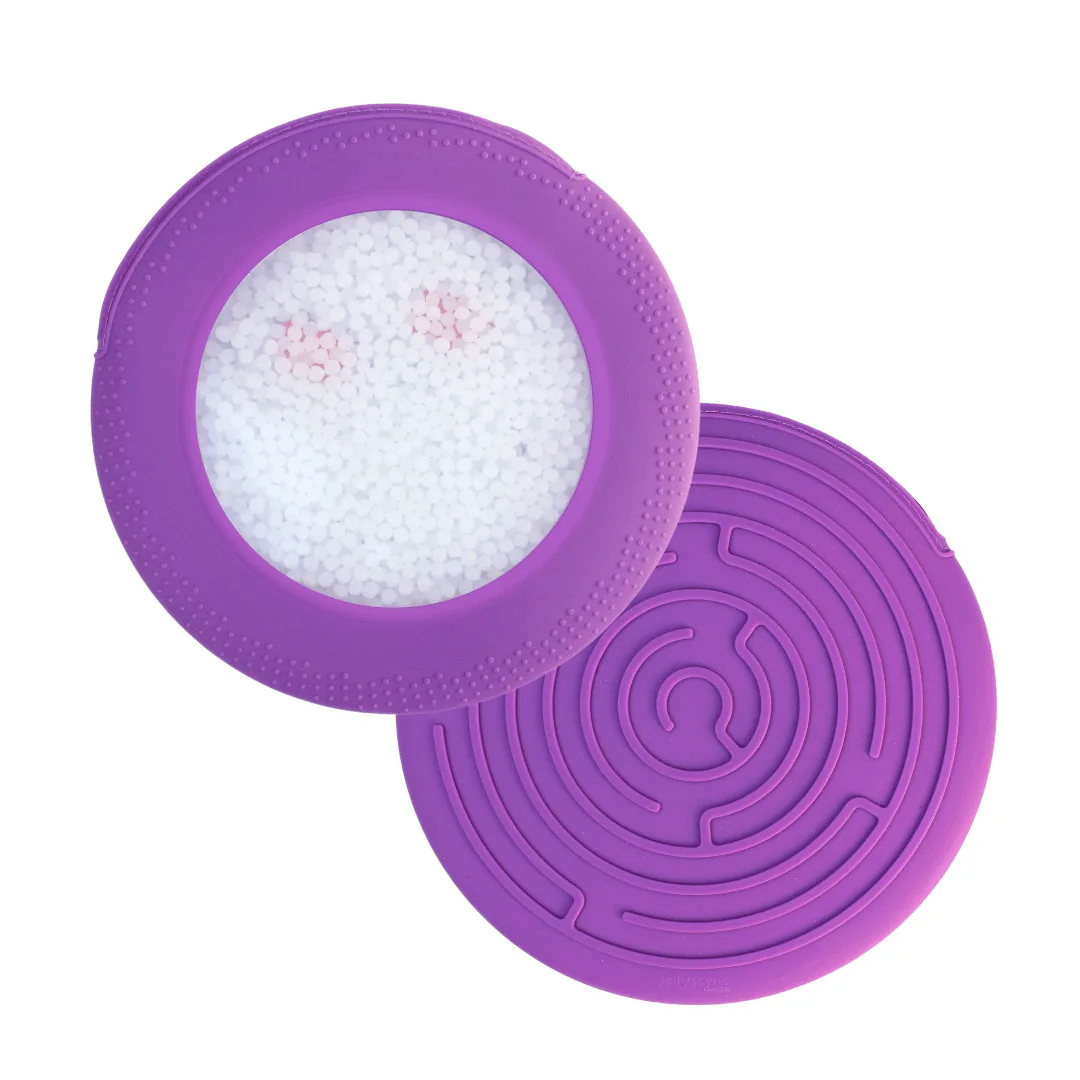
- Peekaboo Sensory Bag: Filled with weighted beads and themed figurines, fully sealed, and designed to engage sight, touch, and sound while helping kids calm and relax. A useful companion for kids who need oral and tactile input together, and a good fallback when a pendant is being cleaned.
Who each firmness level fits
Best for
- Light chewers and younger children who gnaw for comfort, using soft or medium silicone
- Heavy, repetitive chewers who destroy soft items and need firm silicone with a safety clasp
- Parents buying a first chew pendant who want a low-risk starting point in medium firmness
Not for
- Children who need a teether rather than a wearable pendant, since teethers serve a different purpose
- Families looking for a single pendant to suit every child, because firmness is personal to the chewer
- Unsupervised use at any firmness level, as chew necklaces are not toys to be left with a child alone
Firmness is the spec that decides whether a chew pendant gets used or ignored. Start with your child's chewing style, pick the matching level, and check the safety clasp before anything else. One week of observation will tell you more than any product description.