Quick answer
Choose a pendant your child can comfortably reach with their mouth without pulling the cord tight. For most toddlers and young kids, a pendant that rests between the collarbone and mid-chest works well. If you are unsure, start with a smaller, lighter pendant such as the Snowflake Pendant or Dino Pendant and adjust from there.
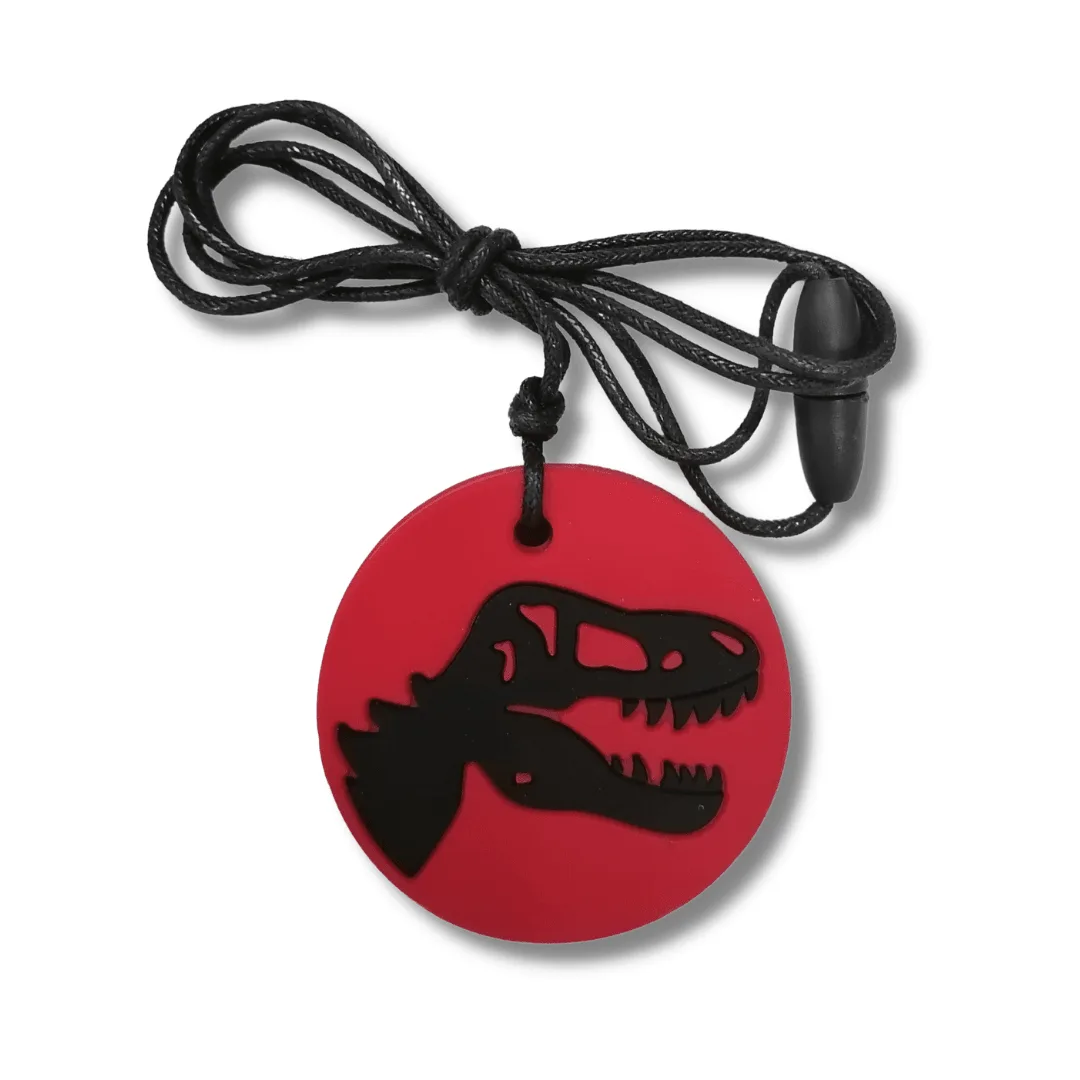
Dino Pendant
A chew pendant only helps if your child actually wears it. The wrong size can dangle too low, sit too high, or feel bulky during play, which means it gets pulled off and forgotten. This guide walks through the fit decisions that matter most: pendant shape, cord length, and how your child chews.
You will also see how real options from Jellystone Designs compare, so you can match a pendant to your child's age, chewing strength, and daily routine without guessing.
Why pendant size matters more than you think
A chew necklace that is too long can swing into the way during play or catch on objects. One that is too short may sit right under the chin, which feels restrictive and makes your child less likely to use it. The goal is a pendant that rests flat against the chest and can be lifted to the mouth with a slight tilt of the head, not a tug on the neck.
Size also affects how long a pendant lasts. A pendant that is too small for a strong chewer may wear faster or feel unsatisfying, while an oversized pendant can be heavy and distracting for a child who only chews occasionally.
- Have your child wear the pendant for a short trial at home before a full day out.
- Check that the pendant lies flat and does not twist or bunch the cord.
How to measure for a chew necklace
You do not need a special tool. Use a soft measuring tape or a piece of string to measure from the base of your child's neck to the point where you want the pendant to rest. For most toddlers, that is about 2 to 4 inches below the collarbone. For older kids, 4 to 6 inches often feels right.
Next, check the cord length against your child's torso. The pendant should sit above the belly button when your child is standing. If it hangs lower, it will swing and may get in the way during active play.
- Measure while your child is standing and relaxed, not sitting or slouching.
- Leave a little room for growth, but not so much that the pendant becomes a swinging hazard.
Match pendant shape to chewing style
Shape matters as much as length. Some kids prefer a pendant they can gnaw on with their back teeth, while others like to mouth a flatter surface. A pendant with a distinct shape, like the Snowflake Pendant or Dino Pendant, gives your child a clear spot to chew and can be easier to hold in the mouth than a round bead.
If your child tends to chew on fingers, nails, or pencils, a pendant with a textured or shaped surface can redirect that urge more effectively than a smooth, uniform bead. The Princess & the Pea Necklace uses multiple silicone beads, which offers a different mouthfeel and can be a good option for kids who like to move the beads around.
- Offer the pendant during a calm moment first, so your child can explore it without pressure.
- Watch which part of the pendant your child naturally mouths, then choose a similar shape next time.
Cord length and safety clasp basics
A chew pendant cord should be long enough to reach the mouth but short enough to stay close to the body. Many Jellystone Designs pendants, including the Rainbow Pendant, use a custom-designed safety clasp that separates easily when gently pulled. That feature matters because it reduces the risk of the necklace catching on something during play.
Even with a safety clasp, always supervise young children with any necklace. Check the cord regularly for wear and replace the pendant if the cord becomes frayed or the clasp stops working.
- Test the safety clasp yourself before your child wears the pendant.
- Avoid layering the chew necklace with other necklaces, which can tangle.
Adjusting fit as your child grows
Children grow quickly, so a pendant that fits in the fall may sit too high by spring. Recheck the fit every few months. If the pendant now rests above the collarbone or feels tight when your child tilts their head, it is time to adjust the cord or choose a different length.
If your child has outgrown the pendant's chew appeal, that is a different signal. A pendant that is the right size but no longer gets used may mean your child needs a different shape or firmness, not a different length.
- Snap a photo of the pendant on your child today so you can compare the fit later.
- Keep a spare pendant in your calm-down kit so you are not caught without one.
Decision rules for choosing a chew pendant size
- If your child is a toddler (1–3 years): Choose a pendant that rests 2–4 inches below the collarbone and sits above the belly button. A smaller, lighter pendant such as the Snowflake Pendant or Dino Pendant is easier for small hands and mouths to manage. Check the fit monthly; toddlers grow fast.
- If your child is a preschooler or early elementary (4–7 years): A pendant that rests 4–6 inches below the collarbone usually works well. At this age, kids can help choose a shape they like, which makes them more likely to wear it consistently. Let your child pick the color or shape to build ownership.
- If your child chews strongly or frequently: Prioritize a pendant with a durable, food-grade silicone body and a shape that offers a firm chew. The Rainbow Pendant is described as withstanding strenuous chews and includes a safety clasp. Inspect the pendant and cord weekly for wear.
- If your child is new to chew pendants: Start with a smaller, lighter option and a shorter cord so the pendant stays close to the body. Introduce it during a calm activity, not during a meltdown. Give it a week of low-pressure exposure before deciding it is not working.
Jellystone Designs options that fit different sizes and needs
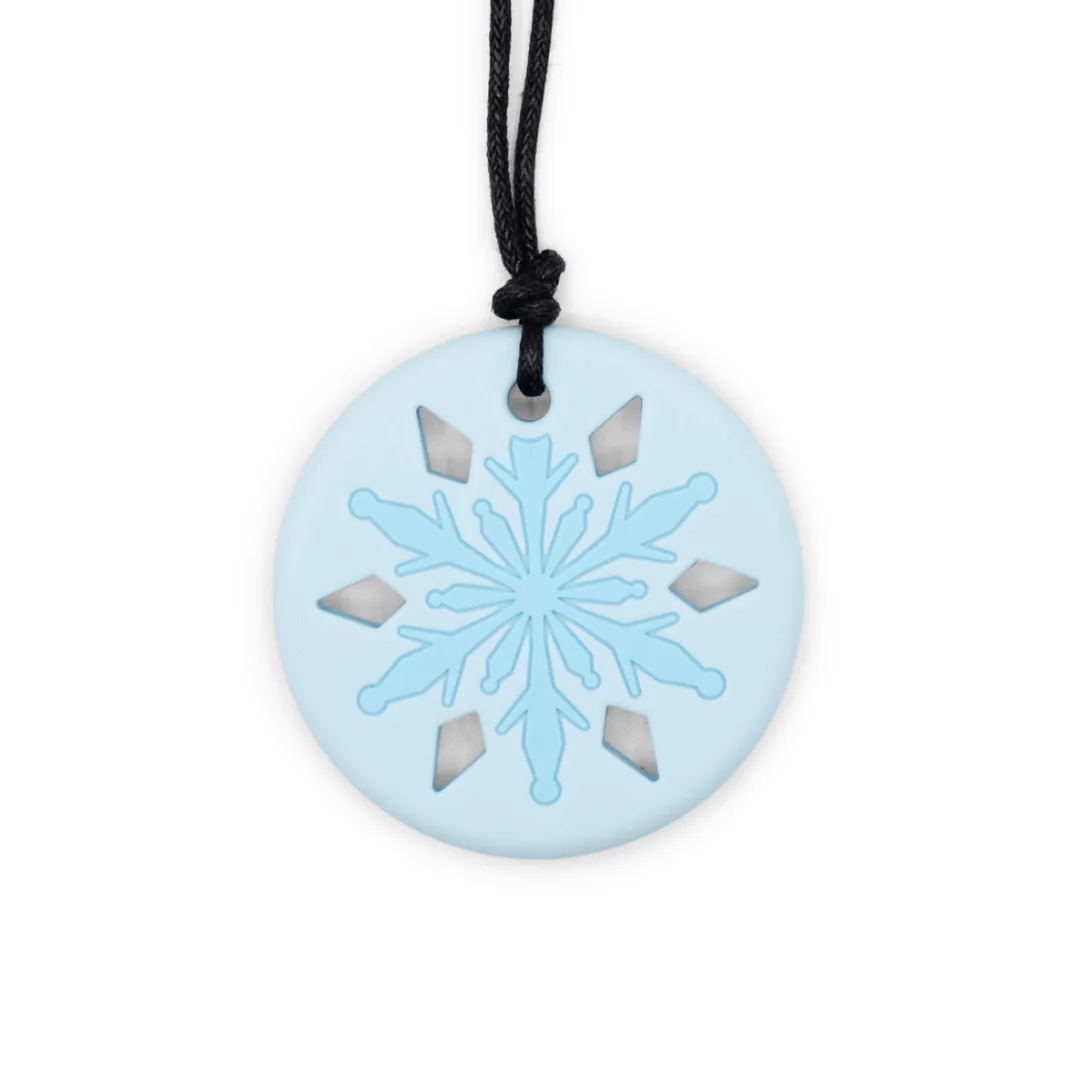
- Snowflake Pendant: Stylish, sensory, suitable for kids who love to chew! Our Snowflake Pendant is a reliable and comforting friend your child can rely on when big emotions threaten to cloud their day. The silicone Snowflake pendant on this necklace is available in a range of their favourite colours and is recommended by Occupational Therapists as a tool your child can use independently to develop effective control of their nervous system. A shaped pendant gives a clear chewing target and comes in multiple colors, so you can match it to your child's preference while keeping the fit consistent.
- Dino Pendant: For all the dinosaur fans out there! Our Dino Pendant is a fantastic new chew pendant for kids with a love for all things prehistoric! Our Dino Pendant is a reliable and comforting friend your child can rely on when big emotions threaten to cloud their day. The silicone Dino Pendant on this necklace is available in a range of their favourite colours and is recommended by Occupational Therapists as a tool your child can use independently to develop effective control of their nervous system. If your child is more likely to wear a pendant they like, a themed shape can make the size and fit conversation easier.
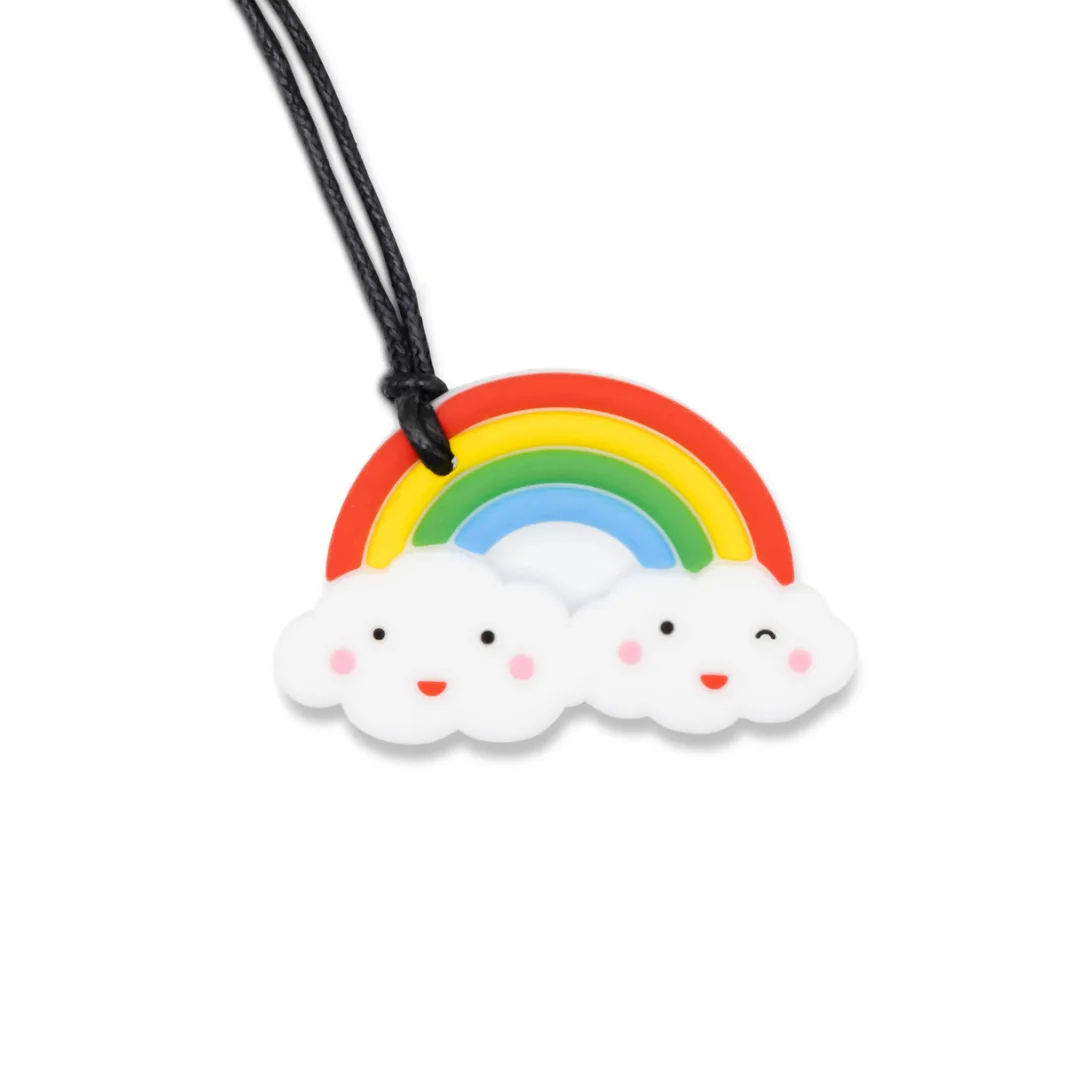
- Rainbow Pendant: Bring a rainbow to every day! Recommended by Occupational Therapists, the rainbow pendant is the ideal tool to help your child self-regulate and self-soothe when big emotions strike. Our Rainbow Necklace features a BPA-free, 100% non-toxic food-grade silicone pendant to withstand the most strenuous of chews, on a black necklace featuring our custom-designed safety clasp that separates easily when gently pulled. The safety clasp is a key fit feature: it releases under gentle pressure, which matters when you are checking cord length and daily wear.
Is this the right fit for your child?
Best for
- Children who chew on fingers, nails, hair, or pencils and need a wearable redirect
- Toddlers and young kids who need a pendant that stays close to the body during play
- Parents who want a pendant with a safety clasp and food-grade silicone
Not for
- Children who need a larger, heavier chew tool for very strong chewing
- Kids who refuse necklaces entirely; a handheld sensory toy may be a better first step
- Unsupervised use by children under 3, since necklaces require adult supervision
The right chew pendant size comes down to a simple check: can your child reach it comfortably without pulling the cord tight? Start with a shape and length that fits their body and chewing style, then adjust as they grow. A well-fitted pendant is more likely to stay on and do its job when big emotions hit.