Quick answer
Choose whole chia seeds when you want a visible gel, a crunchy texture, or a simple sprinkle over oatmeal and yogurt. Choose chia seed powder when you need a smooth blend in smoothies, soups, or baked goods without the gritty mouthfeel. Both forms deliver the same omega-3s, fiber, and minerals, so your decision comes down to texture and convenience.
Texture and how each form behaves in recipes
Whole chia seeds absorb liquid and form a gel, which makes them ideal for puddings, jams, and egg replacements in baking. The gel holds structure and adds a visible speckle. Chia seed powder, because it is cold-milled, disperses evenly without clumping or creating a noticeable texture. This makes it a better choice for smoothies, soups, and sauces where you want the nutrition but not the seed-like feel.
If you are replacing eggs in a recipe, both forms work, but the powder integrates more seamlessly into batters. For a classic chia pudding, whole seeds give the signature gel consistency that the powder cannot replicate.
Nutritional profile and how to compare them
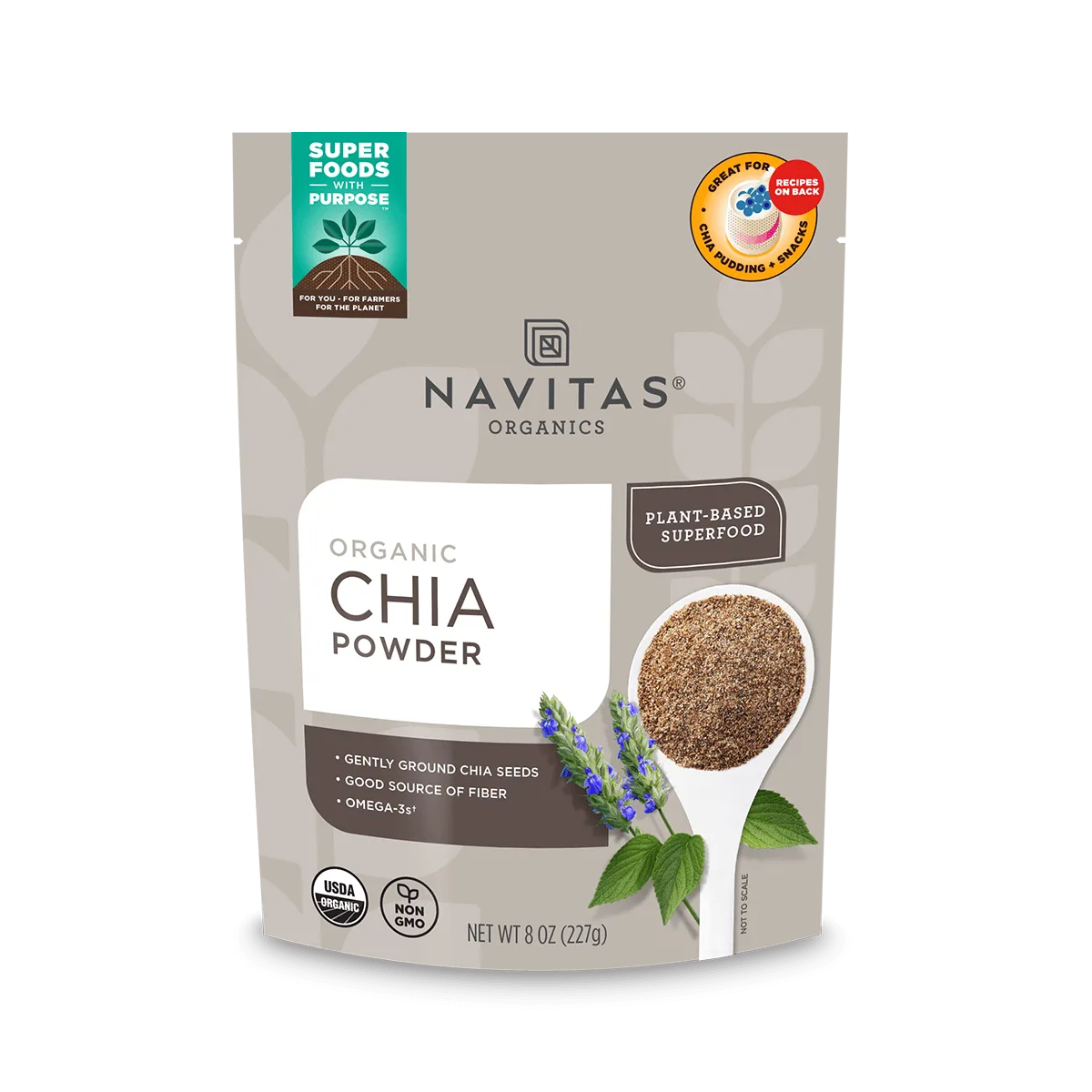
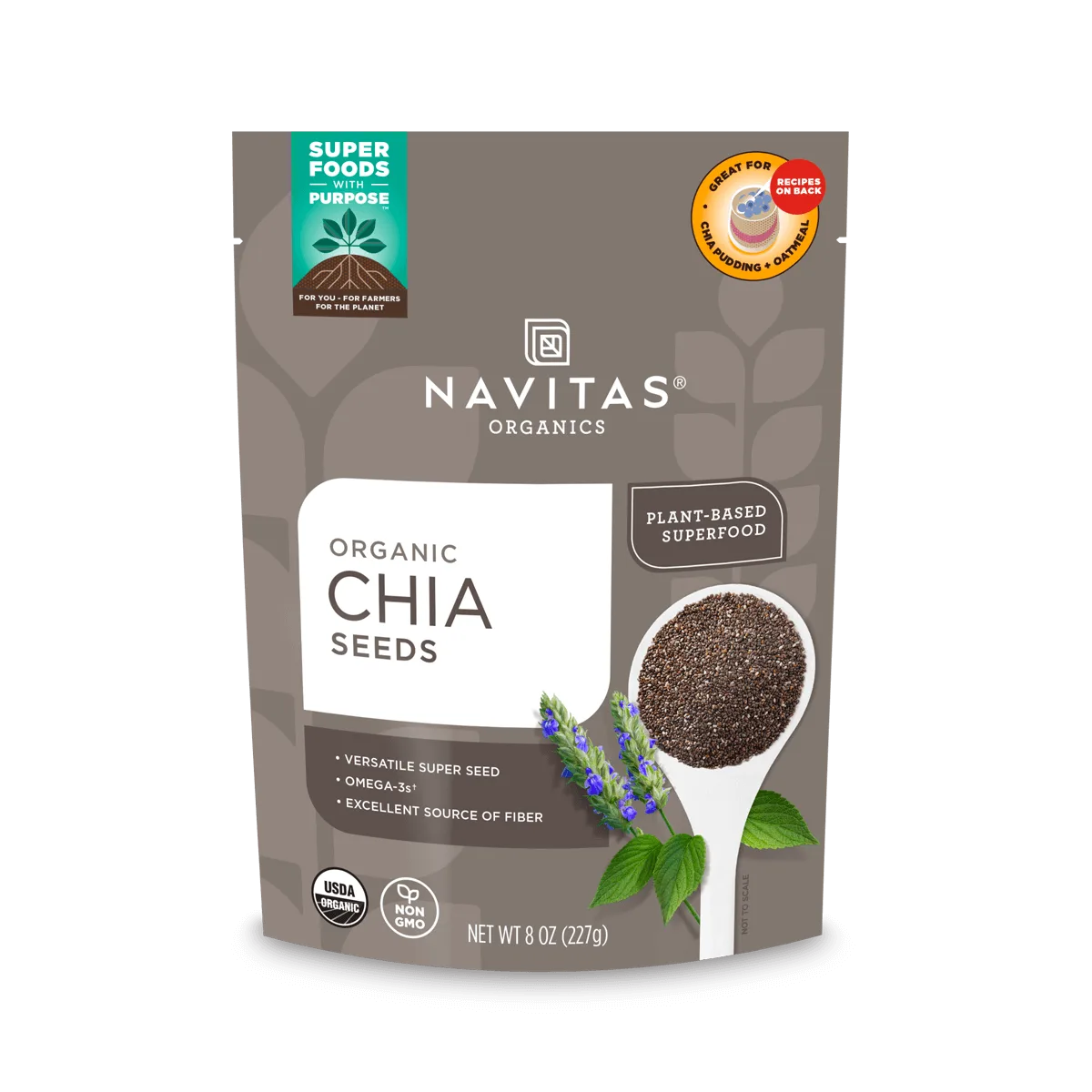
Navitas Organics Chia Seeds and Chia Seed Powder share the same nutritional foundation because the powder is made from 100% cold-milled chia seeds. Both are rich in omega-3 fatty acids, fiber, and minerals. The main difference is surface area: the powder exposes more seed surface, which may help some people digest the nutrients more easily, though this is not a guaranteed effect for everyone.
Because the powder is more processed, it has a slightly shorter shelf life once opened. Whole seeds stay fresh longer in a sealed container. If you buy in bulk and use chia slowly, whole seeds may be the more practical choice.
Convenience and how to use each form day to day
Whole chia seeds are shelf-stable and can be added directly to yogurt, oatmeal, salads, or water without any prep. They require about 15 minutes to gel, so plan ahead if you need a thickener. Chia seed powder is ready instantly and mixes into cold or hot liquids without waiting. It is especially handy for a quick smoothie or a last-minute egg replacement.
The powder is also less likely to get stuck in your teeth or feel gritty in a drink. On the other hand, whole seeds are more versatile for toppings and recipes where you want visual appeal.
Trade-offs between chia seeds and chia seed powder
- Texture control: Whole seeds create a visible gel and crunchy bite; powder disappears into the dish. Choose based on whether you want texture or smoothness. If you dislike seed texture, go with powder. If you want a gel, stick with whole seeds.
- Convenience and shelf life: Whole seeds keep longer in the pantry and need no prep. Powder mixes instantly but may lose freshness faster once opened. For occasional use, whole seeds are more forgiving. For daily smoothies, powder saves time.
- Recipe versatility: Whole seeds work for puddings, jams, and toppings. Powder works for smoothies, soups, sauces, and egg replacement without altering texture. If you bake often or make smoothies, powder is more versatile. If you make puddings or need a topping, whole seeds are better.
Product facts at a glance
- Chia Seeds: Navitas Organics Chia Seeds are your ticket to maximum omega-3 fatty acids! You can add these tiny protein- and fiber-packed seeds to oatmeal, smoothies, yogurt, and countless recipes for a nutritious boost. Whole seeds are the most versatile form for toppings, puddings, and recipes where you want visible texture and a gel structure.
- Chia Seed Powder: Made from 100% cold-milled chia seeds, Navitas Organics Chia Powder packs in the omega-3s, fiber and minerals. With a mild, nutty flavor, it’s the perfect vegan egg replacement and superfood boost for smoothies, soups, baking, and more! The powder blends smoothly into liquids and batters without changing texture, making it ideal for smoothies, soups, and baking where you want the nutrition without the seed crunch.
Which form fits your kitchen?
Best for
- Smoothie lovers who want a seamless blend without grit
- Bakers who need a quick, smooth egg replacement
- Anyone who prefers a neutral texture in soups and sauces
Not for
- People who want a visible chia gel or crunchy seed topping
- Recipes that rely on whole seed structure, such as chia pudding or jam