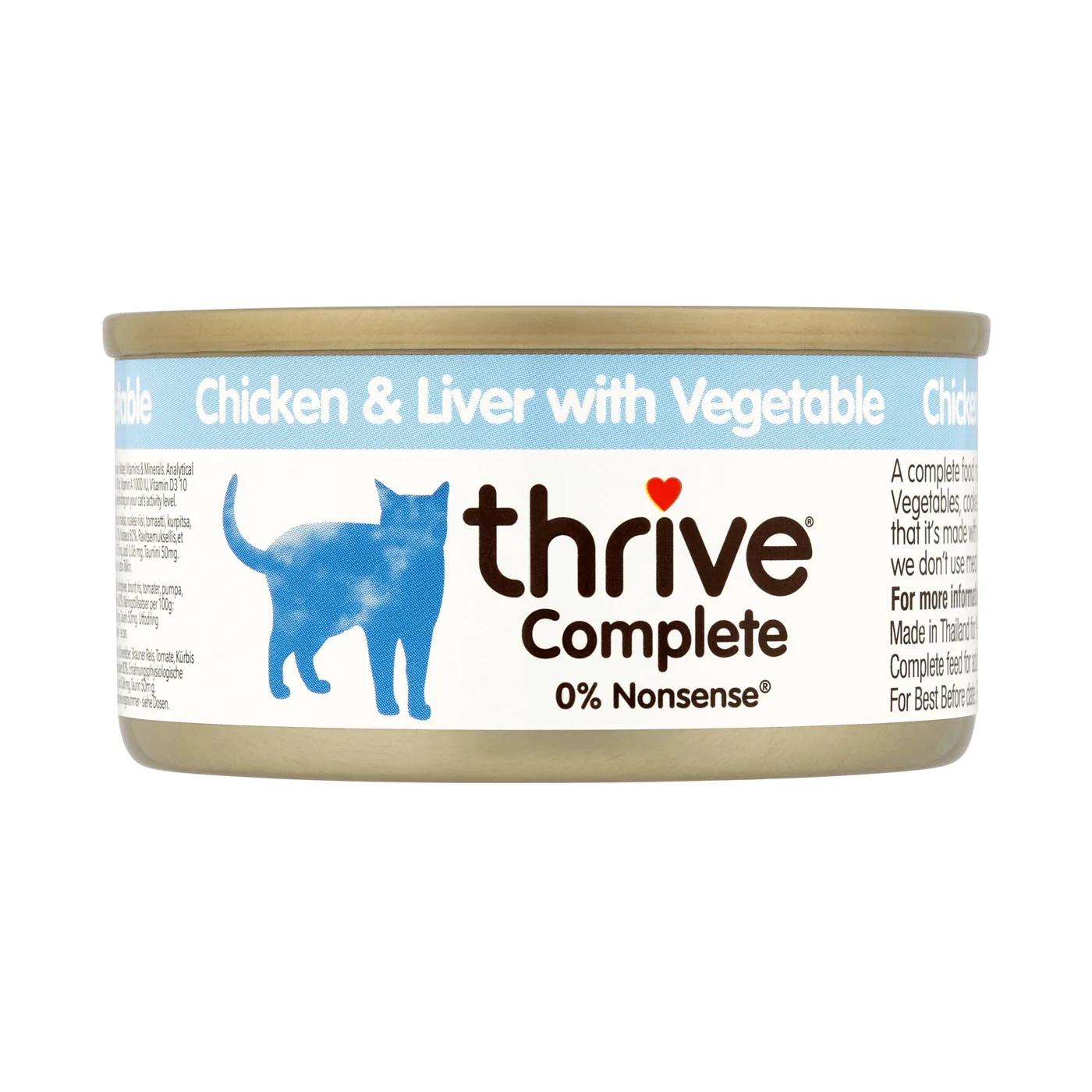
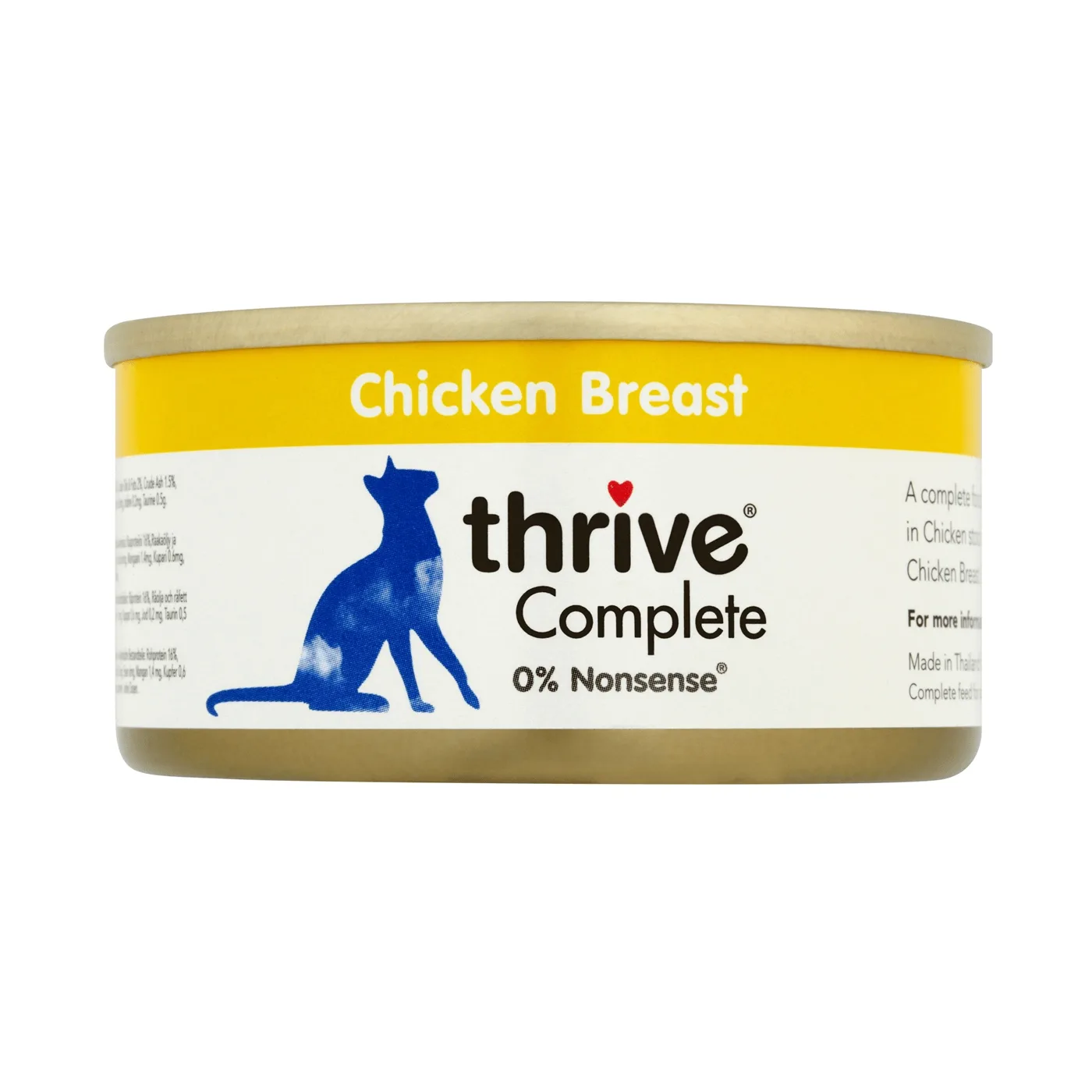
The real difference is the protein list
If you are choosing between Thrive Complete Chicken Breast and Thrive Complete Chicken Breast & Turkey, the decision comes down to how many animal proteins are in the can. The chicken breast recipe uses chicken breast as its protein source. The chicken and turkey recipe uses chicken breast and turkey as its only sources of protein. Both are complete wet cat foods in 75g tins, and both can be served alone or mixed with Thrive PremiumPlus dry food.
That single difference matters most if you are comparing single protein vs mixed protein cat food for a cat with a sensitive stomach or a history of food reactions. A shorter protein list gives you fewer variables to track. A mixed protein recipe gives you a different flavour profile and may suit cats that get bored with one meat. Neither option is automatically better; the right choice depends on your cat and on what the label actually confirms.
What the Chicken & Turkey can confirms
-
Thrive Complete Chicken Breast & Turkey Cat Food 75g: Thrive Complete Chicken Breast & Turkey Cat Food is made with 100% real chicken breast and turkey as the only sources of protein. This is the clearest point of comparison: the can contains two named animal proteins and no other protein sources are listed.
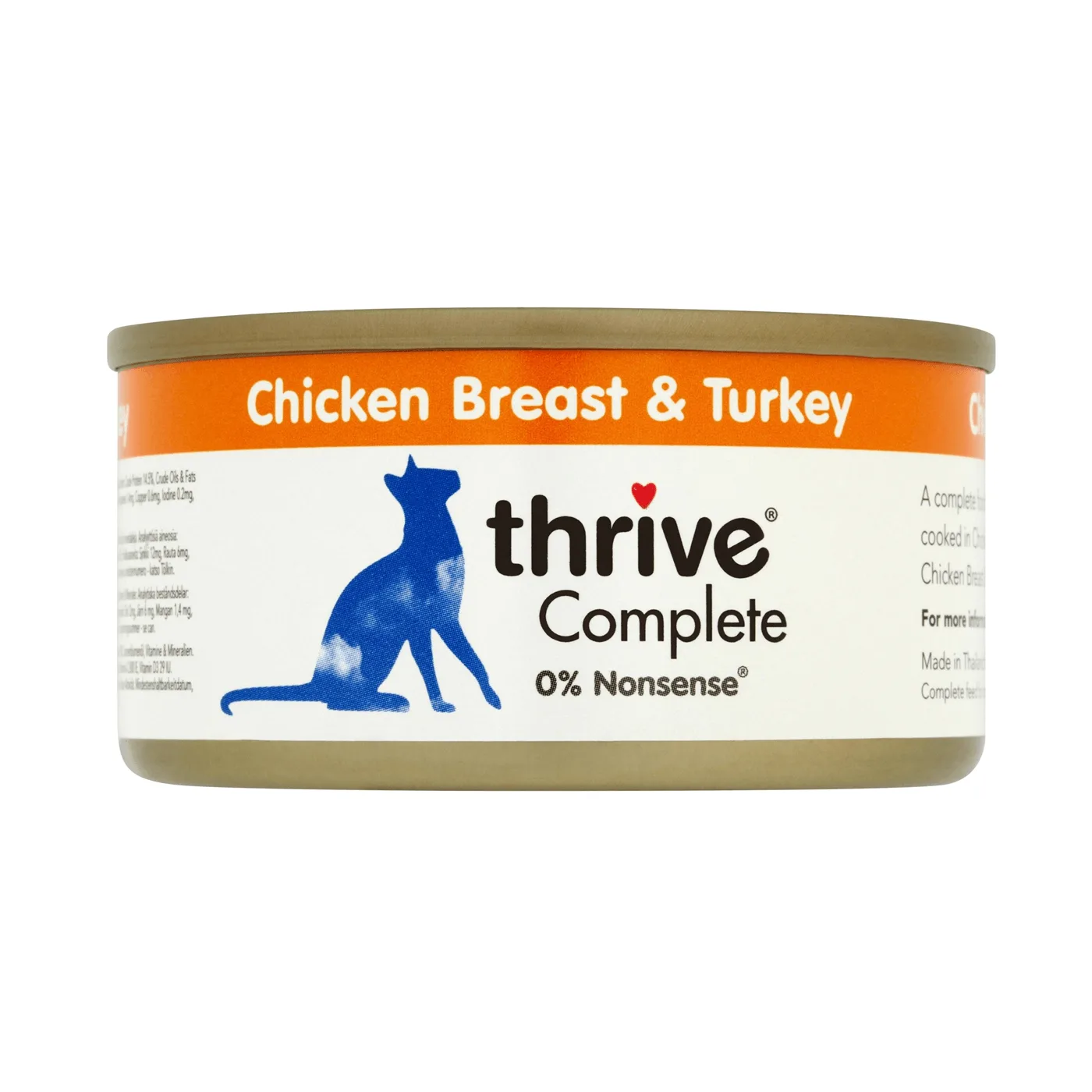
Thrive Complete Chicken Breast & Turkey Cat Food 75g
-
Thrive Complete Chicken Breast & Turkey Cat Food 75g: The recipe contains no preservatives, no fillers or artificial gelling agents, no added colours, no added sugars and no artificial flavours. These are the ingredient claims the label supports, which helps you compare it with the chicken breast recipe on additive content rather than guesswork.
-
Thrive Complete Chicken Breast & Turkey Cat Food 75g: It is a nutritionally balanced wet food produced from chicken and turkey broth with added vitamins and minerals. The broth base and added vitamins and minerals are what make it a complete meal rather than a complementary topper.
Chicken Breast vs Chicken & Turkey at a glance
The table below uses only supplied catalog facts. Where a detail is not confirmed for one or both recipes, it is marked as not confirmed rather than assumed.
- Protein sources: Chicken Breast: chicken breast. Chicken & Turkey: chicken breast and turkey as the only sources of protein.
- Added preservatives, colours, sugars or artificial flavours: Chicken & Turkey: none added, per the supplied label facts. Chicken Breast: not confirmed in the supplied information.
- Fillers and artificial gelling agents: Chicken & Turkey: none, per the supplied label facts. Chicken Breast: not confirmed in the supplied information.
- Serving format: Chicken & Turkey: serve alone or mixed with Thrive PremiumPlus dry food. Chicken Breast: not confirmed in the supplied information.
- Pack sizes: Chicken & Turkey: 75g, 6 x 75g and 12 x 75g. Chicken Breast: 75g, per the product name.
When a single protein is the safer starting point
If your cat has reacted to food before, or your vet has asked you to simplify the diet while you investigate, a single protein recipe is usually the more practical starting point. You have one animal protein to monitor instead of two. The chicken breast recipe fits that brief because chicken breast is the only protein named in the product title.
The trade-off is that the supplied information for the chicken breast recipe does not confirm the same additive claims as the chicken and turkey can. If avoiding added colours, sugars, preservatives or artificial gelling agents is your reason for choosing Thrive, the chicken and turkey can is the one whose label facts explicitly support those claims. That does not mean the chicken breast can contains them; it means the supplied record does not confirm either way. Check the actual tin label before you rely on it.
When a mixed protein makes more sense
For a cat with no known sensitivities, the chicken and turkey recipe offers a broader flavour base and a second named meat without moving away from poultry. Cats that turn their nose up at a single repetitive protein often accept a mixed poultry recipe more readily, and the 6 x 75g and 12 x 75g packs make it easy to keep a rotation going.
The trade-off is that if a reaction does occur, you have two proteins to consider rather than one. That is not a reason to avoid the recipe, but it is a reason to introduce it deliberately and note how your cat responds.
How to run a fair comparison at home
A side-by-side trial only tells you something useful if you change one thing at a time.
- Start with one recipe: Choose either the chicken breast or the chicken and turkey can and feed it as the main wet food for a set period before introducing the other.
- Keep the rest of the diet steady: If you mix with Thrive PremiumPlus dry food, keep the dry food the same while you compare wet recipes, so the only change is the wet food.
- Note the pack size you bought: A 75g tin is a single-serve size; the 6 x 75g and 12 x 75g packs are better for a longer trial without running out mid-week.
- Record what you actually observe: Appetite, interest at mealtimes and litter tray habits are the practical things you can compare. Do not expect the label to tell you which recipe your cat will prefer.
What the labels do not settle
Neither supplied record gives a full ingredient list, guaranteed analysis, calorie content or feeding amount by weight. That means you cannot use this comparison to calculate portions or to confirm whether either recipe is suitable for a cat with a diagnosed condition. The chicken and turkey record confirms it is wheat and gluten free and described as easy to digest, but that is not the same as a veterinary hypoallergenic claim, and it should not be read as one.
If your cat has a diagnosed allergy, a sensitive digestive condition or a prescribed diet, ask your vet before switching recipes. For everyday feeding, the honest summary is this: choose the chicken breast can if you want one named protein and are prepared to check the tin for additive details; choose the chicken and turkey can if you want a two-protein poultry recipe whose additive and serving claims are confirmed in the supplied information.