Why chicken feet earn a place in your chew rotation
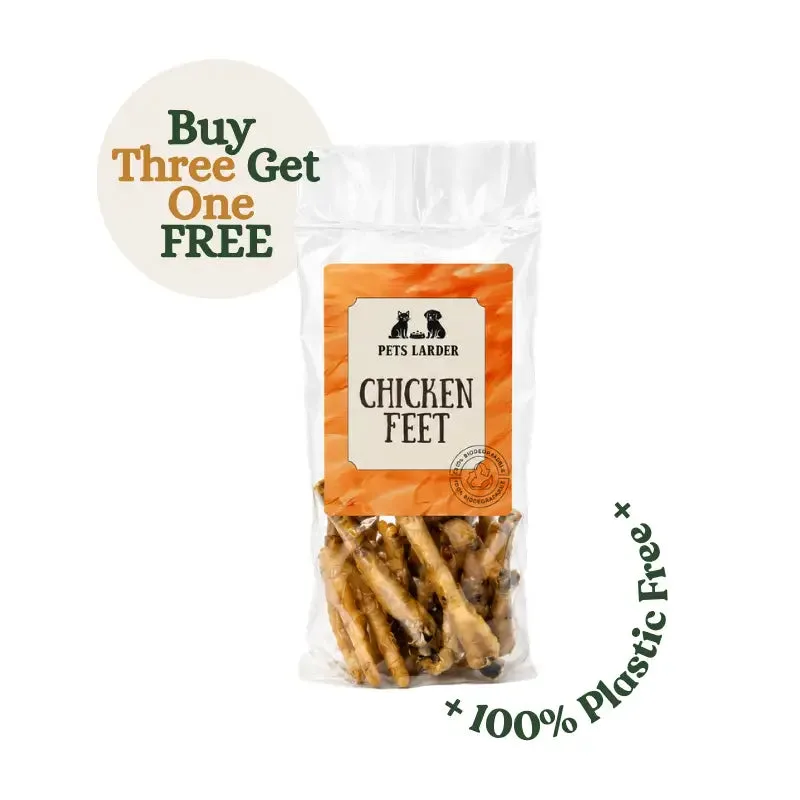
Chicken feet are a single-ingredient chew made from 100% air-dried chicken feet. That simplicity matters: there is no coating, flavouring, or filler, so you know exactly what your dog is gnawing on. The natural cartilage and bone give the chew a texture that most dogs from medium puppies upward can handle, and the air-drying process creates a lightweight, low-odour treat that is easy to store.
Beyond the ingredient list, chicken feet bring 42.8% crude protein and 34.2% crude fat to the table. The cartilage is naturally high in glucosamine and chondroitin, compounds often associated with joint and connective tissue health. For dogs on raw or fresh-food diets, this aligns with whole-food feeding principles. But it is a complementary treat, not a meal replacement, so keep it alongside a balanced diet.
What the product record confirms
-
Chicken Feet for Dogs | 100% Chicken: One ingredient: 100% air-dried chicken feet, nothing else. Simplifies treat choice for dogs with sensitivities and makes it easy to know what you are feeding.
Chicken Feet for Dogs | 100% Chicken
-
Chicken Feet for Dogs | 100% Chicken: Analytical constituents: Crude Protein 42.8%, Crude Fat 34.2%, Crude Fibre 0.9%, Crude Ash 12.0%, Moisture 10.1%. High protein and moderate fat mean you should factor the treat into your dog's daily calorie allowance, especially for weight-conscious dogs.
-
Chicken Feet for Dogs | 100% Chicken: Suitable for most dogs from approximately 4 months, with supervision for puppies. Gives you a clear starting point for when to introduce this chew to a younger dog.
-
Chicken Feet for Dogs | 100% Chicken: Available in 100g, 500g, and 1kg bulk bags. Lets you match the pack size to how often you plan to feed chicken feet.
How to feed chicken feet: a simple routine
The feeding guide on the pack gives a starting point, not a rigid rule. Adjust based on your dog's size, activity level, and overall diet.
- Check the size of your dog: For medium dogs (15–25kg), the guide suggests 1–2 feet per day. For smaller dogs, 1 per day. These are daily maximums, not targets to hit every day.
- Supervise the chew session: Always watch your dog while they chew, especially younger or smaller dogs. This is the most important safety step.
- Remove small pieces: If the piece becomes small enough to swallow whole, take it away to prevent choking.
- Keep fresh water available: Chewing is thirsty work, and hydration supports digestion.
- Factor in the fat: At 34.2% fat, chicken feet are a moderate-calorie treat. If your dog is weight-conscious, reduce other treats or adjust meal portions accordingly.
Matching the chew to your dog
Chicken feet are naturally sized for smaller breeds, so small dogs can enjoy them too—just stick to 1 per day and supervise. Puppies from 4 months can have them under supervision, but start with one foot and see how they handle the texture. For sensitive stomachs, the single-ingredient recipe simplifies identification if a reaction occurs; the record notes they are generally well tolerated.
If your dog is a speed-eater or tends to gulp chews, chicken feet may not be the best fit because they can become pliable. In that case, look for a denser natural chew. But for dogs who need mental engagement without an hour-long gnaw session, the crunchable, digestible texture of the cartilage and bone makes chicken feet a lower-effort option.
Chicken feet vs other natural chews: a quick look
Chicken feet are not the right chew for every dog or every situation. Here is how they compare on key traits.
- Single-ingredient chews: Chicken feet are 100% chicken with no additives. If you want absolute simplicity, they are hard to beat.
- Long-lasting chews: Chicken feet are a moderate-duration chew, not an all-afternoon project. They suit dogs who need engagement without extended gnawing.
- Low-odour chews: They are lightweight and do not smell, which is a meaningful consideration for indoor dogs and owners.
- Joint-support chews: The natural cartilage provides glucosamine and chondroitin, but this is a complementary benefit, not a treatment for joint disease.
Storage and packaging notes
Chicken feet come in a compostable Natureflex bag that is home compostable and industrially compostable, certified to EN 13432, Din Certco home compostable, OK Compost, and PEFC. It is plastic-free. Store the bag in a cool, dry place; the air-dried nature of the chew means it keeps well without refrigeration. The 100g bag is easy to portion, while the 500g and 1kg bulk bags offer better value if you feed regularly.
When to hold off
Chicken feet are not suitable for dogs under 4 months, and they are not a meal replacement. If your dog has a history of swallowing chews whole or has dental issues that make hard chewing painful, consult your vet before offering any bone-based chew. And because the fat content is moderate, dogs prone to pancreatitis or weight gain should have chicken feet only occasionally and with vet guidance.