The real comparison: Versus Play vs. the solo puzzle set
If you are weighing the Chip Theory Kids Versus Play Collection against the earlier Chip Theory Kids collection, the split is not about age or quality. The Versus Play set is built around group play that exercises memory, dexterity, and imagination together. The previous collection was puzzle-oriented solo play. That is the decision in front of you: do you want a set that pulls players into the same activity, or one that lets a child work through puzzles alone?
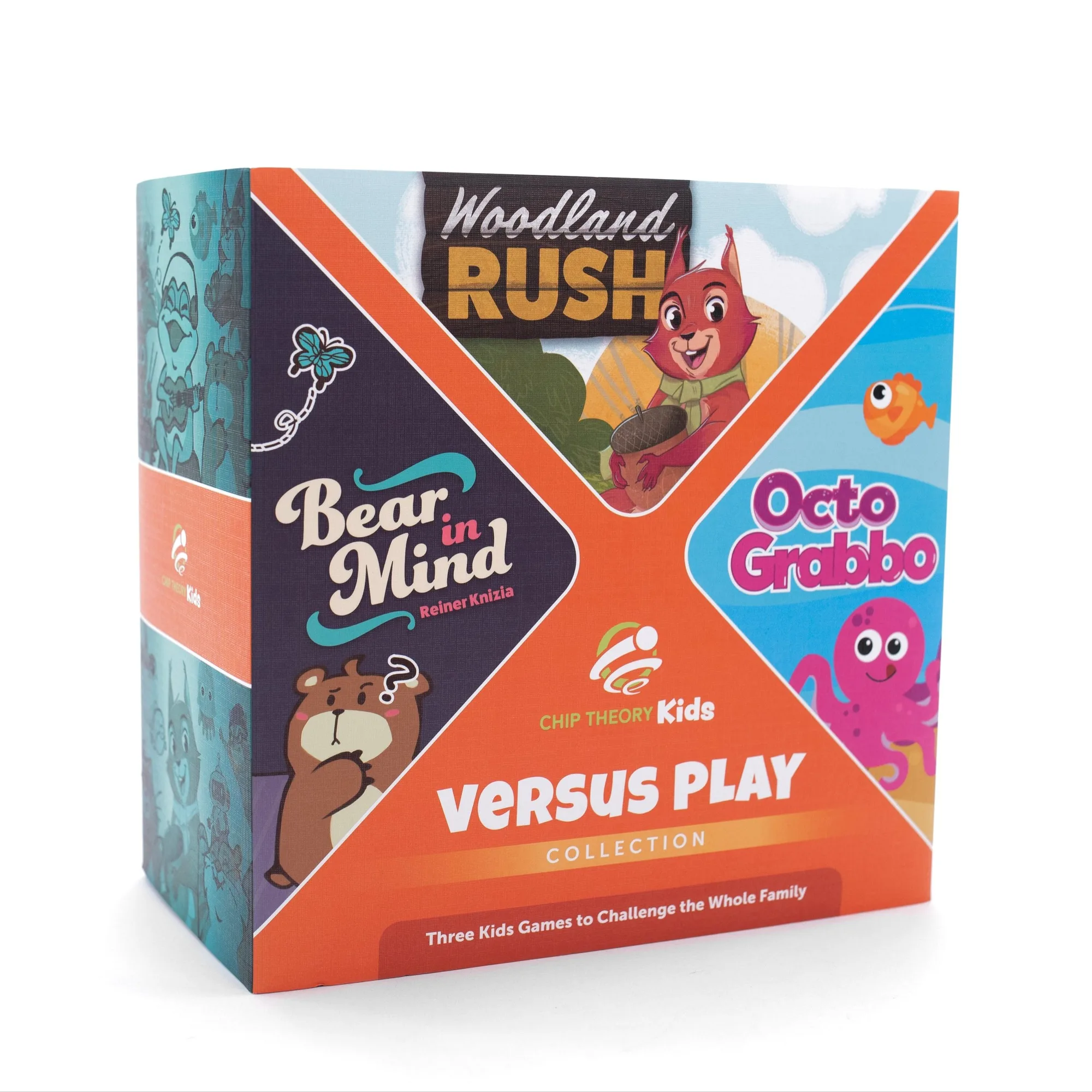
The Versus Play Collection includes three games: OctoGrabbo, Woodland Rush, and Bear in Mind. The set also comes with an exclusive slipcase that holds all three tins, plus a $5.00 discount compared with buying the games separately. Those are the supplied facts. Details such as exact player counts, recommended ages, and play times are not confirmed in the information available here, so treat any specific number you see elsewhere as unverified until the publisher lists it.
What each set asks of players
The comparison below uses only the supplied descriptions. It is not a ranking.
- Chip Theory Kids Versus Play Collection: Three games—OctoGrabbo, Woodland Rush, and Bear in Mind—that exercise memory, dexterity, and imagination together. The emphasis is on shared, active play rather than solo puzzle-solving.
- Previous Chip Theory Kids collection: Described as puzzle-oriented solo play. That makes it the better fit when the goal is independent quiet time rather than a group activity.
Versus Play Collection facts that affect the buying decision
-
Chip Theory Kids “Versus Play” Collection: The collection includes OctoGrabbo, Woodland Rush, and Bear in Mind. Three named games give you a concrete sense of variety before you commit to the set.
Chip Theory Kids “Versus Play” Collection
-
Chip Theory Kids “Versus Play” Collection: The games exercise memory, dexterity, and imagination together. This tells you the set leans toward active, social play rather than a single puzzle type.
-
Chip Theory Kids “Versus Play” Collection: An exclusive slipcase conveniently contains all three tins in the series. Storage is part of the package, which matters if you want the set to stay together between sessions.
-
Chip Theory Kids “Versus Play” Collection: The set carries a $5.00 discount compared with buying the games individually. If you already know you want all three games, the bundled price is the more economical route.
Where the Versus Play set fits—and where it does not
Choose the Versus Play Collection when the child in question enjoys doing things with others and when you want a set that mixes physical actions, memory challenges, and imaginative play. The three-game format also gives you options for different moods without buying separate boxes.
Choose the earlier solo puzzle collection instead when independent play is the priority—for example, for a child who prefers to work through puzzles alone or for quiet solo time. The Versus Play set is not described as a solo puzzle product, so it is not a like-for-like substitute for that need.
One honest limitation: the supplied information does not list player counts, age ranges, or play times for the Versus Play games. That means you cannot confirm from this evidence alone whether a specific age or group size is a good match. If those details are essential, check the publisher's product page before buying.
A practical way to decide
- Start with the play mode: If the goal is shared, active play, the Versus Play set is the closer match. If the goal is solo puzzle-solving, the previous collection is the closer match.
- Check the game names against your child's interests: OctoGrabbo, Woodland Rush, and Bear in Mind are the three games included. If none of those names mean anything to you yet, read their individual descriptions before assuming the set is a fit.
- Decide whether you want all three: The $5.00 discount and the slipcase only pay off if you actually want the full set. If one game appeals and the others do not, the bundle is less compelling.
- Confirm the missing details: Player count, age guidance, and play time are not confirmed in the supplied information. Check those against your household before you buy.