Quick Answer
For swimwear that keeps its stretch after repeated pool sessions, choose a chlorine resistant elastic made from rubber or elastomer rather than standard polyester elastic. It holds up to chlorine, sunlight, and constant wet-dry cycles, so your suits and swim diapers stay snug without sagging.
Why Standard Elastic Fails in Swimwear
Regular elastic is usually made from cotton or polyester blends that absorb water, lose tension quickly, and break down when exposed to chlorine, salt, and UV light. Once the elastic relaxes, the garment bags out at the leg or chest and no longer supports the fabric the way it should.
Chlorine resistant elastic is built for repeated wet-dry cycles. The rubber or elastomer core keeps its stretch and recovery, so the swimsuit keeps its shape through a season of pool or ocean use. That difference matters most in items that get heavy movement, like swim trunks, competitive suits, or swim diapers.
Width and size: the practical trade-off
The elastic is available in 6 mm or 10 mm widths. Narrower 6 mm elastic suits curved seams, leg openings, and delicate straps because it bends more easily around tight curves. The 10 mm width gives more grip and support, which helps in waistbands and wider panels where you need the elastic to hold its shape under tension.
The trade-off is simple: 6 mm hides better in narrow casings but provides less surface contact, while 10 mm holds more firmly but can add bulk. Choose based on where the elastic sits and how much stretch recovery you need in that seam.
Why rubber matters for pool use
Standard elastic breaks down when it meets chlorine, saltwater, and UV light. The rubber or elastomer core in swimwear elastic is formulated to keep its stretch and recovery after repeated exposure, which is why it holds up in swimsuits, rash guards, and swim diapers. The white color also makes it easy to conceal inside a seam or under a lining.
Width matters more than you think
The elastic comes in 6 mm and 10 mm widths. The 6 mm width suits narrow casings, leg openings, and lightweight swimwear. The 10 mm width gives more support for waistbands, larger panels, or heavier fabrics. Choose the width based on the seam allowance and the amount of stretch recovery the garment needs.
How to Choose Your Swimwear Elastic
- Check the chlorine resistance claim: Look for elastic explicitly labeled chlorine resistant. Standard elastic breaks down after repeated exposure to pool chemicals and sunlight; a chlorine-resistant rubber or elastomer blend keeps its stretch and recovery in swimwear. If the product page does not mention chlorine resistance, assume it is not pool-proof.
- Match the width to the seam or casing: Use 6 mm elastic for narrow casings, bra straps, and lightweight swimwear. Choose 10 mm for wider waistbands, leg openings, and heavier fabrics where more grip is needed. Measure the casing or strap channel before ordering so the elastic sits flat.
- Check the recovery after repeated wet use: A true swimwear elastic should return to its original length after stretching while wet. If the elastic stays stretched or feels slack after a few wears, it is not pool-proof. Stretch a sample several times and let it rest for a minute to check recovery before committing.
- Match the width to the seam or casing: Use 6 mm elastic for narrow casings, bra straps and swim diaper leg openings; use 10 mm for waistbands and wider channels. Measure the casing before buying. If the casing is already sewn, measure it first so the elastic fits without twisting.
Product facts
-
Chlorine Resistant Rubber Elastic | White: This chlorine resistant elastic is made from a rubber/elastomer composition and comes in 6 mm or 10 mm widths. The rubber core gives the elastic the snap and recovery swimwear needs, while the width choice lets you match the elastic to the weight of your fabric and the width of your casing.
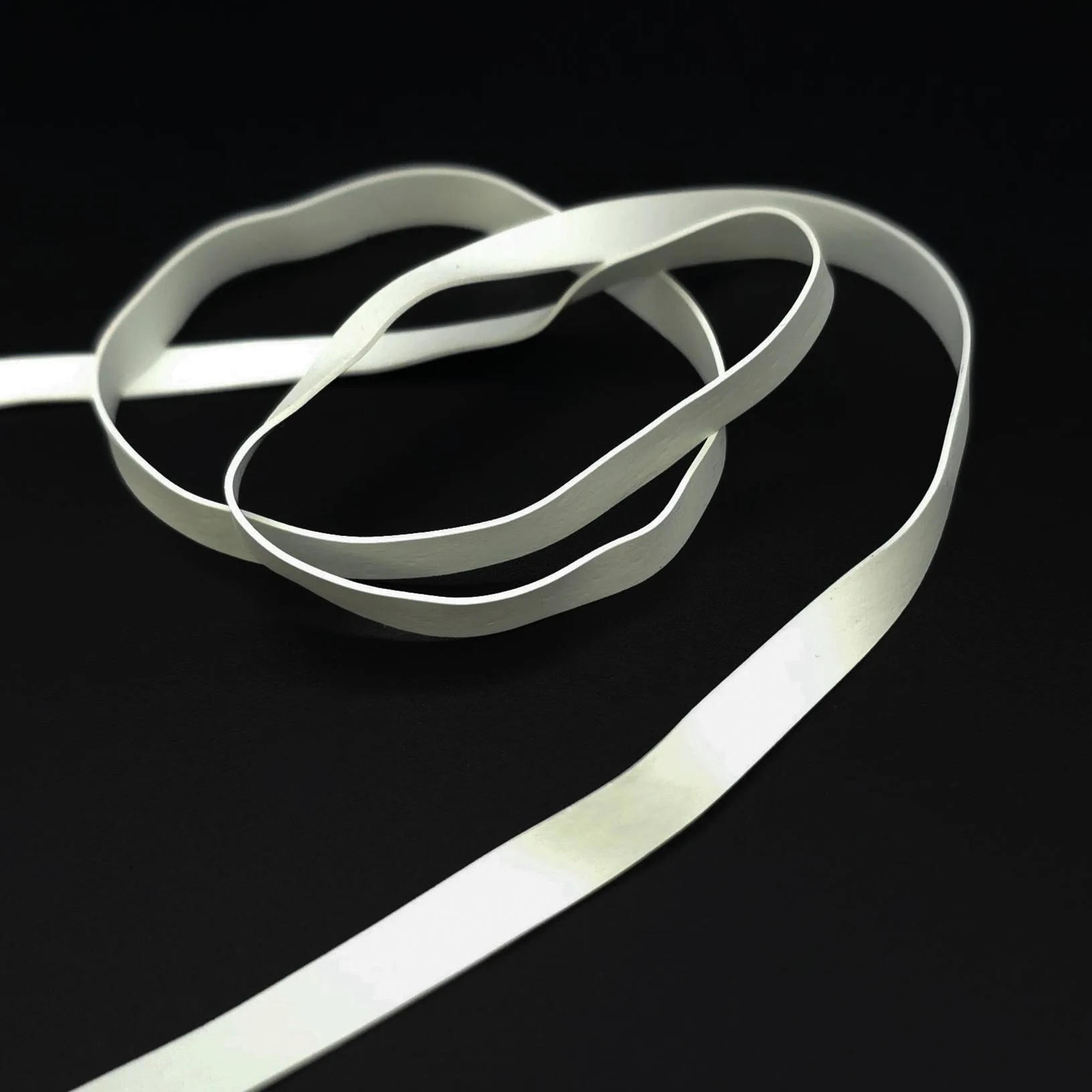
Chlorine Resistant Rubber Elastic | White
Who Should Use Chlorine Resistant Elastic
Best for
- Swimwear seams and waistbands that face regular pool or ocean exposure
- Swim diaper leg and waist openings that must stay snug after repeated washes
Not for
- Projects that need a soft, wide waistband with a fabric cover, where a narrower rubber elastic may feel too firm
- Garments washed in hot dryer cycles without fabric protection, since heat can still age any elastic