Quick answer
Choose a thin, holed blade for soft cheeses and a sturdy forked-tip blade for hard cheeses; for large wheels, a double-handled knife gives you the control you need.
Why blade design matters for cheese texture
Soft cheeses like Brie, Camembert, and blue cheese are delicate. A thick blade can crush or pull the cheese, ruining its texture. The narrow, sharp blade of a soft cheese knife glides through without sticking, thanks to holes that prevent adhesion.
Hard and semi-hard cheeses, such as aged Gouda or Parmesan, require a sturdy blade with a sharp edge. A soft cheese knife is too thin and may bend or break. A hard cheese knife also often includes a forked tip, which helps you serve the sliced cheese directly.
When a double-handled knife is the right choice
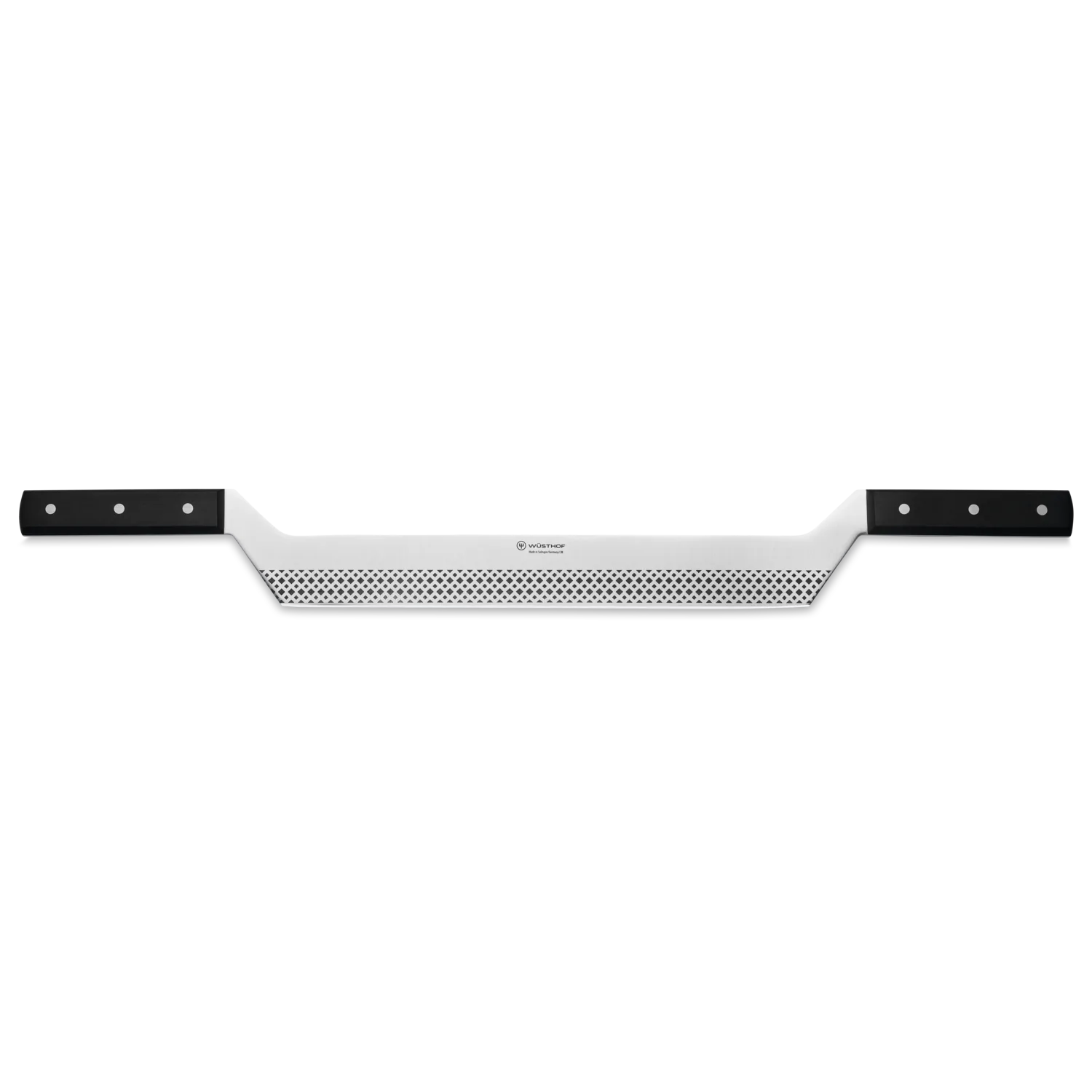
If you regularly serve whole wheels or large wedges of cheese, a standard knife may not give you enough control. A double-handled cheese knife lets you apply even pressure with both hands, making it easier to slice through a large piece cleanly. The etched blade also prevents sticking, so your slices stay intact.
The cheese plane alternative for thin, even slices
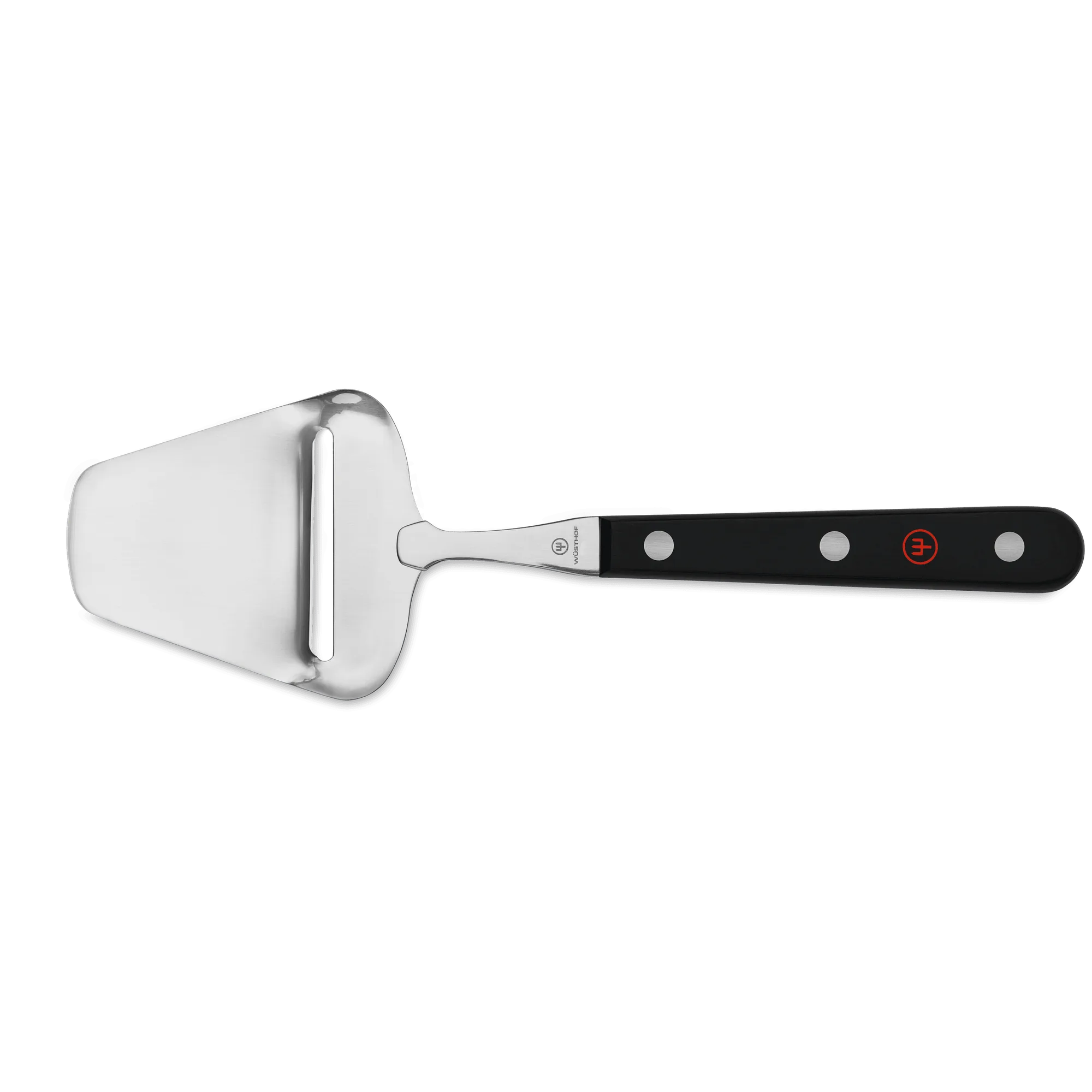
For semi-hard and hard cheeses, a cheese plane creates very thin, uniform slices. It is ideal for topping burgers, grilled cheese sandwiches, or charcuterie boards. Keep in mind that a cheese plane does not work well on soft or crumbly cheeses, and it is not designed for cutting wedges.
How to decide which cheese knife to buy
- For soft cheeses (Brie, Camembert, blue cheese): Choose a soft cheese knife with a thin, narrow blade and holes. The holes prevent sticky cheese from clinging, and the thin blade won't crush the delicate interior. Look for a knife specifically labeled for soft cheese; avoid using it on hard cheese.
- For hard and semi-hard cheeses (aged Gouda, Parmesan, Cheddar): Choose a hard cheese knife with a sturdy blade and a forked tip. The fork lets you serve slices without touching the cheese, and the strong blade can cut through dense textures. A cheese plane is also an option if you need thin, even slices for sandwiches or burgers.
- For whole wheels or large wedges: Choose a double-handled cheese knife. The two handles give you better leverage and control, and the etched blade reduces sticking. This knife is not necessary if you only serve pre-cut wedges or small blocks.
Product details at a glance
-
Classic 5" Soft Cheese Knife: The narrow, sharp blade glides through creamy cheese without pulling or crushing it. Classic holes prevent stickier cheese from clinging. Not recommended for firmer, semi-hard cheeses. This is your go-to knife for soft-ripened and blue cheeses; avoid using it on hard cheese to prevent blade damage.
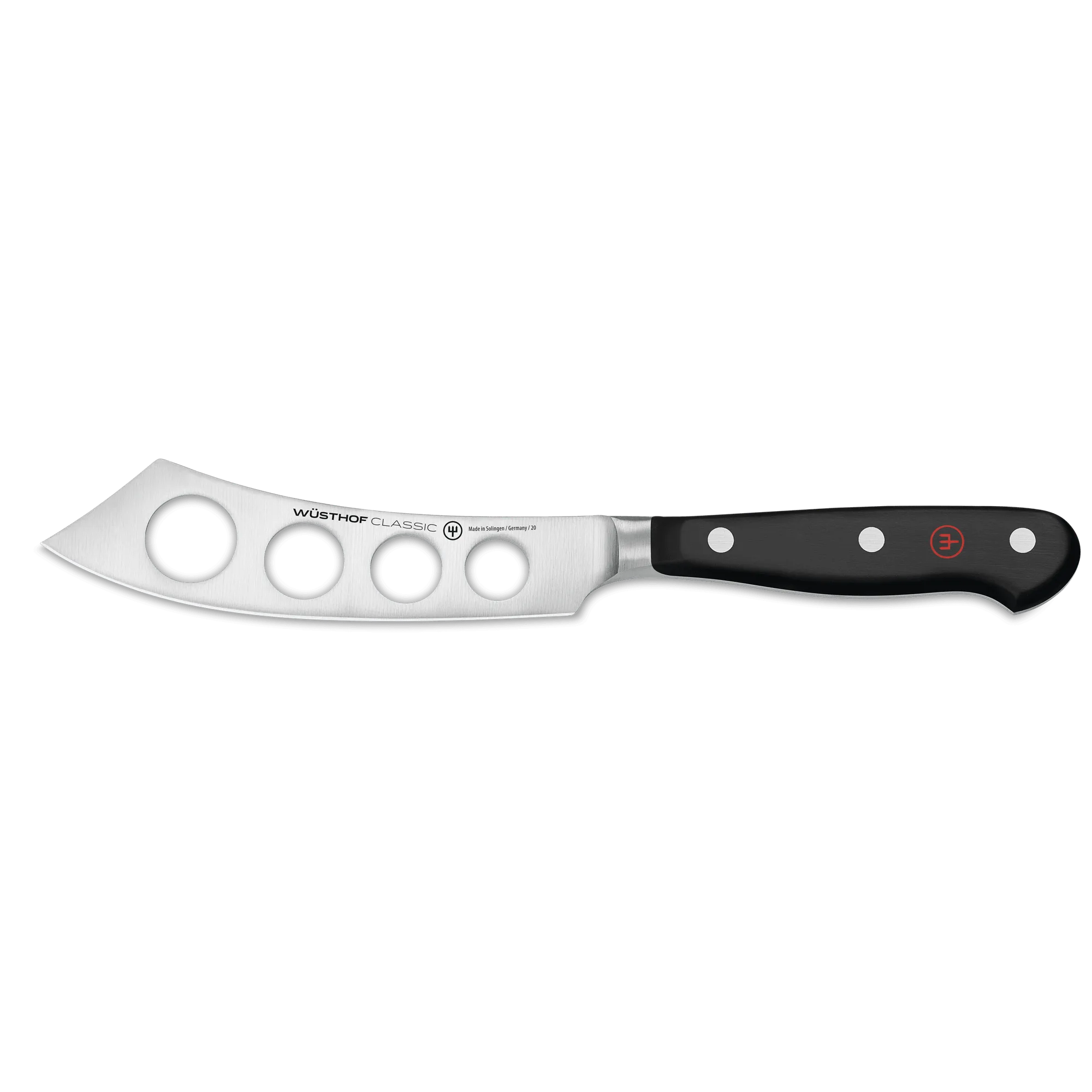
Classic 5" Soft Cheese Knife
-
Classic 4 3/4" Hard Cheese Knife: Equipped with a sturdy blade and a sharp edge, and a forked tip for serving the sliced cheese. The forked tip lets you pick up and serve each slice without touching the cheese, making it perfect for hard and semi-hard cheeses.
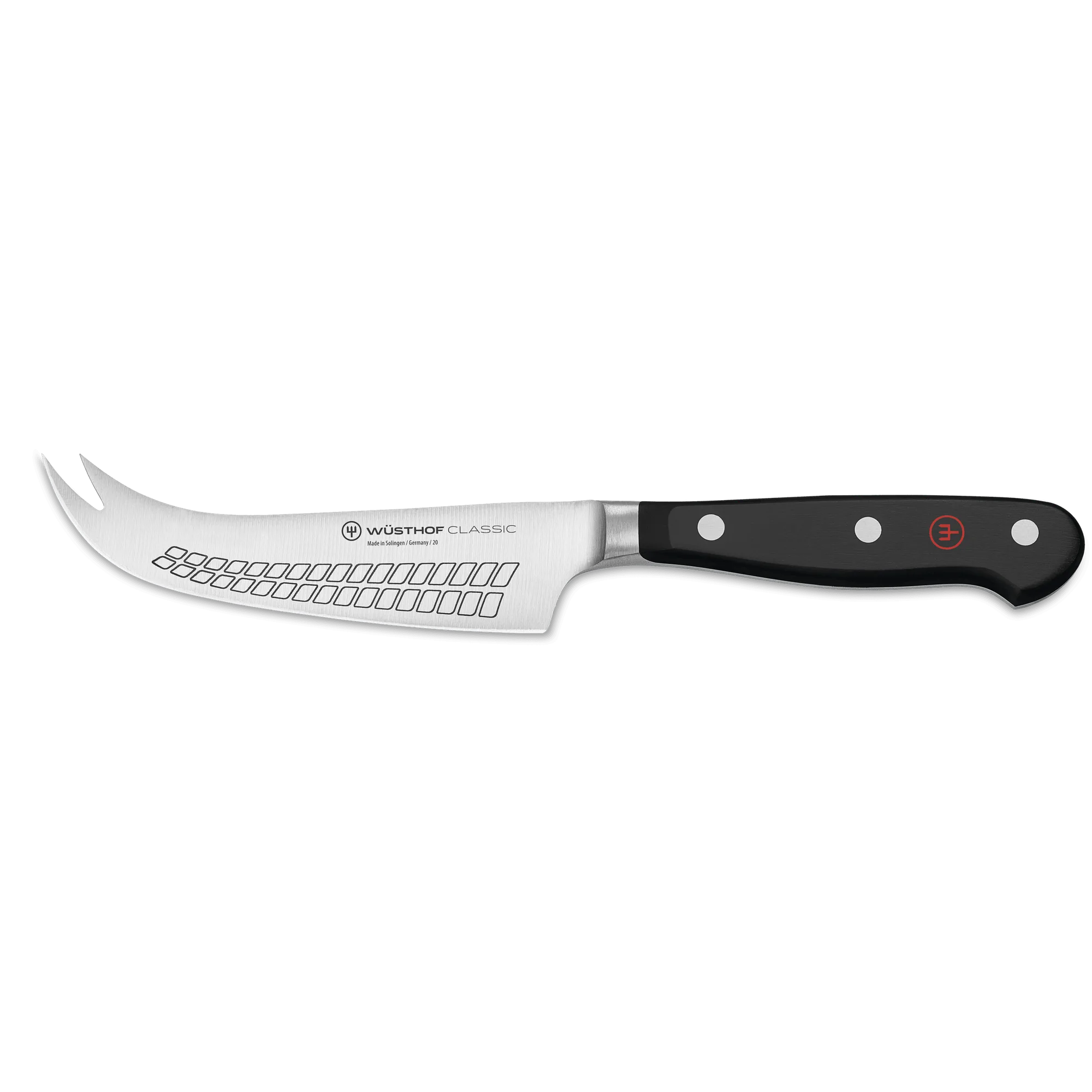
Classic 4 3/4" Hard Cheese Knife
-
Double-Handle 12" Cheese Knife: Two handles allow hands to maintain control while the sharp blade does the rest. Special etching prevents cheese from sticking or pulling. Ideal for slicing whole wheels or large wedges where a single-handled knife would be unwieldy.
-
Gourmet 4 3/4" Cheese Plane: Creates even slices of semi-hard or hard cheese, perfect for burgers, grilled cheeses and other sandwiches. If you need uniform thin slices for cooking or presentation, this plane is more efficient than a knife.
Who should buy which knife
Best for
- Home cooks who serve a variety of cheese textures and want one knife per type
- Entertainers who often present whole cheese wheels or large wedges
- Sandwich lovers who need thin, uniform slices of hard cheese
Not for
- Anyone who only eats pre-sliced cheese and does not cut wheels at home
- Chefs who need a single all-purpose knife (cheese knives are task-specific)