Quick answer
Match the light to your plants first: low-demand plants in a shallow tank can thrive under a simple freshwater LED bar with a plant-friendly colour temperature, while high-demand carpets and deep tanks need more intensity and adjustability than a basic bar provides.
Colour temperature matters more than wattage claims
For freshwater planted tanks, the spectrum should support photosynthesis without washing out fish colour. A natural 9000 K output sits in a cool, bright range that favours plant growth and lifts blue tones in fish. Warm white household-style light can look yellow and may not deliver the blue energy plants use. Check the stated colour temperature and whether the maker describes the spectrum for plants, not just 'bright'.
Tank depth changes the bar you need
Light falls off with distance from the surface. A low-profile LED bar mounted close to the water suits shallow tanks and low-to-medium plants. Deeper tanks or tall decor that blocks light need a higher-output fixture or multiple bars. If a product listing does not state a depth or intensity figure, treat that as a limit: do not assume it will reach a carpeting plant at 60 cm.
Running cost and heat are part of the decision
LED bars use far less electricity than traditional fluorescent tubes, and lower heat output means less strain on a lid or canopy. That matters if the light runs eight hours a day. A basic bar with no dimmer still works for low-demand setups, but you cannot tune intensity down for algae control or up for a demanding carpet.
Decision rules for planted tank lighting
- Low-demand plants, shallow tank: Choose a freshwater LED bar with a plant-friendly colour temperature such as 9000 K and mount it close to the surface. Prioritise even coverage over extra features. If the listing gives no depth guidance, keep the bar for tanks where light reaches the substrate easily.
- Carpets or high-demand plants: Look for a fixture with stated higher output or dimming and multiple bars if needed. A single basic bar is unlikely to drive a demanding carpet in a deep tank. Ask for intensity or depth data before buying; absence of data is a red flag for high-demand setups.
- Long daily photoperiod: Favour LED over fluorescent for lower energy use and heat. Set a consistent timer rather than judging by eye. A bar rated for lower consumption reduces running cost but does not replace a timer.
- Colour and fish appearance: A cool 9000 K bar lifts blue tones and looks crisp. If you prefer a warmer look, accept that it may not match the plant-focused spectrum. Decide whether plant growth or a warm aesthetic is the priority before choosing colour temperature.
Product facts to weigh
-
LED BAR FRESHLIFE: Freshlife LED bars use a natural 9000 K light intended to favour plant photosynthesis and stimulate oxygen production. That colour temperature suits freshwater planted tanks where you want plant growth and clear blue tones without a complex fixture.
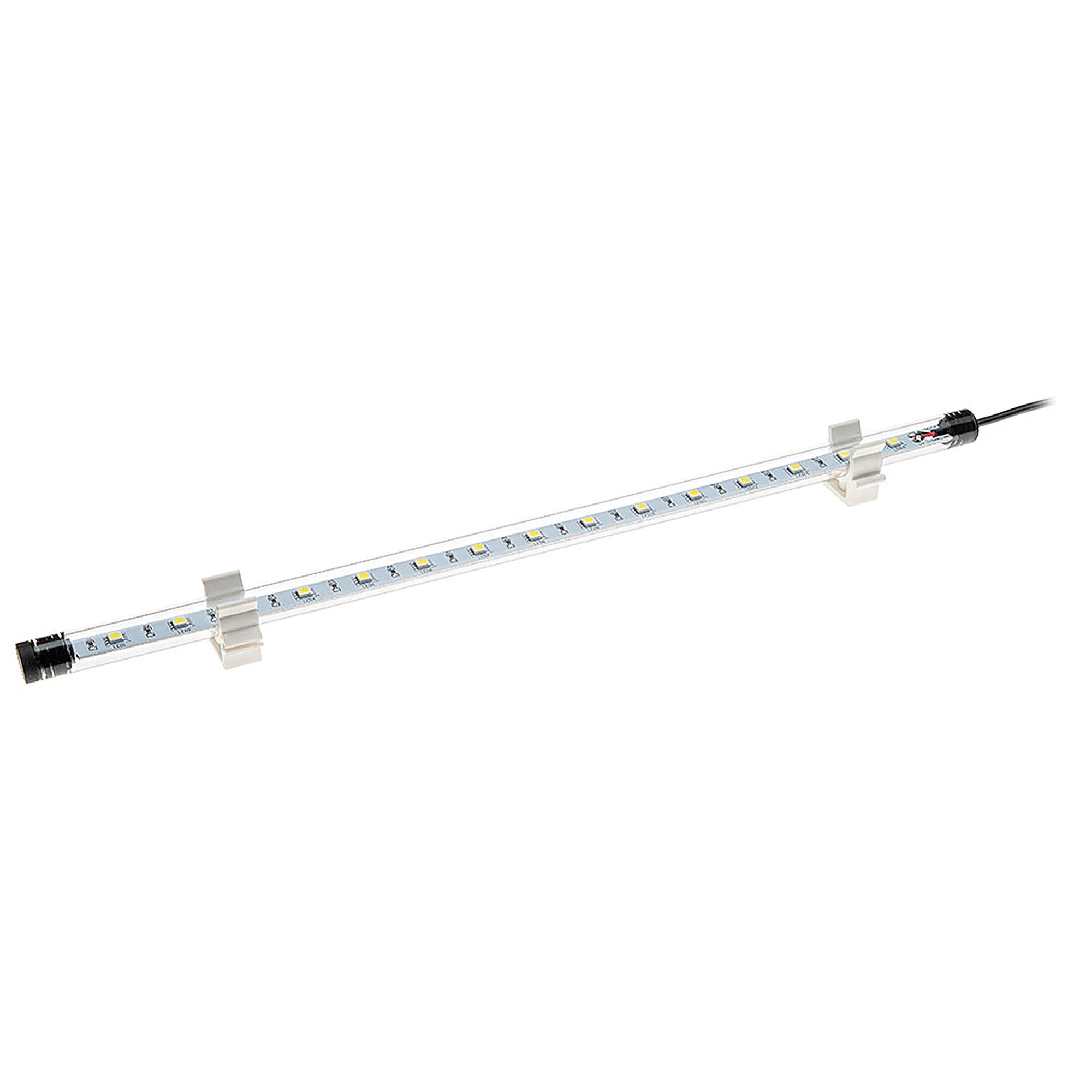
LED BAR FRESHLIFE
-
LED BAR FRESHLIFE: The bars are rated to use up to 50% less energy than traditional fluorescent lighting. Lower running cost makes a simple bar easier to justify for daily eight-hour lighting schedules.
Who this approach suits
Best for
- Beginners with low-demand plants in shallow freshwater tanks
- Keepers who want a simple, low-energy LED bar without dimming controls
Not for
- High-demand carpet plants in deep tanks
- Aquarists who need programmable intensity or spectrum control