Choosing the right backpack is about more than just capacity or features—it's about how the pack fits your unique body. A well-fitted pack distributes weight evenly, reduces fatigue, and prevents discomfort, allowing you to focus on your mission, whether that's a summit push or a daily commute. This guide will walk you through the essentials of pack fit, helping you understand your body type and select a pack that feels like it was made for you.
At Mystery Ranch, we design packs with adjustability and comfort in mind. From our iconic Hotshot series to versatile daypacks like the Pintler Pack, our lineup offers options for every body type. By the end of this guide, you'll know how to measure your torso, adjust your pack correctly, and choose a model that supports your adventures.
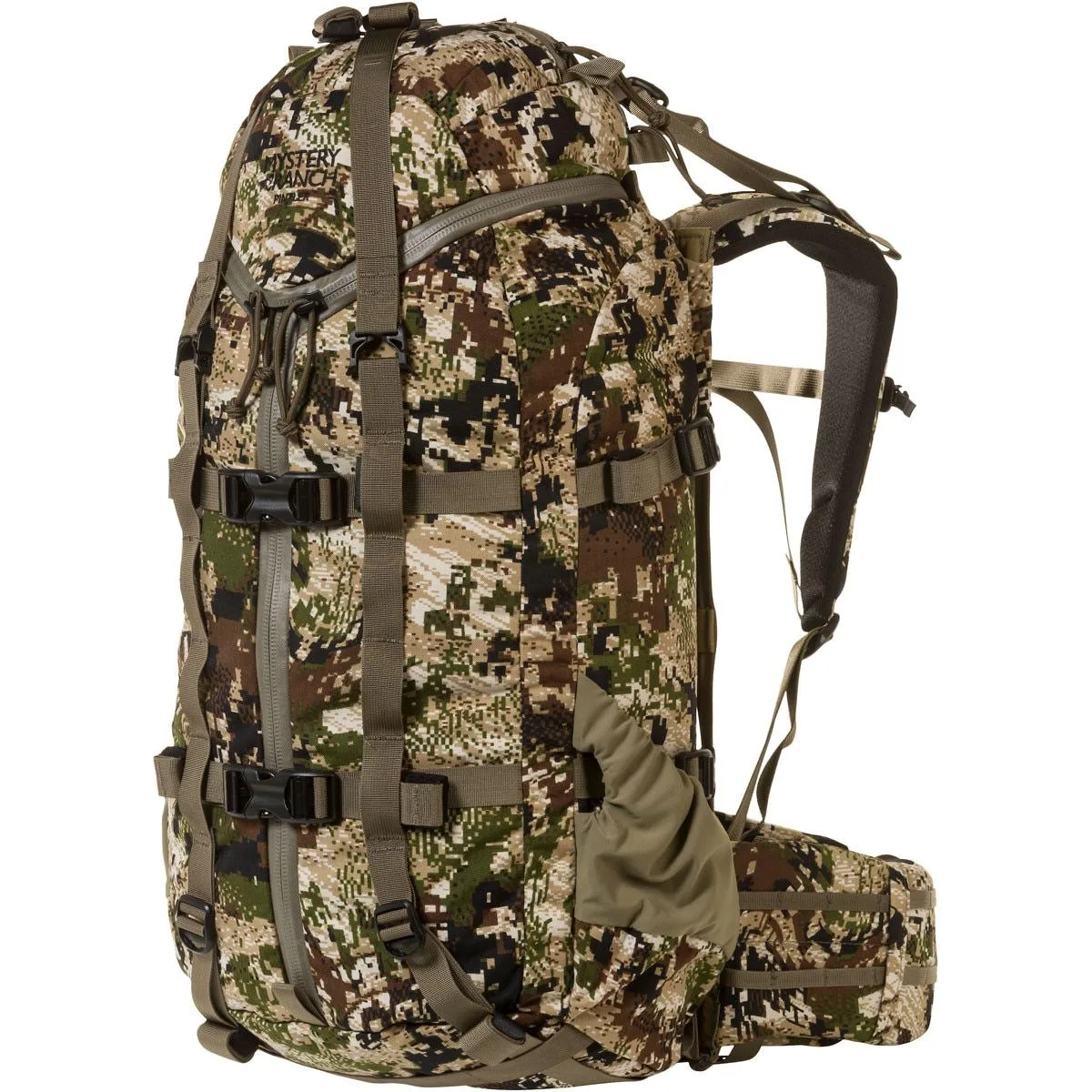
Pintler Pack
Why Pack Fit Matters
A backpack that doesn't fit properly can turn a pleasant hike into a painful ordeal. When a pack is too long or too short for your torso, the hip belt may ride on your waist instead of your hips, causing chafing and poor weight distribution. Similarly, shoulder straps that are too wide or narrow can dig into your shoulders or slide off, leading to instability.
Proper fit ensures that the majority of the load is carried by your hips, which are strong enough to support heavy weights, while the shoulder straps stabilize the pack without bearing excessive pressure. This not only enhances comfort but also improves your balance and reduces the risk of injury. Investing time in finding the right fit pays off in every mile you carry your pack.
- Measure your torso length from the C7 vertebra (the bony bump at the base of your neck) to your iliac crest (the top of your hip bones).
- Try packs with loaded weight to assess how they feel under real conditions.
- Adjust the hip belt so it sits snugly on your hip bones, not your waist.
Understanding Torso Length and Hip Belt Sizing
Torso length is the most critical measurement for pack fit. It determines the size of the pack frame and how the shoulder straps and hip belt align with your body. Most packs come in sizes like Small, Medium, Large, or offer adjustable torso lengths. To measure, tilt your head forward and find the prominent bone at the base of your neck (C7). Place your hands on your hips with thumbs pointing back—the top of your thumbs indicates your iliac crest. Measure the distance between these two points.
Hip belt sizing is equally important. The hip belt should wrap around your iliac crest, with the padded portion covering your hip bones. It should be snug but not restrictive, allowing you to move freely. Many Mystery Ranch packs, such as the Hotshot and Blitz 35, offer adjustable hip belts that accommodate a range of sizes, ensuring a custom fit.
- Use a flexible measuring tape and a friend's help for accurate torso measurement.
- When trying on a pack, loosen all straps, put it on, and tighten the hip belt first, then the shoulder straps.
- The hip belt should sit at a 45-degree angle over your hips, not parallel to the ground.
Matching Packs to Body Types
Different body types require different pack features. For those with a longer torso, look for packs with extended frame lengths or adjustable torso systems. The Metcalf 50 Pack and Metcalf 100 Pack offer excellent adjustability for taller individuals. Conversely, if you have a shorter torso, a pack with a shorter frame or a women's-specific model like the Women's Hotshot CF can provide a better fit.
For broader shoulders, consider packs with wider shoulder straps that distribute weight without pinching. The Mountain Ruck features contoured straps that accommodate a variety of shoulder widths. If you have a narrower build, a pack with more adjustable straps, such as the Flight Monster Pack, allows you to cinch everything down for a secure fit.
- Women's-specific packs often have narrower shoulder straps and a contoured hip belt for a better fit.
- For petite frames, look for packs with shorter torso lengths and adjustable sternum straps.
- If you have a long torso, prioritize packs with extended sizes or adjustable torso systems.
Adjustability Features to Look For
Modern packs come with a variety of adjustment points that allow you to fine-tune the fit. Key features include adjustable torso lengths, movable shoulder straps, and sternum straps that slide up and down. The Blitz 35, for example, features an adjustable yoke that lets you dial in the perfect torso length, while the Pintler Pack offers multiple attachment points for the sternum strap.
Another crucial feature is load-lifter straps, which pull the top of the pack closer to your body, improving stability and weight transfer. The Anchor Point Cube and The Brain are examples of packs that incorporate load lifters effectively. When trying on a pack, adjust these straps to see how they affect the fit—they should be angled at about 45 degrees from the shoulder straps.
- Look for packs with adjustable yokes or torso lengths to accommodate changes in clothing layers.
- Test the sternum strap placement—it should sit at your collarbone level, not too high or low.
- Load-lifter straps should be tightened to create a slight tension, pulling the pack into your back.
Testing the Fit: What to Check Before You Buy
Before purchasing a pack, spend time testing it with realistic weight. Load it with 15-20 pounds and walk around the store. Pay attention to pressure points, whether the hip belt stays in place, and if the shoulder straps feel balanced. The pack should feel like an extension of your body, not a burden.
Check that you can move your arms freely without the shoulder straps digging in, and that the pack doesn't bounce when you walk. If possible, try the pack with the types of clothes you'll wear during your activities. A pack that fits perfectly over a t-shirt might feel different over a bulky jacket.
- Simulate the weight you'll carry on your typical trips to ensure the pack handles it comfortably.
- Ask a friend or store associate to check the fit from behind—the pack should sit level and not tilt.
- If you're between sizes, choose the larger size and use the adjustment system to fine-tune the fit.
Finding the right pack for your body type is a game-changer for comfort and performance. By understanding your measurements and testing adjustability features, you can select a pack that feels custom-made. Explore our range of packs, from the versatile Hotshot to the rugged Mountain Ruck, and experience the difference a proper fit makes on your next adventure.