Quick answer
For day hikes, choose a hip pack that balances capacity with organization and stays secure while moving. Look for adjustable straps, multiple compartments, and durable materials.
Why a hip pack works for day hikes
A hip pack keeps your hands free and your weight centered on your hips, reducing shoulder strain compared to a sling or small backpack. It's ideal for carrying a phone, keys, snacks, a map, and a light layer without the bulk of a full pack.
The main trade-off is limited volume: most hip packs hold between 2 and 6 liters. If you need to carry a water bottle, rain jacket, or lunch, check the pack's capacity and external attachment options.
What to look for in a day-hike hip pack
Look for a hip pack with a padded belt that distributes weight evenly and doesn't dig in. Adjustable straps let you cinch it tight so it won't bounce when you walk or run. A sternum strap can add extra stability.
Organization matters: multiple compartments and internal loops help you separate small items like a headlamp, multitool, or first-aid supplies. A flat rear pocket is useful for a phone or map you want quick access to.
How to choose your day-hike hip pack
- Capacity: Estimate what you need to carry: phone, keys, wallet, snacks, a map, and maybe a light jacket. A 2–4 liter pack covers basics; 5–6 liters allows for extra layers or a small water bottle.
- Fit and stability: The hip belt should sit on your hip bones, not your waist. Look for a padded, contoured belt with a secure buckle. A compression strap can reduce bounce on uneven terrain. Try the pack with a typical load and walk around the store or your home to check for shifting.
- Organization: Choose a pack with at least two compartments: one for flat items like a phone or map, another for small gear. Internal loops or elastic webbing help secure items so they don't jostle.
Product highlights
-
Suur-kukkaro hip pack: The interior features three large elastic webbing loops, two small and one large flat compartment, tie-down loops, and a loop surface for attaching hook-backed organizers. This level of internal organization lets you keep small hiking essentials like a headlamp, knife, and first-aid items separate and easy to find without digging.
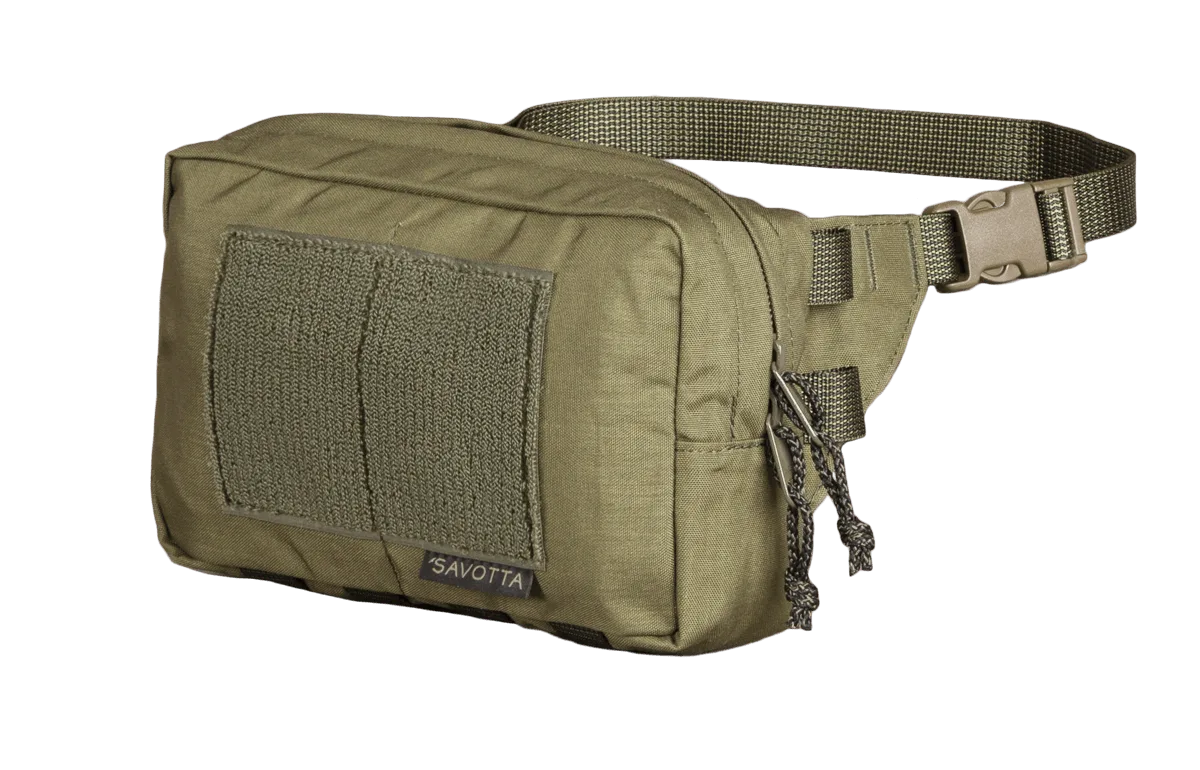
Suur-kukkaro hip pack
Who should buy a hip pack for day hikes
Best for
- Hikers who want to travel light and fast without a backpack
- Day hikers who carry only essentials like phone, keys, snacks, and a map
Not for
- Hikers who need to carry a full water bottle, rain jacket, lunch, and extra layers
- Anyone planning a hike longer than a few hours where more gear is required