Quick answer
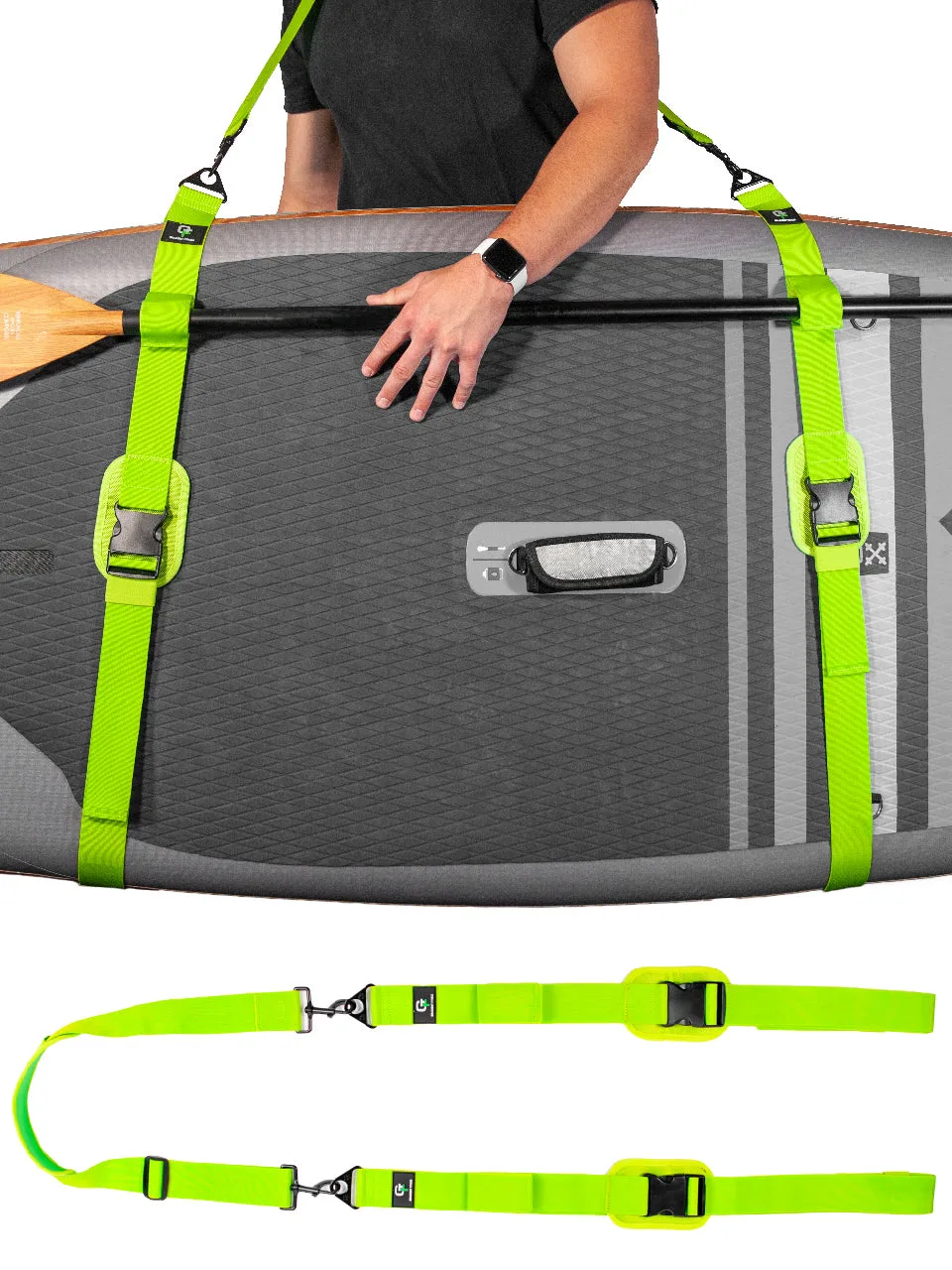
For most paddlers, a single fully adjustable padded carry strap is enough: it fits any board or kayak width, spreads weight across your shoulder, and keeps your paddle attached. Choose a strap with front-of-buckle padding if you carry a finished hull, and add a second strap only when your boat is heavy enough that one shoulder carry becomes a strain. If you are moving ski boots or gym gear instead, a boot carrier strap or lifting straps solve a different problem.
lifting straps
Fit first: width, padding, and buckle placement
A kayak or SUP carry strap does not need to match your board's width the way a roof rack pad does. The strap wraps around the hull and tightens, so an adjustable tri-glide piece covers everything from a narrow surf ski to a wide inflatable SUP. What actually changes the carry is where the padding sits. Padding in front of the buckles protects the board surface from metal and plastic rubbing as you walk, which matters most on glossy composite hulls and finished wood boards.
Check the strap path before you tighten. The webbing should sit under the hull near the balance point, not at the very nose or tail, so the board hangs level. If the strap slides toward one end, you are carrying aft of the center of gravity and will fight the board the whole way.
- Adjustable tri-glide hardware: one size covers any board or kayak width
- Padding in front of buckles: protects the hull surface during the walk
- Extra paddle loops: hook-and-loop closure keeps your paddle with you
- Heavy-duty nylon buckles and reinforced metal hardware: built for outdoor use
Weight and distance: when one strap is not enough
The honest limit is not a number printed on the strap. It is how far you carry the boat and how the weight feels on one shoulder. A light recreational kayak or inflatable SUP moved 30 feet from car to water is a one-strap job. A heavy sit-on-top or a rigid board carried several hundred yards to a launch is a two-person or two-strap job, because a single shoulder carry puts the whole load on one side of your body.
If you regularly carry alone, plan the route before you lift. Set the board down at the halfway point if you need to, and keep the strap adjusted so the hull rides high on your shoulder rather than hanging at your hip. A strap that lets the board swing low is the fastest way to strain your lower back.
One-person carry: what to look for in the strap
For solo transport, prioritize a strap that stays put and leaves your hands free. The extra paddle loops on a carry strap are not a gimmick: hook-and-loop closure means you can hook your paddle to the strap and walk with both hands available for a gate, a railing, or a boat ramp. Reinforced metal hardware and heavy-duty nylon buckles matter more here than on a strap you only use with a partner, because a solo carry puts repeated load on the same connection points.
If your boat is heavy enough that a shoulder carry still strains you, the better answer is often a cart or a second person, not a thicker strap. No strap removes weight; it only redistributes it.
Carry strap decision rules
- Board or kayak under about 40 lb, short carry: One fully adjustable padded strap is enough. Tighten it under the balance point so the hull hangs level. Buy one strap, not two.
- Heavy sit-on-top or rigid SUP, long carry: A single shoulder carry puts the full load on one side. Use two people, a cart, or two straps before you add padding. Weight is the deciding factor, not strap thickness.
- Finished or glossy hull: Choose a strap with padding in front of the buckles so metal and plastic do not rub the surface. Padding placement matters more than padding thickness.
- Carrying board and paddle together: Look for hook-and-loop paddle loops so your hands stay free for gates, railings, and ramps. Solo carry is easier with your paddle attached.
Products that fit these carry decisions
- Kayak/SUP Carry Strap: Fully adjustable tri-glide piece, padding in front of buckles, extra hook-and-loop straps to hold your paddle, heavy-duty nylon buckles, and reinforced metal hardware. One strap covers any board or kayak width, the padding protects the hull surface, and the paddle loops let you carry board and paddle in a single trip.
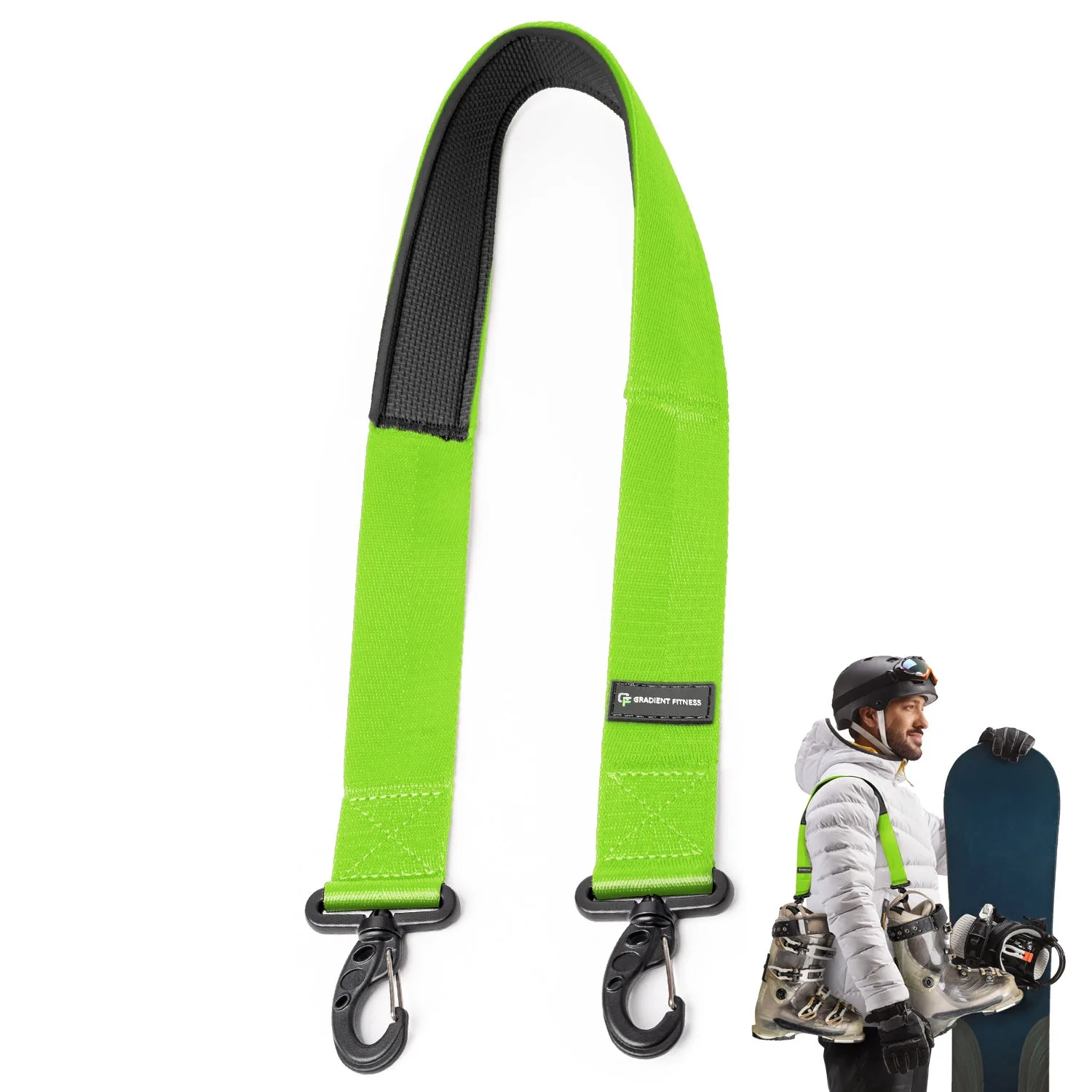
- Snowboard & Ski Boot Carrier Strap: Convenient portability lets you sling heavy ski boots over your shoulder, freeing your hands for other gear, and reduces strain by distributing weight evenly across arms, shoulders, and back. If your carry problem is boots or bulky gear rather than a hull, this is the strap that solves it; the same weight-distribution logic applies to any shoulder carry.
Who this carry strap approach fits
Best for
- Paddlers carrying one kayak or SUP a short distance from car to water
- Solo paddlers who want their paddle attached and both hands free
- Owners of finished or glossy hulls who want buckle padding against the surface
Not for
- Paddlers regularly moving a heavy boat several hundred yards alone, who should use a cart or a second person
- Anyone expecting a strap to reduce the actual weight of the boat