Quick Answer
For most CNC routing of wood, plastics, and foam, a low-helix up-cut spiral bit with AstraHP coating is a reliable choice. Choose the 1/4″ shank for rigidity and faster feed rates, or the 1/8″ shank for fine detail work and lower cutting forces.
Why Low Helix?
Low-helix up-cut spiral bits, also called open helix or slow helix, have less twist than standard spiral bits. This reduces material uplift while cutting, which is especially helpful when machining plastics and acrylics where chip welding can be a problem.
The reduced twist also allows for faster milling in wood and non-ferrous materials. You get the chip evacuation benefits of an up-cut bit without the aggressive pull that can lift thin workpieces or cause chatter in lighter CNC machines.
Shank Size: 1/8″ vs 1/4″
The 1/4″ shank is the standard for most CNC routers. It provides more rigidity, less deflection, and allows you to take deeper cuts at higher feed rates. If your spindle has a 1/4″ collet, this is the more versatile choice.
The 1/8″ shank is ideal for fine detail work, small lettering, and intricate inlays where you need a smaller tool diameter. It also reduces cutting forces, which can be beneficial on lighter machines or when cutting thin materials. However, the smaller shank is more prone to deflection, so you must reduce feed rates and depth of cut accordingly.
AstraHP Coating Trade-Offs
AstraHP coating is a hard, lubricious coating that reduces friction and heat buildup. This extends tool life and improves finish, especially in plastics and non-ferrous materials. The trade-off is that coated bits cost more than uncoated carbide, but the longer life and better finish often justify the premium.
For wood, the coating also helps prevent pitch buildup, keeping the cutting edge sharper for longer. If you mostly cut softwoods or plywood, an uncoated bit might be sufficient, but for abrasive materials like MDF or plastics, the coating is a worthwhile investment.
Decision Rules for Choosing a Low-Helix Up-Cut Spiral Bit
- Material Type: If you mainly cut plastics, acrylics, or foam, a low-helix up-cut bit is a strong choice because it reduces material uplift and chip welding. For wood and plywood, it also works well, but you may want to consider a down-cut or compression bit for the cleanest top edges.
- Shank Size: Choose a 1/4″ shank bit when you need rigidity and faster feed rates for general routing. Choose a 1/8″ shank bit for fine detail work, small lettering, or when your spindle is limited to 1/8″ collets. Remember to reduce feed rates and depth of cut with the smaller shank. Check your spindle collet size before buying—1/4″ and 1/8″ are the most common, but some spindles only accept one.
- Coating Choice: If you cut abrasive materials like MDF, plastics, or non-ferrous metals, opt for the AstraHP coated bit to reduce friction and extend tool life. For occasional wood cutting, an uncoated bit may be more economical.
- Corner Radius: A 0.001″ corner radius is nearly sharp and provides a clean cut with minimal corner stress. This is fine for most routing, but if you need a stronger cutting edge for heavy cuts, consider a bit with a larger radius.
Product Facts
-
1/8″ Low-Helix Up-Cut Spiral Bit (AstraHP Coated): This 1/8″ low-helix up-cut spiral bit has a 1/4″ shank, a 3/4″ length of cut, and a 0.001″ corner radius. The small diameter and low helix make it excellent for fine detail work and faster milling in wood and plastic, but the 1/4″ shank provides more rigidity than a typical 1/8″ shank bit.
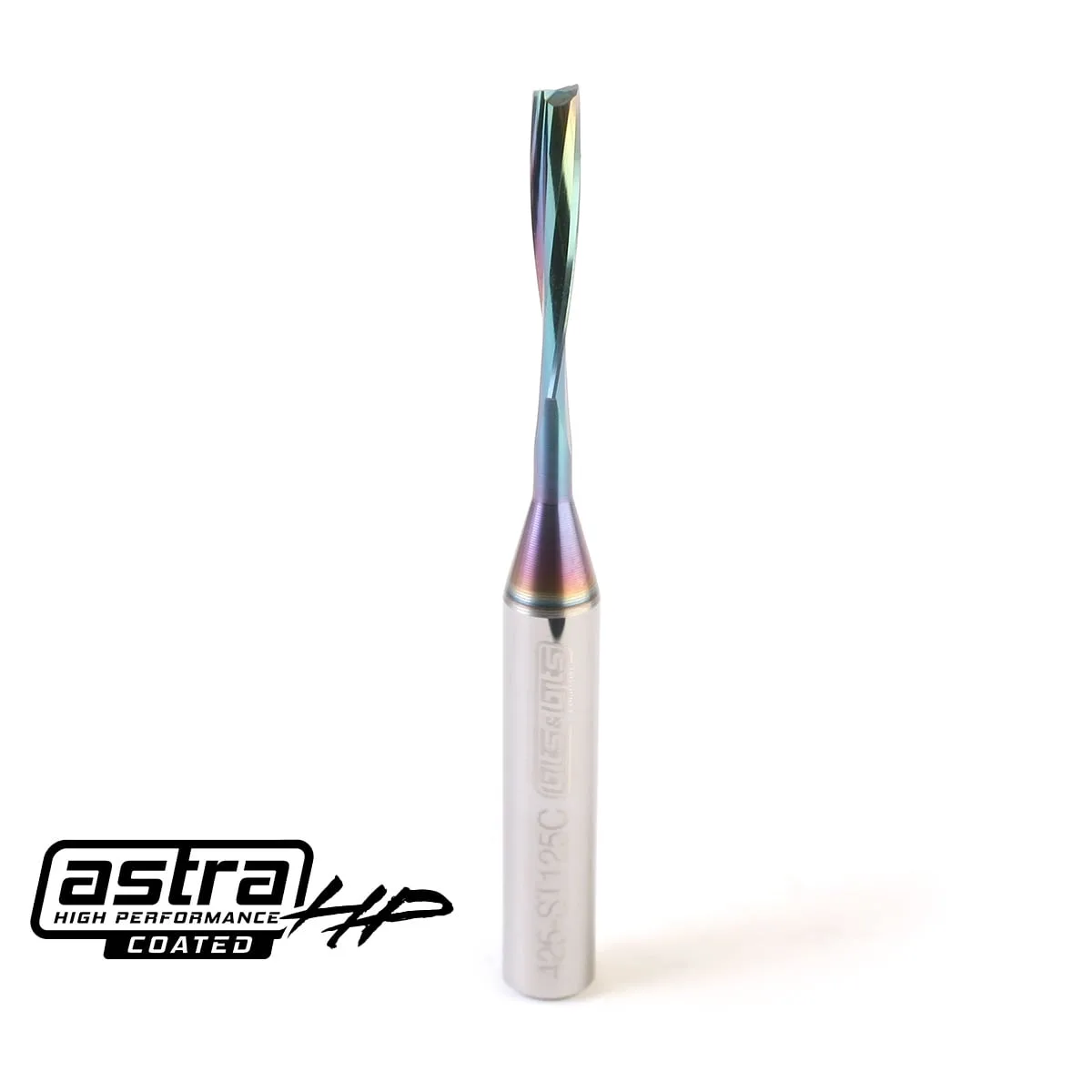
1/8″ Low-Helix Up-Cut Spiral Bit (AstraHP Coated)
-
1/4″ Low-Helix Up-Cut Spiral Bit (AstraHP Coated): This 1/4″ low-helix up-cut spiral bit has a 1/4″ shank, a 1″ length of cut, and a 0.001″ corner radius. The 1/4″ diameter and longer cut length make it a versatile choice for general CNC routing, especially in plastics, acrylics, foam, and wood.
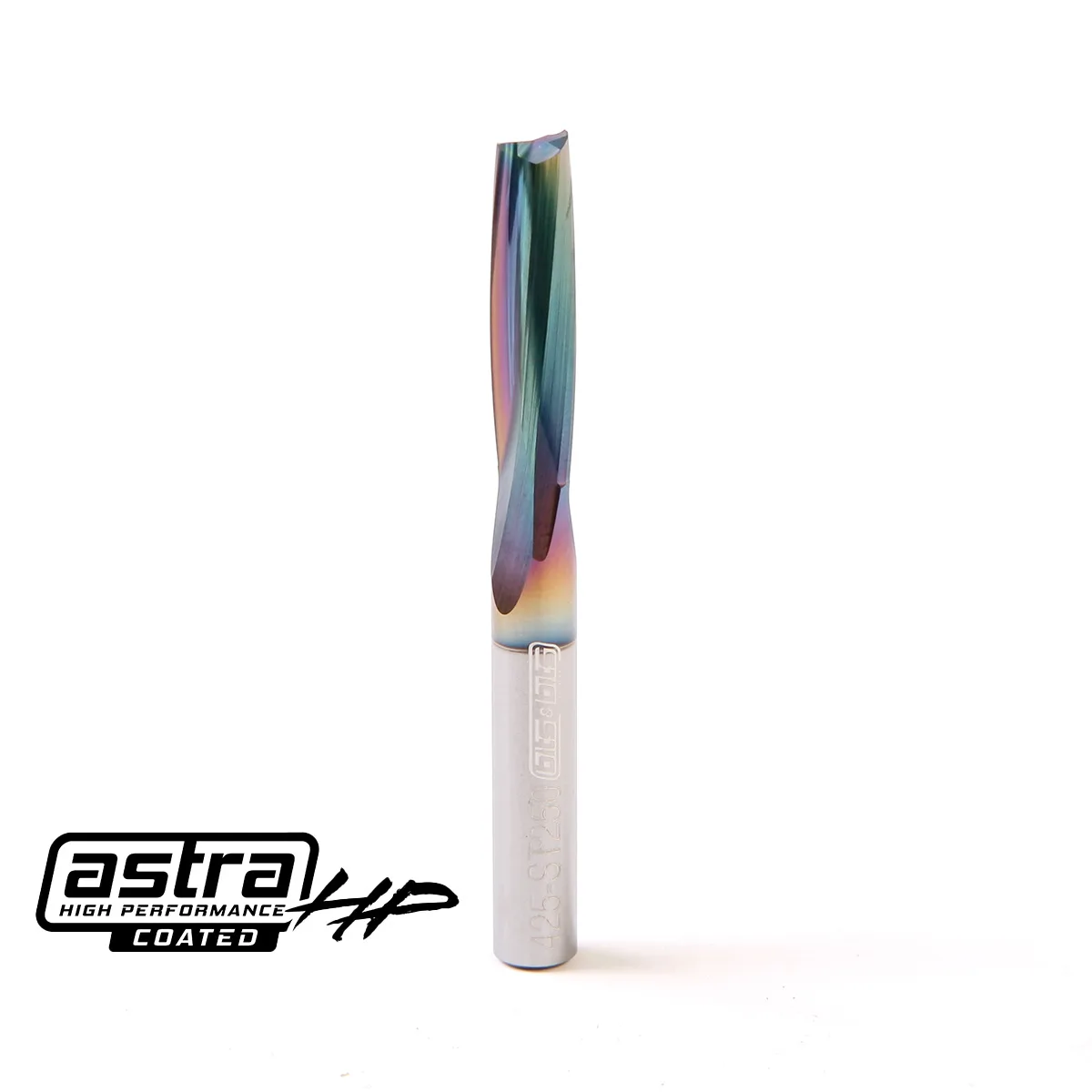
1/4″ Low-Helix Up-Cut Spiral Bit (AstraHP Coated)
Who Should Choose These Bits?
Best for
- CNC hobbyists and professionals cutting plastics, acrylics, foam, and wood
- Users needing a versatile spiral bit that balances chip removal and edge quality
Not ideal for
- Projects requiring a perfectly clean top edge on plywood (consider a down-cut or compression bit)
- Heavy-duty roughing in hard metals (consider a bit with a larger corner radius or different geometry)