Quick answer
Choose a nylon mallet with a compact head (around 1.5 inches) for precise, mark-free work on small jewellery components, and a well-balanced wooden handle for controlled strikes.
Why choose nylon over steel or rawhide?
Nylon is softer than steel but harder than rawhide, making it ideal for forming and seating metal without leaving dents or transfer marks. It's also more durable and consistent than rawhide, which can dry out and crack.
Head size matters for precision
A 1.5-inch (approx. 38mm) nylon face is ideal for jewellers working on rings, bezels, and small assemblies. It delivers force exactly where needed without bruising surrounding areas. Larger heads are better for bigger sheet metal work but can be clumsy for fine detail.
Decision rules for choosing a nylon mallet
- Head size: Choose a 1.5-inch (38mm) head for jewellery-scale work, or a larger head for bigger metal forming tasks.
- Handle material: A shaped wooden handle provides good balance and shock absorption. Avoid metal handles that can transmit vibration.
- Face condition: Inspect the nylon faces for smoothness. Rough or pitted faces can still mark your work. Replace or sand the faces if they become damaged.
Featured product
-
Mark-Free Forming — Nylon Head Mallet, 1.50 Inch Diameter, Wooden Handle: The Mark-Free Forming — Nylon Head Mallet has compact 1.5-inch (approx. 38mm) nylon faces that land force precisely on small components without bruising the areas either side of the strike. This makes it ideal for truing rings, forming bezels, and seating assemblies where a steel face would leave marks.
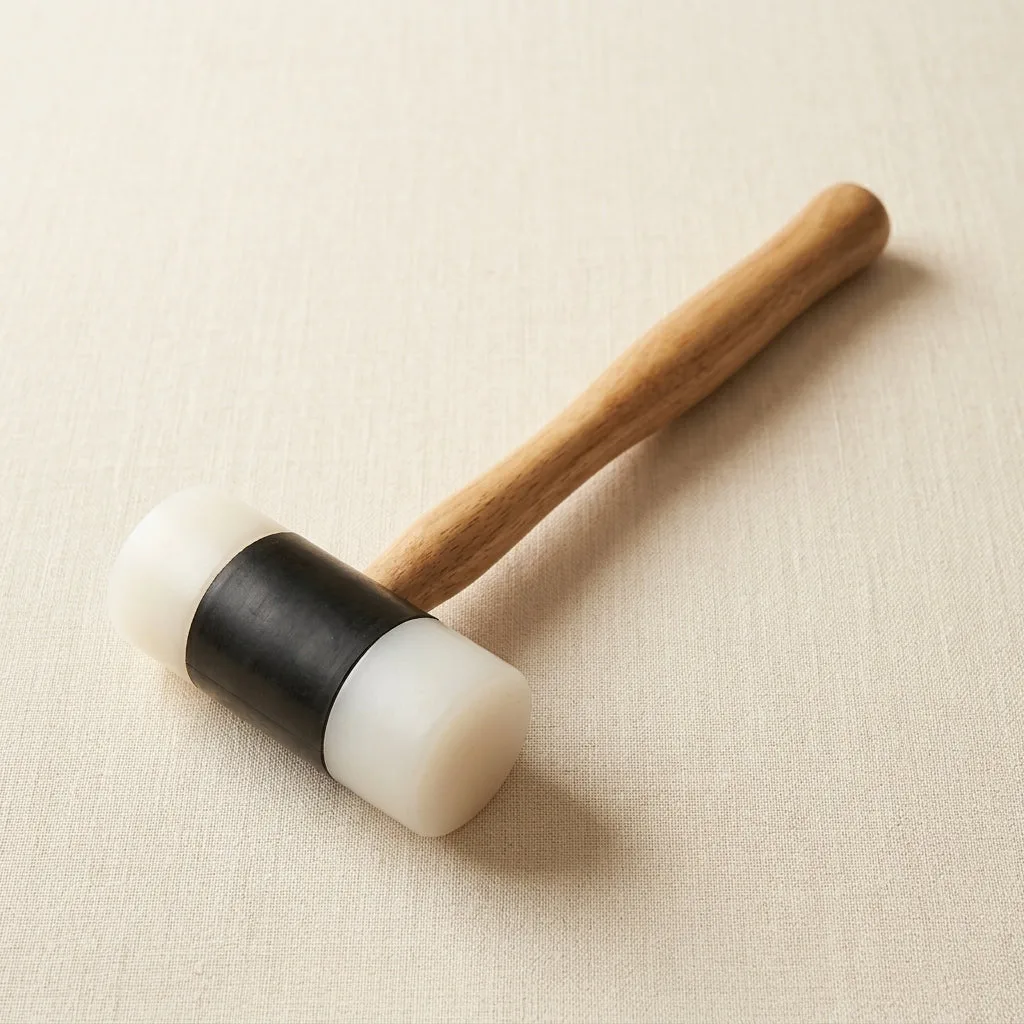
Mark-Free Forming — Nylon Head Mallet, 1.50 Inch Diameter, Wooden Handle
Who is this mallet for?
Best for
- Jewellers and silversmiths forming rings, bezels, and small assemblies
- Anyone needing a mark-free strike on polished or finished metal
Not for
- Heavy forging or shaping thick sheet metal (choose a steel or rawhide mallet instead)
- Tasks requiring a dead-blow effect (choose a shot-filled mallet)