Why Syringe Choice Matters for Your Diabetic Pet
Managing diabetes in pets requires consistent, accurate insulin dosing. The right syringe helps ensure your pet receives the correct dose with minimal discomfort. When choosing a syringe, the key factors are compatibility with U-40 insulin, the capacity (how many units you can draw), and the needle gauge (which affects injection comfort).
A mismatch—such as using a U-100 syringe for U-40 insulin—can lead to dangerous dosing errors. This guide focuses on U-40 syringes designed specifically for pets on U-40 insulin, helping you make an informed choice.
What the U-40 Insulin Syringe Offers
-
U-40 Insulin Syringe 1/2cc 29g – 100 Count: Precision-engineered U-40 insulin syringes designed for accurate dosing and comfortable injections up to 20 units. This confirms the syringe is purpose-built for U-40 insulin, eliminating dosing confusion and supporting typical pet insulin doses.
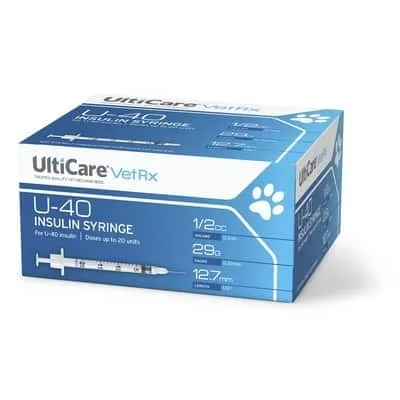
U-40 Insulin Syringe 1/2cc 29g – 100 Count
-
U-40 Insulin Syringe 1/2cc 29g – 100 Count: 1/2cc capacity (up to 20 units); 29-gauge fine needle. The 1/2cc barrel matches common pet insulin volumes, and the fine 29g needle helps reduce injection pain—important for daily injections.
-
U-40 Insulin Syringe 1/2cc 29g – 100 Count: Clear, easy-to-read markings ensure precise measurement. Accurate reading of units is critical for safe dosing; clear markings reduce the risk of under- or overdosing.
Understanding Syringe Capacity and Dosing
The 1/2cc capacity of these syringes means they can hold up to 20 units of U-40 insulin. This is a common range for many small to medium pets. If your pet's prescribed dose is near or above 20 units, you may need a larger capacity syringe. Always confirm the dose with your veterinarian and choose a syringe that allows you to draw the exact dose without needing to measure at the extreme end of the barrel.
Using a syringe that is too large for the dose can make it harder to read the markings accurately. A 1/2cc syringe is a good middle ground for most pet insulin regimens.
Needle Gauge and Injection Comfort
The 29-gauge needle is among the finer sizes commonly available for insulin syringes. A finer needle means a smaller puncture, which can reduce pain and tissue trauma. This is especially important for pets that require daily injections, as comfort can affect their cooperation and stress levels.
While a 29g needle is generally comfortable, very thick or long-haired pets may benefit from a slightly longer needle to ensure the insulin reaches the subcutaneous layer. The supplied information does not specify needle length, so consult your vet if you have concerns about proper injection depth.
Choosing Between Syringe Sizes
Select the smallest capacity that comfortably holds your pet's dose. This improves reading accuracy and reduces waste. If your pet's dose is 15 units, a 1/2cc syringe is a better fit than a 1cc syringe.
- 1/2cc (up to 20 units): Best for pets with doses up to 20 units. Offers finer graduations for small dose adjustments. Common for cats and small dogs.
- 1cc (up to 40 units): Suitable for larger doses. The markings are spaced further apart, which may reduce precision for small doses. Not covered by the supplied product record.
What to Check Before You Buy
Before purchasing, confirm that your pet's insulin is U-40 (not U-100). The syringe must match the insulin concentration. Also verify the needle gauge and length with your veterinarian, especially if your pet has sensitive skin or a thick coat.
The 100-count pack provides a convenient supply for daily injections, reducing the frequency of reordering. Store syringes in a clean, dry place and dispose of used needles safely according to local regulations.
What the Supplied Information Does Not Cover
The product record does not specify needle length, which can affect injection technique. It also does not include instructions for drawing insulin or injection site rotation. Always follow your veterinarian's guidance for proper injection technique and disposal of sharps.