Quick answer
For most babies, a freezer teether made of food-grade silicone offers the most soothing relief, while wooden teethers provide a firmer surface for older teethers. Choose based on your baby's age, chewing style, and how much cooling you need.
Freezer vs. wooden: what’s the real difference?
Freezer teethers are designed to be chilled, which adds a numbing effect that can be especially comforting for sore, swollen gums. They are typically made of soft, food-grade silicone, which is gentle on tender gums and easy for small hands to grip.
Wooden teethers, on the other hand, offer a firmer chewing surface that can help massage gums and provide resistance as your baby's teeth emerge. They are often combined with silicone elements for variety. Wooden teethers are not meant to be chilled, but they can be treated with food-safe oils to keep the wood smooth.
The best choice depends on your baby’s stage and preferences. Some babies love the cold, while others prefer the firmness of wood. Many parents find it useful to have both types on hand.
Safety first: what to look for
No matter which type you choose, safety is paramount. Look for teethers made from 100% food-grade silicone and free from BPA, lead, phthalates, and cadmium. These materials are non-toxic and safe for your baby to chew.
Check that the teether is the right size for your baby’s hands. A simple, easy-to-grip design helps your baby hold it independently, which encourages self-soothing and motor skill development.
Always follow the manufacturer’s instructions for cleaning and chilling. Some teethers can be chilled but not frozen, as freezing may make them too hard or damage the material.
Caring for your teether
Proper care extends the life of your teether and keeps it hygienic. Silicone teethers can be easily cleaned with soapy water. Wooden teethers should be wiped clean and occasionally treated with beeswax or coconut oil to maintain smoothness and prevent cracking.
Always inspect the teether for signs of wear or damage, and replace it if you notice any cracks or loose parts. This is especially important for wooden teethers, which can splinter if not maintained.
Decision rules for choosing a teether
- If your baby is under 6 months: Choose a soft, all-silicone teether that can be chilled. The cold helps soothe early teething pain, and the soft material is gentle on delicate gums. Check that the teether is easy to grip and not too large for your baby's mouth.
- If your baby is 6 months or older: Consider a wooden teether with silicone parts. The firmer wood provides resistance for chewing, while the silicone offers a softer texture for variety. Make sure the wood is smooth and free of splinters; re-treat with coconut oil or beeswax as needed.
- If your baby has a strong chew: Opt for a wooden teether that can withstand more pressure. Wood is more durable than silicone alone and offers a satisfying chew surface. Inspect the teether regularly for wear or damage.
Teethers worth considering
-
Freezer Teether - Chamomile | Speckled Cappuccino: The Freezer Teether - Chamomile is made from soft, food-grade silicone and can be chilled, not frozen. It is approximately 3.5" x 2" and easy to clean with soapy water. This freezer teether is ideal for babies who need cold relief on sore gums, and its compact size is perfect for little hands to hold.
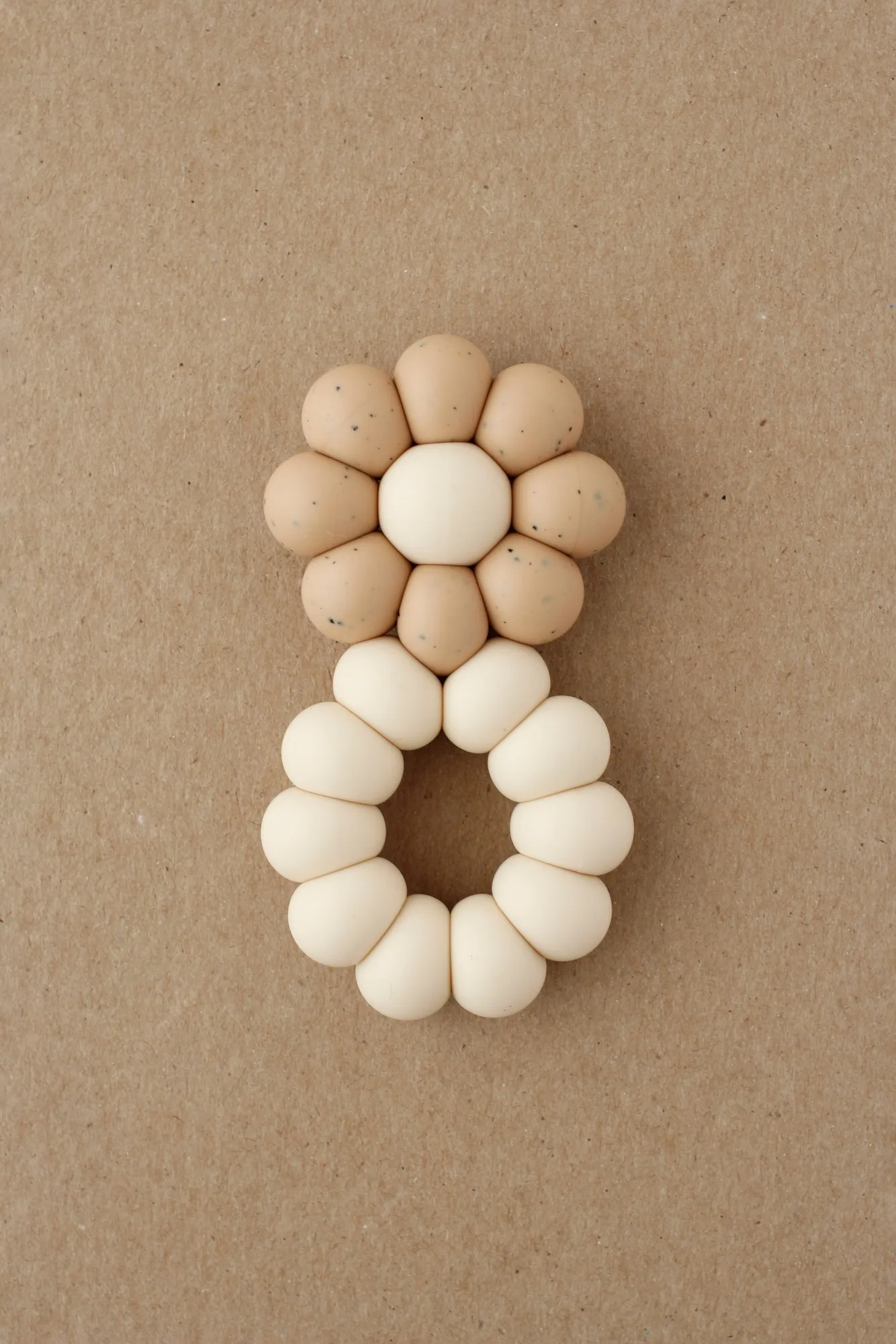
Freezer Teether - Chamomile | Speckled Cappuccino
-
Teether - Dany | Maple: The Teether - Dany combines soft silicone with beechwood treated with coconut oil, offering a mix of textures for chewing. This wooden teether provides a firmer surface for older babies who prefer more resistance, and the wood can be re-treated with beeswax or coconut oil for longevity.
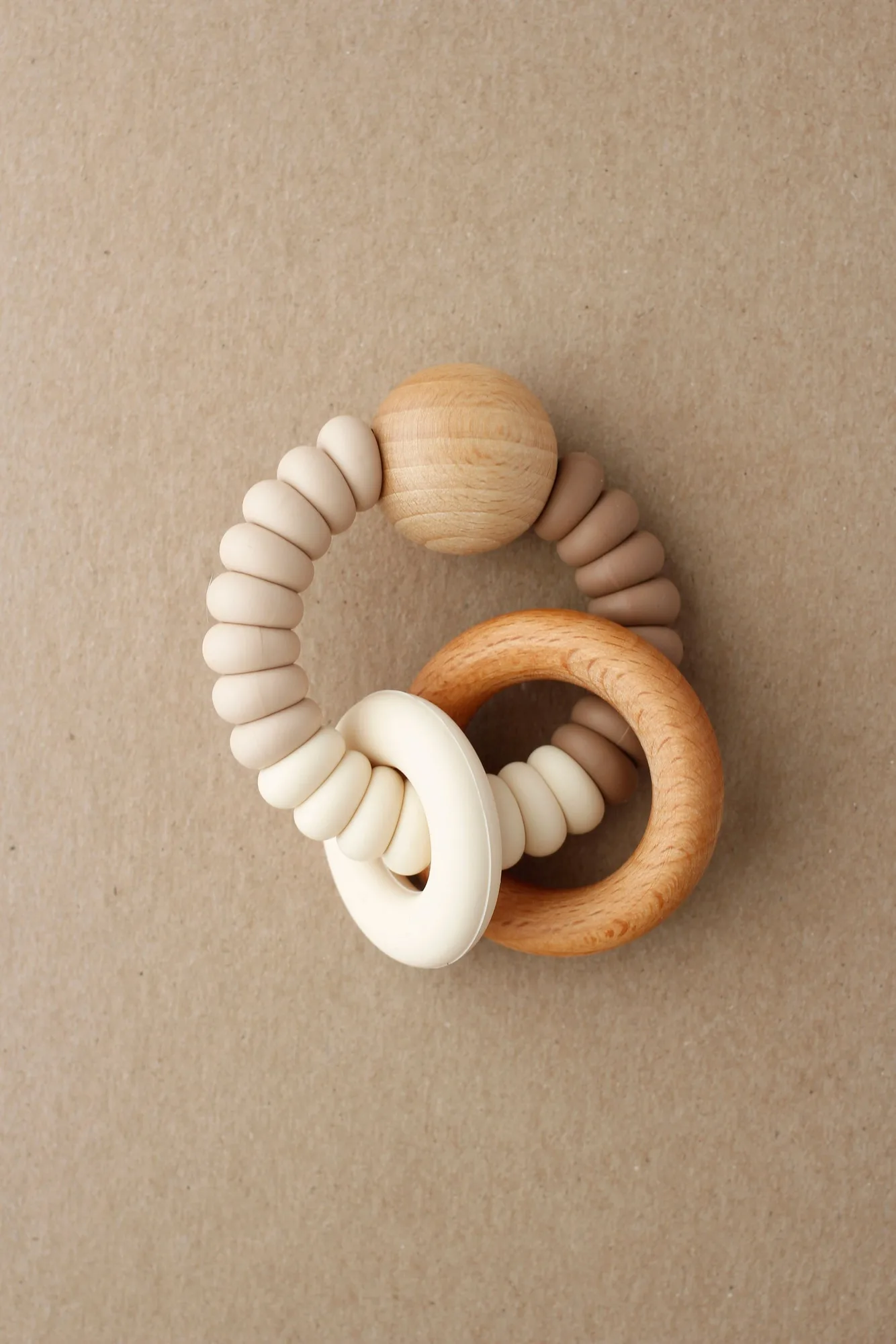
Teether - Dany | Maple
Which teether fits your baby?
Best for
- Babies who need cold relief for sore gums
- Older babies who prefer a firmer chewing surface
- Parents who want a non-toxic, durable option
Not for
- Babies who dislike cold sensations
- Parents who prefer a single-material teether without wood