Start with one slice, not a full meal
The easiest way to introduce the Chop 'n' Play Fruits & Veggies set is to hand your child one piece of play food, the wooden knife, and the cutting board. Show them how the knife slices through the food, then let them try. The set is recommended for kids 2 years and over, so the first sessions work best when you keep the task simple and let your child repeat the same cut until they are comfortable.
This is a pretend cutting food toy, not a real kitchen lesson. The goal is the motion and the sound: each slice makes a "crunch" that mimics real chopping. That immediate feedback is what keeps toddlers engaged, and it gives you a natural moment to name the fruit or vegetable as they cut.
What the set gives you to work with
-
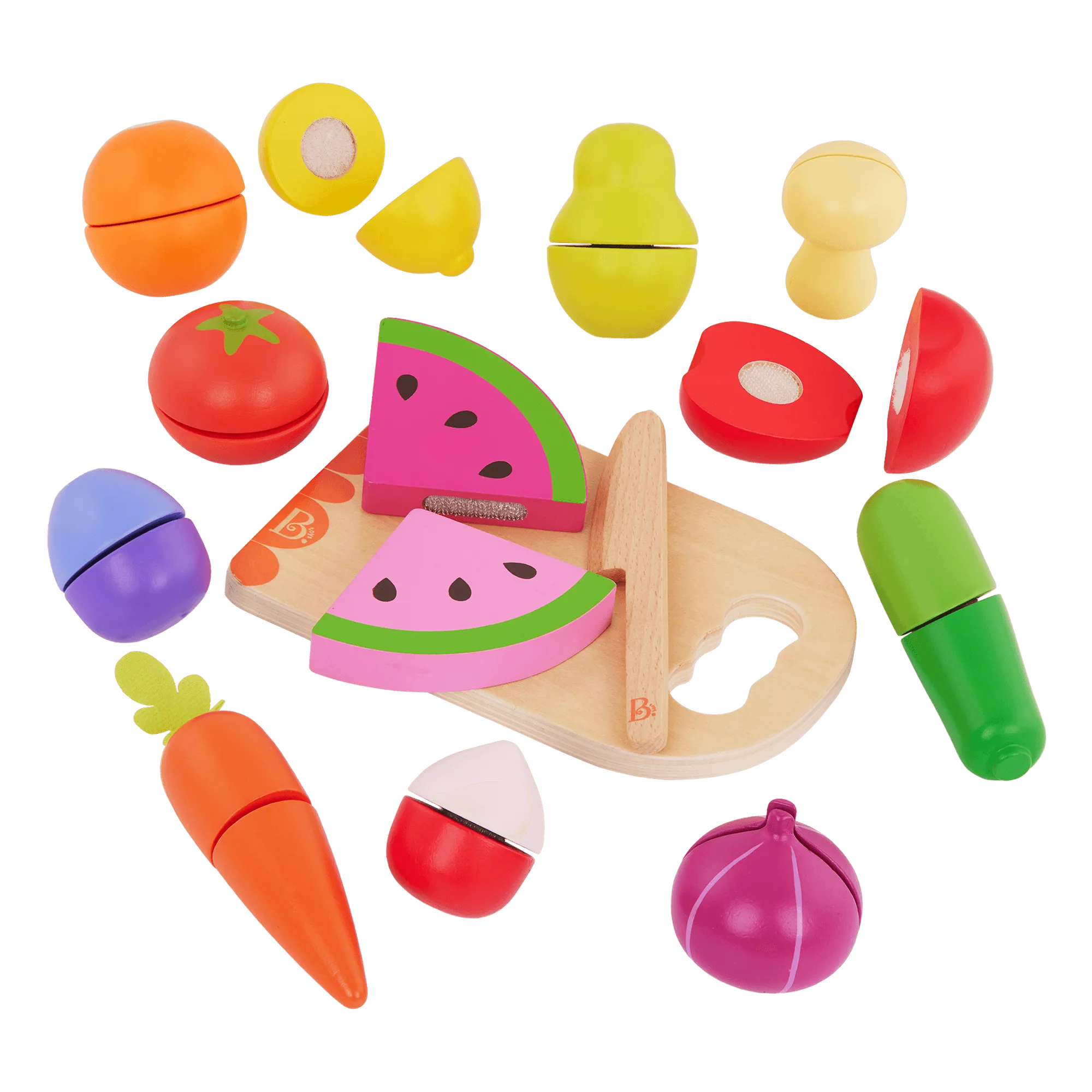
Chop 'n' Play - Fruits & Veggies: The wooden play-food set comes with 12 colorful and sliceable veggies and fruit. Twelve pieces give you enough variety to build a pretend meal without overwhelming a toddler, and the sliceable design is the core of the cutting activity.
Chop 'n' Play - Fruits & Veggies
-
Chop 'n' Play - Fruits & Veggies: The set includes a wooden knife and cutting board for prepping ingredients. Having the right tools in the box means you can start the cutting routine immediately, without hunting for extra play kitchen accessories.
-
Chop 'n' Play - Fruits & Veggies: The toy food is described as tiny-hands friendly. That matters for a 2-year-old who is still developing a grip; the pieces are sized to be held and sliced with less frustration.
A simple pretend-cooking routine for ages 2+
This routine uses only what comes in the set. It works best on a low table or the floor, where your child can reach the cutting board comfortably.
- Set out the board and one food: Place the cutting board in front of your child and put one sliceable fruit or vegetable on it. Keep the rest of the set nearby but out of the way so the first cut is not a choice overload.
- Model one slow slice: Hold the wooden knife and cut through the food once, letting your child hear the crunch. Then hand them the knife and let them try the same piece.
- Name what they cut: As they slice, say the name of the fruit or vegetable. This turns a fine-motor activity into a low-pressure vocabulary moment without turning play into a lesson.
- Add a second ingredient: Once the first piece is cut, offer another. Two or three pieces are enough for a first session; the goal is a finished "dish," not a full pantry.
- Serve and share: Move the cut pieces to a plate or bowl and pretend to share the meal. The set is designed for pretend play, so following your child's lead here keeps the routine playful.
Kitchen pretend play ideas that use the whole set
Once your child is comfortable with one slice, you can build small kitchen pretend play ideas around the set. Try a "fruit salad" session where they cut several fruits and stir them in a bowl, or a "soup" session where vegetables go into a pot. You do not need extra toys for either; the 12 pieces and the cutting tools are enough to suggest a meal.
For a slightly longer activity, set up a pretend market: arrange the uncut foods on one side of the table and the cutting board on the other. Your child can choose an ingredient, bring it to the board, and cut it before adding it to the meal. This adds a simple sequence of choose, carry, cut, and share without requiring reading or rules.
What to check as your child plays
The supplied information does not include care instructions or safety warnings beyond the age recommendation, so these checkpoints focus on what you can observe during play.
- Comfort with the knife: Watch whether your child can hold the wooden knife and make a slicing motion without frustration. If not, model the motion again or switch to a simpler piece.
- Interest in the crunch: The sliceable design is the main feedback loop. If your child stops cutting to mouth the pieces, redirect to the board and show the cut again.
- Attention span: Two or three pieces may be enough for a 2-year-old. End the session while it is still fun rather than pushing for a full meal.
What the supplied information does not settle
The product record confirms the age recommendation, the 12 sliceable foods, and the included knife and cutting board. It does not list materials beyond "wooden," specific cleaning instructions, or small-part warnings. If you need those details before buying, check the packaging or the product page directly rather than assuming. The record also does not describe how the pieces attach or separate, so the exact cutting mechanism is best understood by trying it with your child.