Quick answer
Choose a citrine cabochon when you need a smooth, domed stone for wire wrapping, pendant setting, or a polished display piece. Choose a citrine druze cluster when you want a natural, sparkling formation for a shelf, altar, or wholesale inventory. The cabochon is a finished jewelry component; the druze cluster is a specimen or decorative object.
What each form actually is
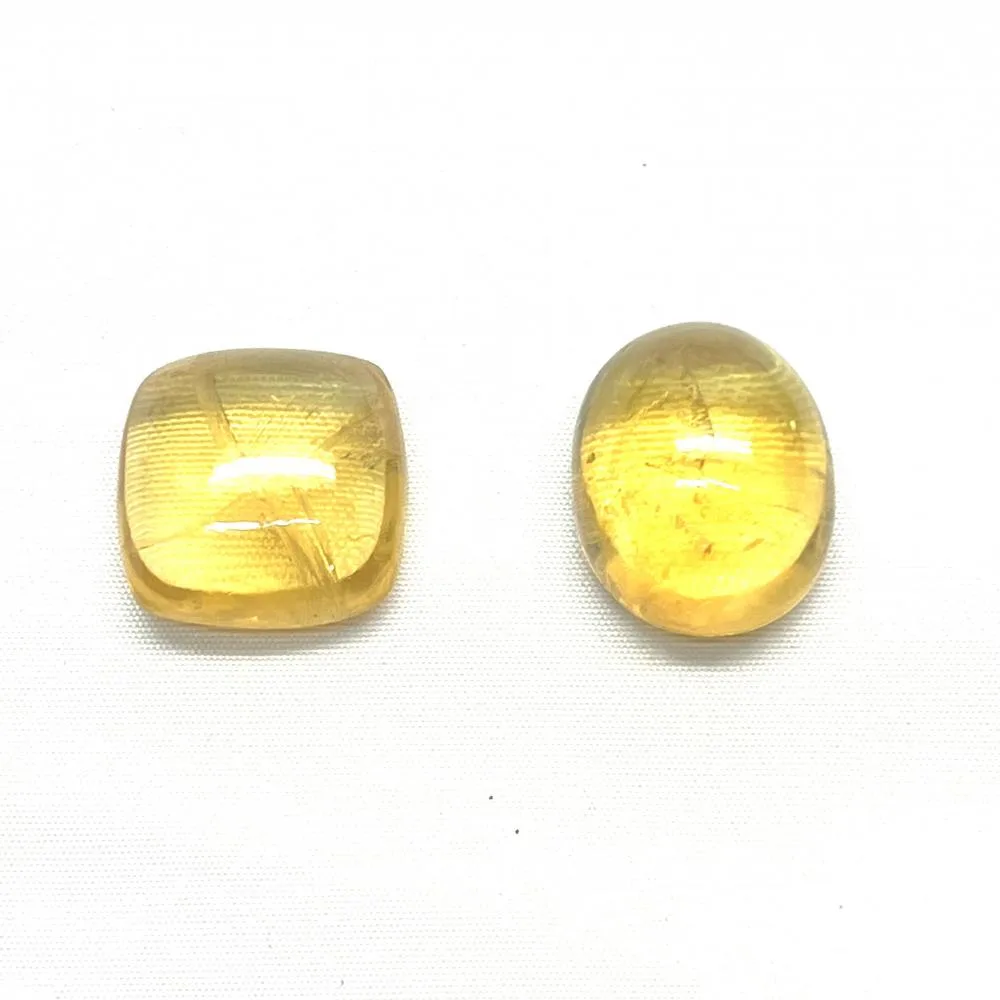
A citrine cabochon is a cut and polished stone with a smooth, rounded top and a flat or slightly domed back. That shape is deliberate: it gives jewelry makers a consistent surface to wrap, bezel, or set without sharp edges catching on wire or skin. The catalog lists it as a polished piece suited to wire wrapping, pendants, or standalone display.
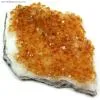
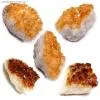
A citrine druze cluster is a natural formation of many small crystal points on a matrix. The Uruguay and Brazil clusters in this shop are described as having sparkling, golden crystal points that catch the light. No two are identical in shape or point distribution, which is part of their appeal as specimens and decor.
Jewelry making: where the cabochon wins
If your goal is a finished piece of jewelry, the cabochon is the practical starting point. Its smooth, domed surface is designed for wire wrapping or setting into a pendant. You can also display it as a standalone specimen, but its main advantage is that it removes the guesswork of shaping a natural stone. The trade-off is that you get one polished stone rather than a cluster, so you lose the raw, multi-point look some wearers prefer.
Druze clusters are not typically set into jewelry because their uneven, fragile points can snag, break, or sit awkwardly against the body. They are better kept as display pieces. If you want a citrine jewelry stone that is ready to work with, the cabochon is the lower-risk choice.
Display and collecting: where the druze cluster wins
A citrine druze cluster is a natural formation, so each piece is unique in shape and size. That makes it a stronger choice for collectors, altars, or shelf styling where you want a one-of-a-kind object. The Uruguay cluster is a single natural formation, while the Brazil option is offered in wholesale quantities for retailers or anyone stocking up.
The trade-off is consistency. Because clusters are natural, you cannot expect two to look alike, and the point structure may be delicate. For a uniform look across a display or a retail batch, you may need to sort through several pieces. A cabochon, by contrast, gives you a repeatable shape but less natural character.
Budget and quantity considerations
The citrine cabochon is listed at USD 18.04 (catalog comparison price USD 26.15) for a single polished stone. The Uruguay citrine druze cluster is USD 4.54 (catalog comparison price USD 7.20), and the Brazil wholesale citrine druze clusters are USD 6.66 (catalog comparison price USD 9.25). If you need multiple display pieces or retail stock, the wholesale Brazil clusters offer a lower per-unit entry point than a single cabochon.
That said, price per piece is not the whole story. A cabochon is a finished component that saves you finishing time, while a cluster may need cleaning, sorting, or careful packing. Buy the form that matches the work you are prepared to do.
Trade-offs to weigh before you buy
- Cabochon: finished form vs. natural character: The smooth, domed shape is ready for wire wrapping or setting, but you get one polished stone instead of a multi-point cluster. Choose this if your priority is a wearable or settable stone.
- Druze cluster: natural beauty vs. consistency: Each cluster is a unique natural formation with sparkling points, so no two look alike and points can be delicate. Choose this if you want a display specimen and can handle variation.
- Wholesale quantity vs. single-piece control: The Brazil wholesale clusters lower the per-piece cost for retail or multiple displays, but you receive a bulk lot rather than one selected piece. Choose wholesale only if you can sort and store several clusters.
Product facts at a glance
- Cabochons - Citrine Cabochon: Polished cabochon cut with a smooth, domed surface; citrine is known for warm, golden-yellow hues; versatile for jewelry making or as a collectible. This is the form to choose when you need a ready-to-set stone for wire wrapping or pendants.
- Citrine - Citrine Druze Clusters (Uruguay): Natural citrine druze cluster from Uruguay with sparkling, golden crystal points; each cluster is unique. Best for a one-of-a-kind display piece or collector specimen where natural variation is the point.
- Wholesale - Citrine Druze Clusters (Brazil): Natural citrine druze clusters from Brazil offered in wholesale quantities; each cluster has golden-yellow hues and a sparkling druzy surface. A practical option for retailers or anyone who needs several clusters rather than a single specimen.
Which should you choose?
Best for
- Jewelry makers who need a smooth citrine cabochon for wire wrapping or pendant setting
- Collectors who want a unique Uruguay citrine druze cluster for display
- Retailers or decorators who need multiple Brazil citrine druze clusters in wholesale quantity
Not for
- Anyone expecting a druze cluster to be set directly into jewelry without reinforcement
- Buyers who need identical, uniform pieces and cannot accept natural variation
- Shoppers looking for a single polished stone who would be better served by a cabochon