Quick Answer
Choose citrine jewelry if you want a warm, radiant stone associated with positivity, confidence, and creative energy. Choose amethyst jewelry if you want a calming, introspective stone linked to peace, balance, and spiritual clarity. If you cannot decide, wear citrine and amethyst together — citrine for forward momentum, amethyst for steady calm — and let the combination do both jobs.
Citrine and amethyst are two of the most recognizable stones in spiritual jewelry, and they are often confused for the same kind of purchase. They are not. One is a solar stone that reads warm and energizing; the other is a violet stone that reads cool and quiet. Understanding that split makes the choice much easier.
This comparison looks at what each stone means, how each one wears, and where each fits into a real jewelry wardrobe. It also covers what happens when you wear citrine and amethyst together, and which pieces from the Satya Jewelry catalog show the difference in practice.
Citrine Jewelry Meaning: Warmth, Positivity, and Forward Motion
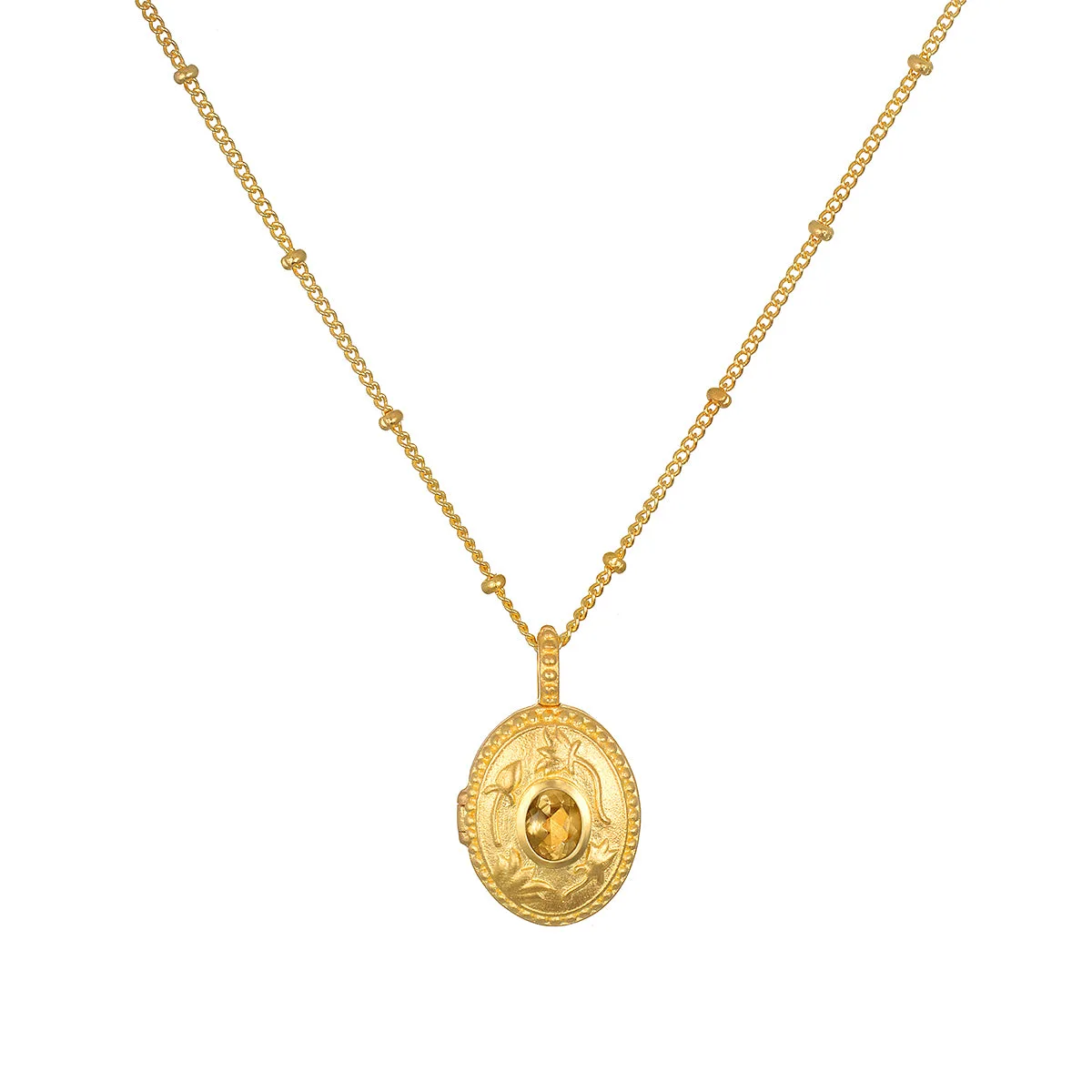
Citrine is traditionally associated with radiance, happiness, and awareness. It is the stone people reach for when they want to feel lighter, more optimistic, and more open to what is next. In jewelry, that meaning translates into a warm golden-orange color that flatters most skin tones and reads especially well against earth tones, cream, and denim.
Because citrine is tied to positivity and creative energy, it is a natural choice for a piece you wear on days when you need momentum. It is also one of the more versatile stones for stacking, since its color is bright without being loud. If your main goal is the best crystal for positivity in a daily-wear piece, citrine is usually the more direct answer.
- Pairs especially well with gold-plated settings, which echo its warm tone.
- Works as an everyday stone because the color is easy to match.
- Best worn as a pendant or bracelet where you will see it often.
Amethyst Jewelry Meaning: Calm, Balance, and Reflection
Amethyst carries a very different reputation. It is the stone of calm, balance, and spiritual clarity — the one people wear when they want to slow down rather than speed up. Its purple range runs from pale lavender to deep violet, which makes it a cooler, more contemplative choice in a jewelry collection.
In practice, amethyst jewelry tends to suit evening wear, quiet days, and moments when you want a reminder to pause. It layers beautifully with silver, white gold, and cooler-toned metals, and it holds its own as a single statement piece. If your intention is reflection rather than momentum, amethyst is the more natural fit.
- Reads as more formal or evening-appropriate than citrine.
- Layers well with cool metals and neutral, muted outfits.
- A strong choice if you want one meaningful piece rather than a stack.
How They Compare in Real Jewelry
On the body, the biggest difference is temperature. Citrine brings warmth and light; amethyst brings depth and calm. That single contrast drives most styling decisions. A citrine pendant brightens a plain white shirt or a linen dress. An amethyst pendant adds richness to a dark outfit or a layered evening look.
The second difference is versatility. Citrine is easier to wear every day because its color is forgiving and works with most of what is already in a jewelry box. Amethyst is slightly more deliberate — you tend to choose it, rather than grab it. Neither is better; they simply serve different moods.
A third difference is how each stone behaves in a set. Citrine plays well with other warm stones such as turquoise or jade in a bracelet stack. Amethyst tends to prefer quieter company, where its color can stay the focal point. If you already own several warm-toned pieces, amethyst will add contrast; if your collection leans cool, citrine will wake it up.
Can You Wear Citrine and Amethyst Together?
Yes, and it is one of the more useful combinations in crystal jewelry. Citrine and amethyst together balance energizing and calming qualities — warm and cool, outward and inward. Wearing them as a pair is a practical way to hold both intentions at once rather than choosing between them.
Styling-wise, keep the metals consistent so the color contrast reads as intentional rather than accidental. Two gold-plated chains, or two stretch bracelets on the same wrist, will look more considered than mixed metals with mixed stones. If you want a single piece that carries multiple stones, a multi-stone pendant does the same work in one purchase.
- Wear citrine higher and amethyst lower when layering two necklaces.
- Keep both pieces on the same wrist if you are stacking bracelets.
- Match metal tone across the pair for a cleaner look.
Care and Wear Considerations
Both citrine and amethyst are quartz-family stones, so they are reasonably durable for everyday jewelry, but they are not indestructible. Store them away from harder stones that can scratch the surface, and remove them before heavy cleaning, gardening, or the gym. Gold-plated settings need the same care as any plated jewelry: keep them away from perfume, lotion, and water where possible.
If a piece uses a stretch cord, watch for over-stretching and roll bracelets on and off rather than pulling them. If a piece uses a chain, check the clasp and extension regularly. These habits matter more than the stone choice when it comes to how long a piece stays wearable.
- Put jewelry on last, after perfume and lotion have dried.
- Wipe stones with a soft dry cloth rather than soaking them.
- Check stretch cords and clasps every few months.
Trade-Offs to Weigh Before You Buy
- Energy direction: Citrine leans outward — radiance, happiness, awareness, momentum. Amethyst leans inward — calm, balance, spiritual clarity. Pick citrine for active seasons and amethyst for reflective ones.
- Styling range: Citrine's warm gold-orange is easy to wear daily and layers well with other warm stones. Amethyst's violet is more deliberate and reads stronger against cool metals and darker outfits. Citrine is the lower-effort everyday choice; amethyst is the more intentional one.
- Owning both: Wearing citrine and amethyst together balances the two qualities, but it takes a little planning — matching metal tones and choosing which piece sits higher. If you want both energies, buy one piece of each rather than forcing a single stone to do everything.
- Care reality: Both are quartz-family stones and reasonably durable, but plated settings and stretch cords are the parts most likely to wear out first. Care habits will affect the piece's lifespan more than the stone choice.
Catalog Examples That Show the Difference
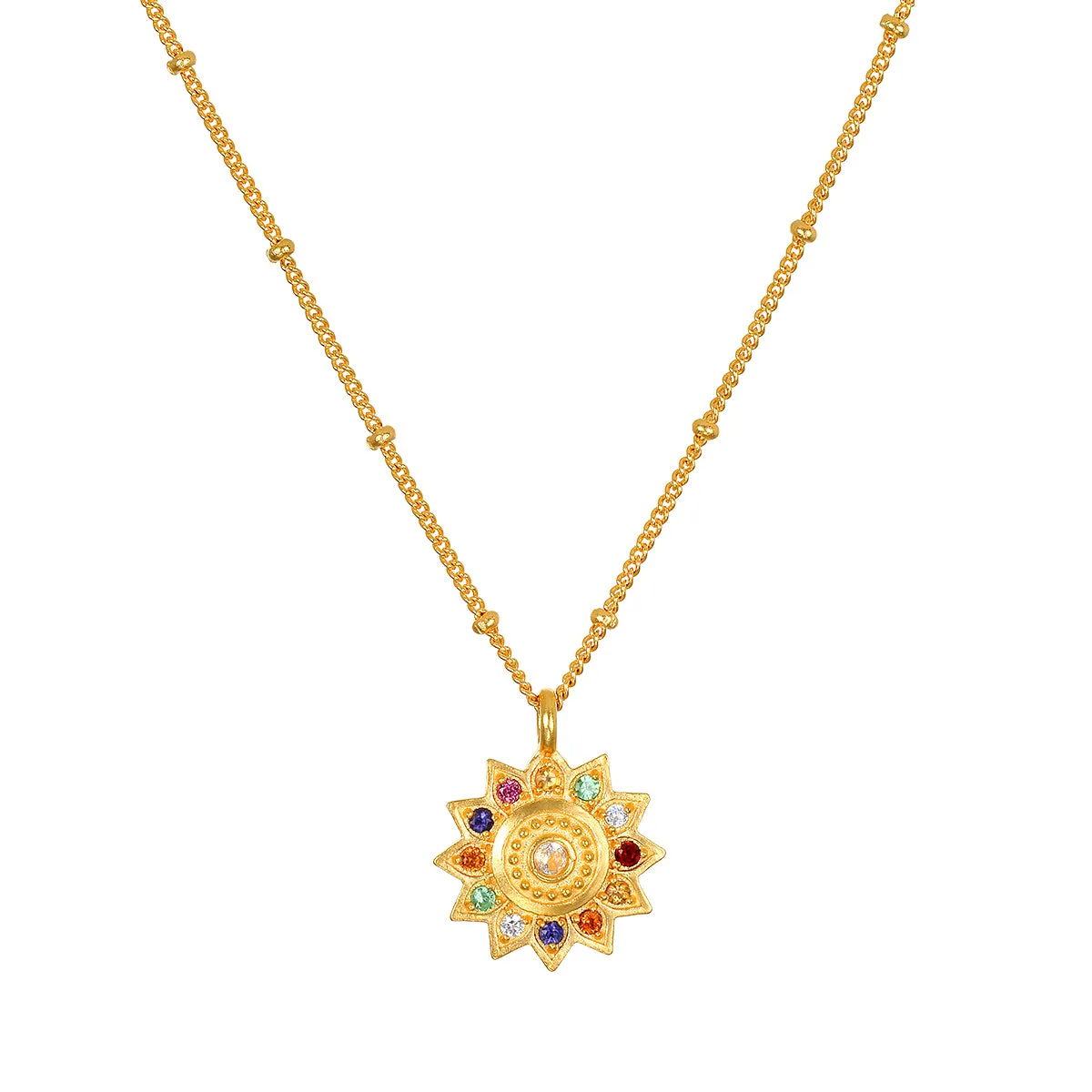
- Vibrant Self Multi Stone Lotus Necklace: An 18kt gold-plated lotus pendant adorned with vibrant healing gemstones, including citrine, which the catalog associates with radiance, happiness, and awareness. A concrete example of citrine used in a warm, gold-toned pendant — the direction to choose if you want positivity and brightness in one piece.
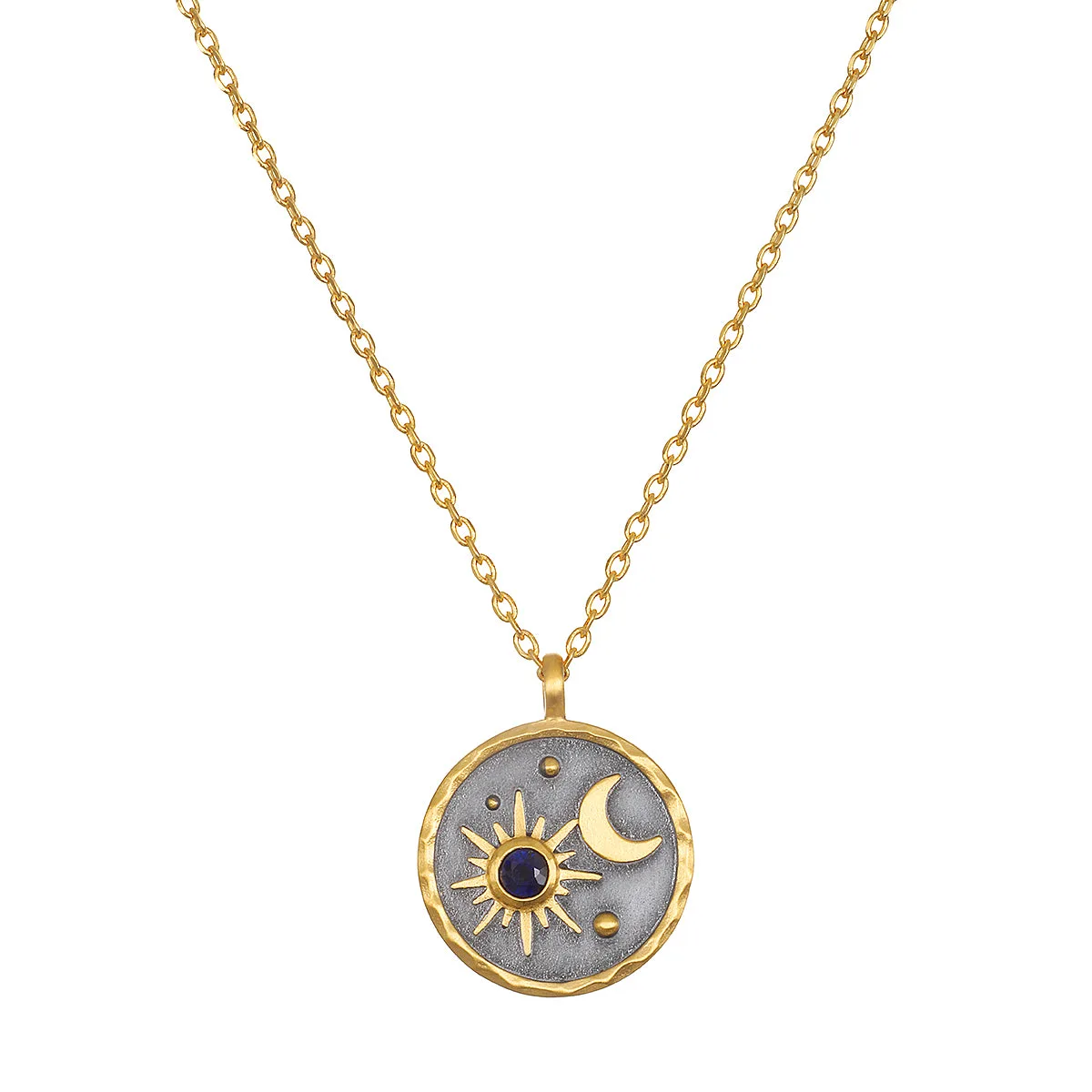
- Celestial Birthstone Necklace - September: A sapphire accent set in 18kt gold plate on a gunmetal background, on a 16-inch chain with a 3-inch extender finished with a gold star. Not amethyst, but a useful comparison point: it shows how a cooler, deeper-toned stone reads in a celestial design, which is closer to the amethyst mood than the citrine one.
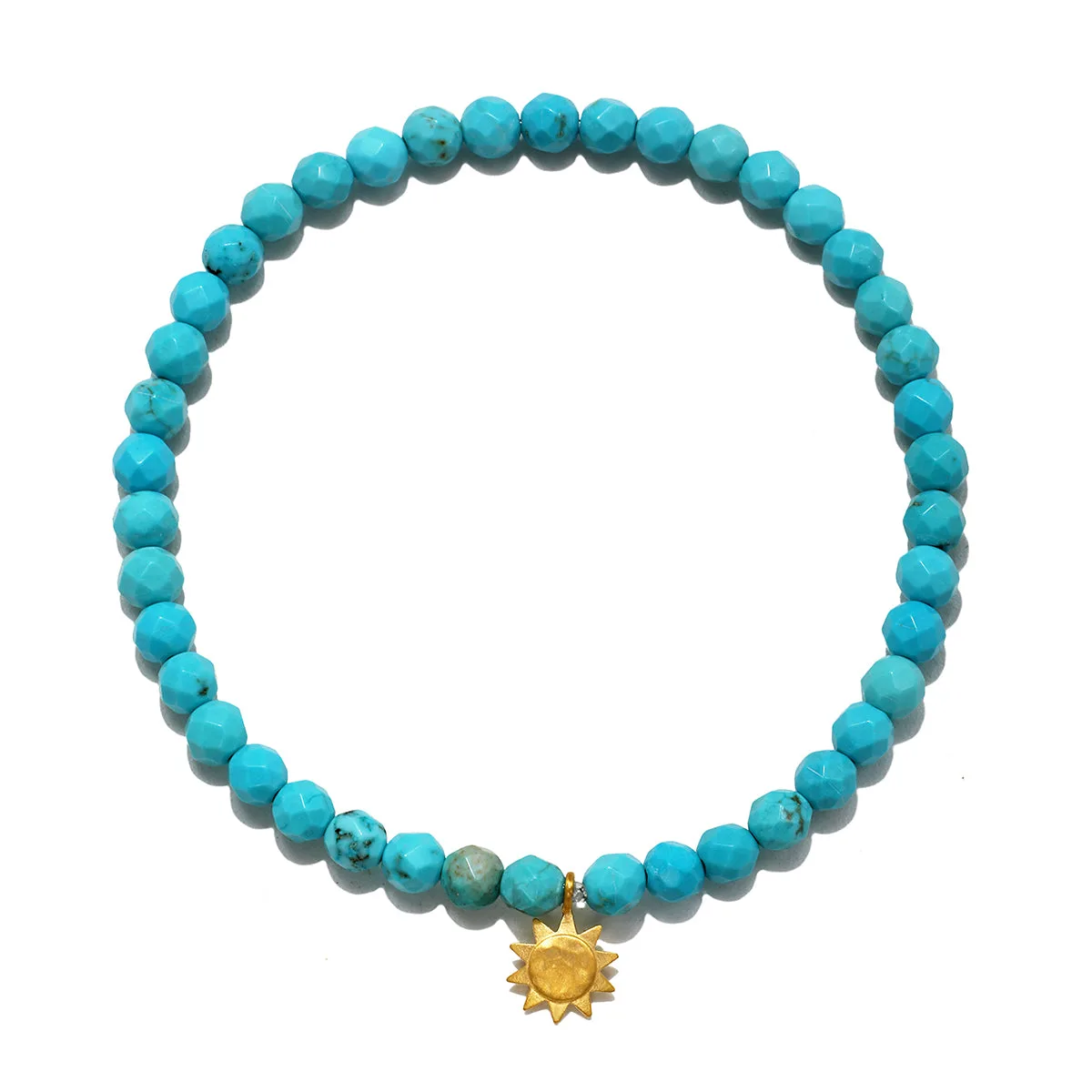
- Ignite Vibrancy Turquoise Sun Stretch Bracelet: A turquoise stretch bracelet with a golden sun charm, where turquoise is described as the stone of health and tranquility and the sun symbolizes vitality and personal power. If you like citrine's warm, energizing character but want a bracelet instead of a necklace, this shows the same solar idea in a different format.
Which Stone Should You Choose?
Choose citrine if you want
- A warm, everyday stone tied to positivity and creative energy
- A piece that layers easily with other warm-toned jewelry
- A gift for someone starting a new chapter or project
Choose amethyst instead if you want
- A calming, introspective stone for reflection and balance
- A cooler-toned piece that reads more formal or evening-ready
- A single statement piece rather than part of a stack
Citrine and amethyst are not rivals so much as opposites that work well together. Start with the energy you actually want to carry — warmth and momentum, or calm and clarity — and let the styling follow. If you genuinely want both, wear citrine and amethyst together and let each stone do its own job.