Two Blades, Different Strengths
Both the Classic 9" Hollow Edge Carving Knife and the Classic 10" Hollow Edge Ham Slicer come from WÜSTHOF's respected Classic series and share the hollow-edge design that reduces drag. But each knife is shaped for a distinct part of the carving process. The carving knife is built to separate meat from bone and cut clean slices through roasts, while the ham slicer excels at producing paper-thin slices from dense hams and similar ingredients. Understanding these differences helps you pick the right tool for the meal you're preparing.
What the Catalog Confirms
-
Classic 9" Hollow Edge Carving Knife: The 9" Hollow Edge Carving Knife has a longer and narrower blade than a chef's knife, allowing the knife to cleanly cut through meats. The pointed tip is designed to help guide meat away from the bone. This shape makes the carving knife a natural choice for roasts, turkey, or large cuts where you need to work around bones and produce even slices.
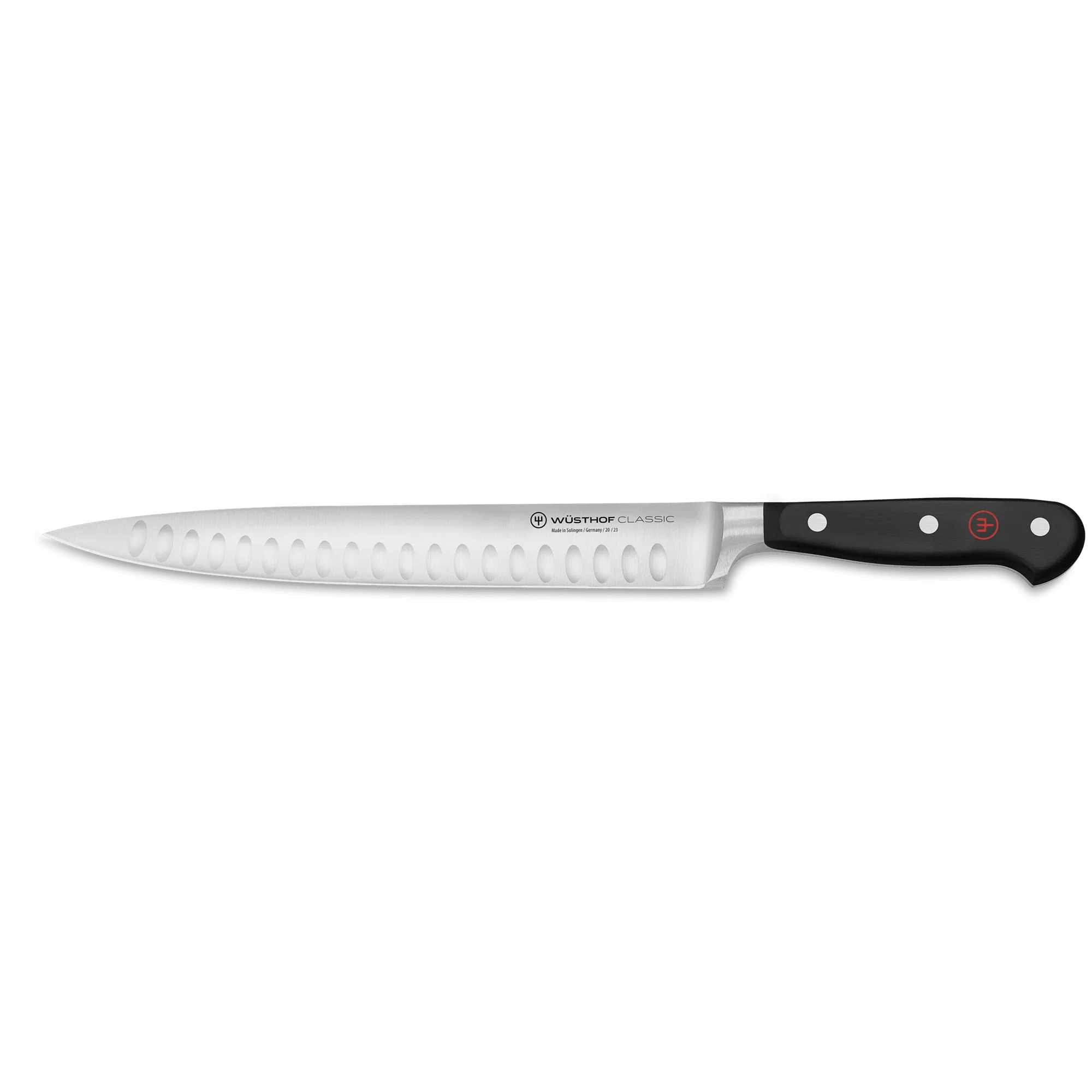
Classic 9" Hollow Edge Carving Knife
-
Classic 10" Hollow Edge Ham Slicer: The Ham Slicer has earned its name: its shape and sharpness are designed to cut very thin slices of hard ingredients, especially from hams. These qualities make this knife ideally suited to fruit and vegetables and other meats too, as well as for carving roasts. The ham slicer's blade profile is optimized for thin, uniform slicing. It can also handle carving duties, but its real strength is precision slicing of dense foods.
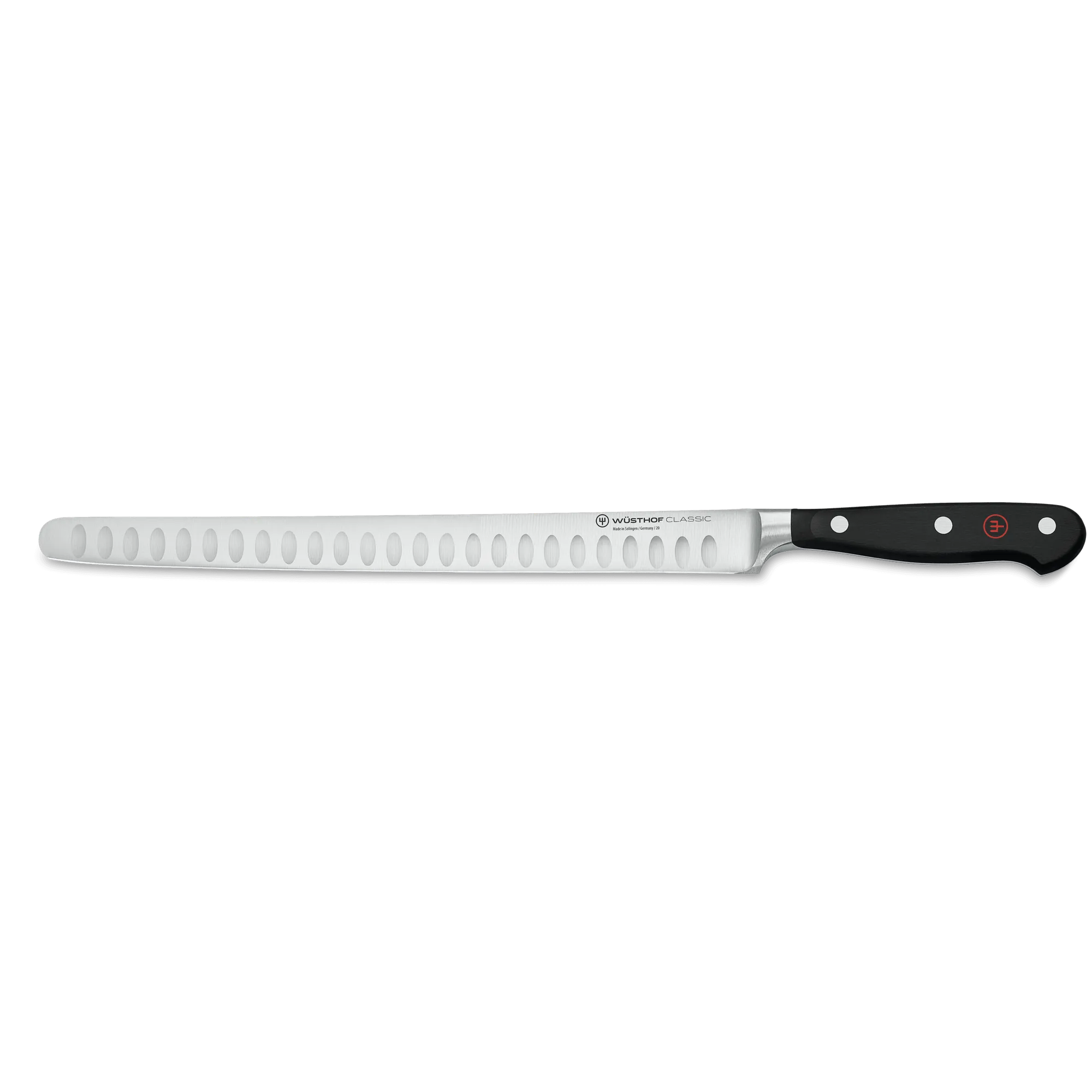
Classic 10" Hollow Edge Ham Slicer
How the Hollow Edge Helps Both Knives
Both knives feature evenly spaced vertical indentations along the blade. These create small air pockets between the blade and the food, which gently push slices off the blade and reduce friction. The result is less drag and cleaner cuts, especially with sticky foods like potatoes or dense meats. The hollow edge is a practical advantage for both carving and slicing tasks.
Carving Knife vs Ham Slicer: Key Differences
- Blade length and shape: The carving knife has a 9" blade that is longer and narrower than a chef's knife, with a pointed tip to guide meat away from bone. The ham slicer is 10" long and has a shape specifically designed for cutting very thin slices from hard ingredients like ham.
- Best use: The carving knife is ideal for cutting through roasts, poultry, and large meats while maneuvering around bones. The ham slicer excels at producing thin, even slices from dense hams and can also handle fruit, vegetables, and other meats.
- Versatility: The ham slicer is more versatile for thin slicing tasks beyond meat, including fruit and vegetables. The carving knife is more specialized for bone-in roasts and large cuts.
Which One Should You Choose?
If you regularly carve bone-in roasts, turkey, or large cuts of meat, the Classic 9" Hollow Edge Carving Knife is the more practical choice. Its pointed tip and narrower blade make it easier to work around bones and produce clean slices. If you often slice ham, prosciutto, or other dense ingredients into very thin pieces, the Classic 10" Hollow Edge Ham Slicer is built for that exact task. It can also double for carving roasts, though its blade shape is less optimized for bone work.
For most home cooks who prepare a range of roasted meats and occasional thin-sliced charcuterie, the carving knife offers more everyday utility. But if you frequently serve thin-sliced ham or want a dedicated slicer for precision work, the ham slicer is a worthy addition.