Quick Answer
Match the table height to the seated child's elbow height, aiming for a 2-inch clearance between the chair seat and the table underside. For mixed-age rooms, choose adjustable classroom tables so you can fine-tune the height as children grow.
Why Height Matters More Than You Think
When a table is too high, children hunch their shoulders and strain to reach their work. When it's too low, they slump and their elbows drop, which can lead to poor posture and frustration. The right height supports natural arm position and keeps attention on the task, not on discomfort.
For young children, the difference of just a few inches can be significant. A table that works for a 3-year-old may be awkward for a 5-year-old. That's why adjustable legs are a practical feature for classrooms with a range of ages.
The Trade-Off: Fixed vs. Adjustable Heights
Fixed-height tables are often less expensive and can feel sturdier, but they lock you into one size. If your class roster changes or you have a wide age range, you may end up with tables that don't fit some children.
Adjustable tables cost a bit more but offer flexibility. For example, a table that adjusts from 15 to 24 inches can serve toddlers and older preschoolers alike. Over several years, that flexibility can save you from buying new furniture as your students grow.
Decision Rules for Choosing Table Height
- Measure the seated child: Have the child sit in the chair you plan to use. Measure from the floor to the child's elbow. The table height should be about 2 inches below that elbow height to allow a comfortable bend. Always measure with the actual chair, not a generic height chart.
- Use age-based starting points: For ages 2-3, look for tables around 15-20 inches high. For ages 4-5, aim for 20-24 inches. For ages 6-8, consider 24-26 inches. These are starting points, not strict rules. Adjust based on individual children, not just age.
- Prioritize adjustability for mixed ages: If your classroom spans more than two years, choose adjustable tables with a range that covers the expected heights. For example, a 15-24 inch range can work for toddlers through kindergarten. Check the adjustment range before buying to ensure it covers your students.
- Test for comfort: After setting the height, have a child sit and place their hands flat on the table. Their elbows should be at a 90-degree angle or slightly more. If they have to lift their shoulders, the table is too high. Do a quick comfort check with a few students before committing to a height.
Classroom Table Options to Consider
-
Nature Color 30" x 36" Rectangle Table with Adjustable Legs: This Nature Color table has a 1.25" thick maple top and legs that adjust in 1" increments from 15" to 24". The wide adjustment range lets you fine-tune the height for different ages, making it a versatile choice for mixed-age classrooms.
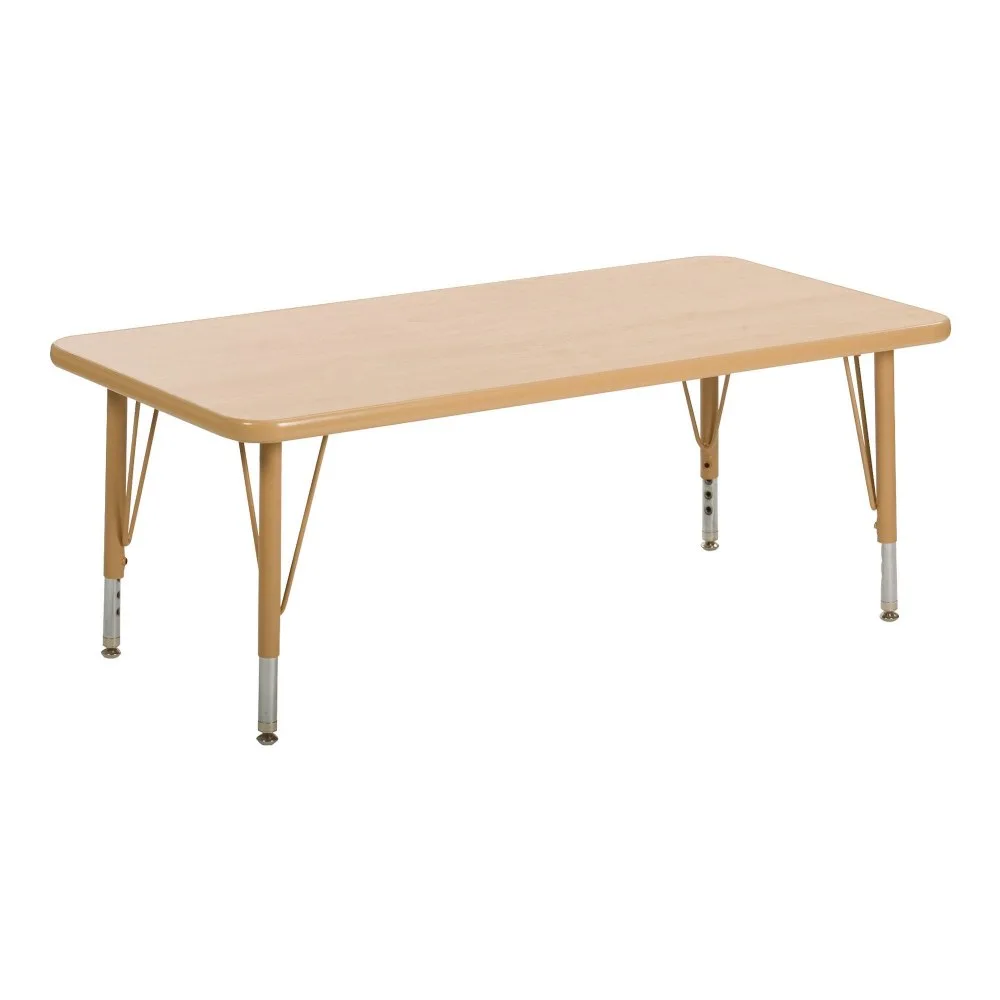
Nature Color 30" x 36" Rectangle Table with Adjustable Legs
-
Laminate 24" x 36" Rectangle Table With Adjustable Legs: This Carolina laminate table features a high-pressure laminate surface and legs that adjust in 1" increments. The durable surface resists wear and is easy to clean, while the adjustable legs help you maintain proper ergonomics as children grow.
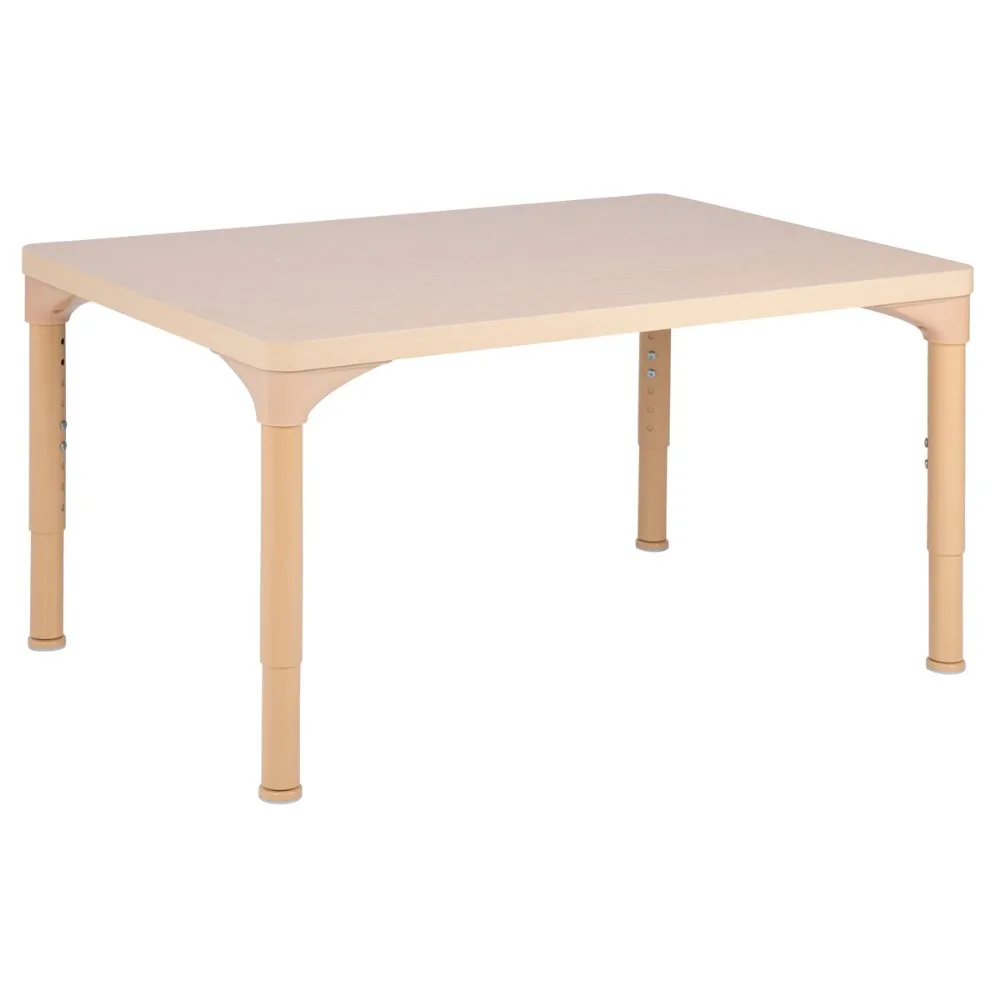
Laminate 24" x 36" Rectangle Table With Adjustable Legs
Who Should Choose What
Best for
- Classrooms with a wide age range (e.g., 2-5 years) that need flexible height options
- Teachers who want to adjust tables as children grow or as class rosters change
Not for
- Fixed-height tables may be a better fit if your class is a single age group and you want to save money