Quick answer
Clean silicone bath toys weekly with warm soapy water and a soft brush, then air dry completely to prevent mold.
Why silicone needs special care
Silicone is naturally mold-resistant but not immune. Trapped water inside hollow toys or in crevices can still lead to mildew if left wet. Regular cleaning removes soap scum and bacteria that build up over time.
Frequently asked questions
How often should I clean silicone bath toys?
Clean them once a week, or more often if you see visible grime. A quick rinse after each bath helps too.
What is the best way to clean silicone bath toys?
Use warm water, mild dish soap, and a soft brush or cloth. Scrub all surfaces, including any textured areas. Rinse thoroughly and squeeze out any water from the toy. Avoid harsh chemicals or abrasive sponges that can damage the silicone surface.
How do I dry silicone bath toys to prevent mold?
Shake off excess water, then let the toy air dry completely in a well-ventilated area. Do not store it in a sealed container while still damp. A drying rack or hanging mesh bag works well for keeping toys dry between baths.
Can I sanitize silicone bath toys?
Yes. You can boil them for 5 minutes or soak in a 1:1 vinegar-water solution for 15 minutes. Rinse thoroughly after sanitizing. Boiling is safe for 100% silicone, but check the manufacturer's instructions first.
What should I do if I see mold on a silicone bath toy?
Scrub the moldy area with a soft brush and soapy water. For stubborn stains, use a paste of baking soda and water. Rinse and dry completely. If mold persists inside a hollow toy, it may be time to replace it.
Product facts
-
Squeezi Hippo – Soft Silicone Bath Toy for Toddlers: The Squeezi Hippo is made of soft, mold-resistant silicone safe for small hands. Its solid silicone design reduces hidden moisture pockets, making it easier to keep clean than hollow plastic toys.
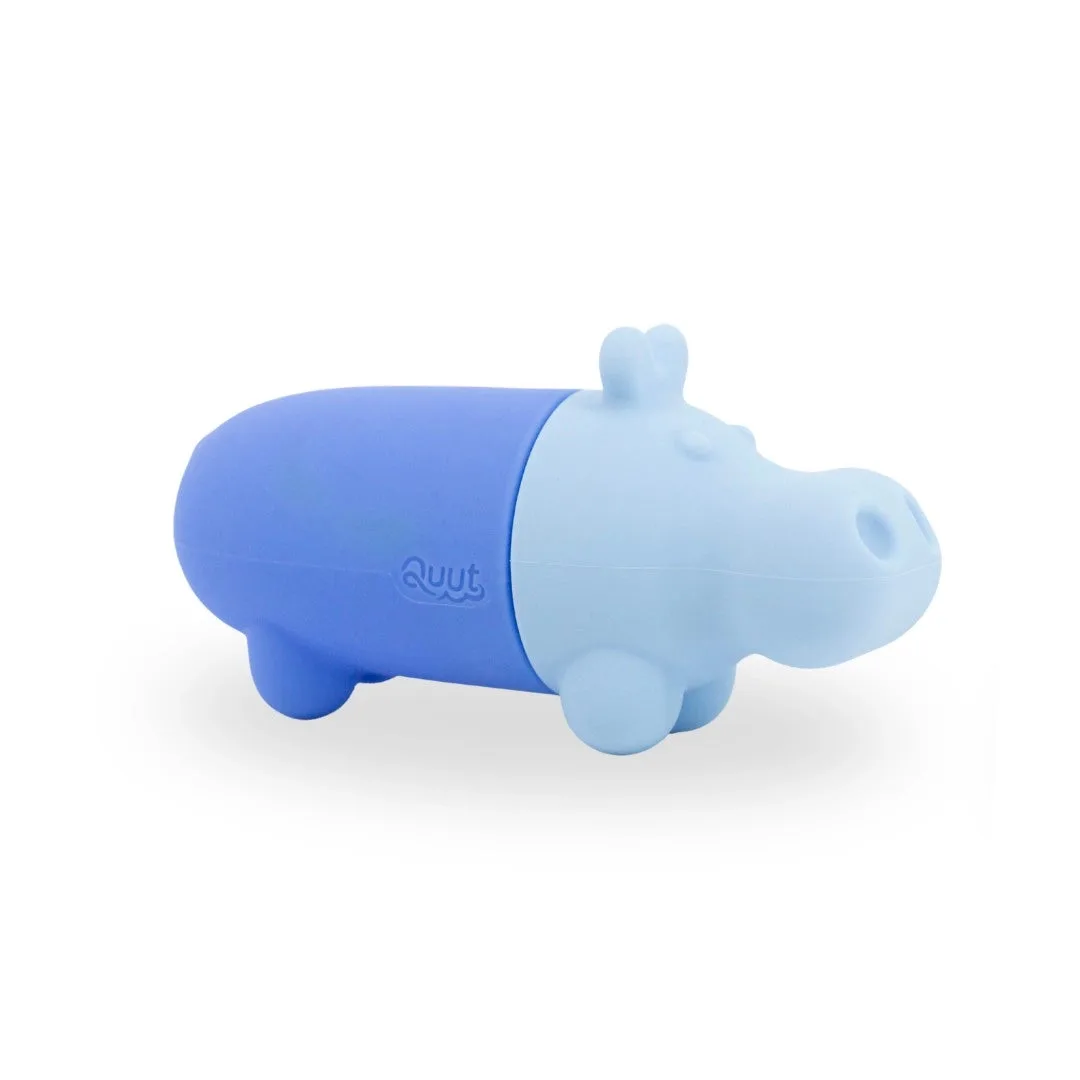
Squeezi Hippo – Soft Silicone Bath Toy for Toddlers