Two warming spices, two different cups
Cloves and juniper berries both bring warmth to tea, but they are not interchangeable. Cloves are pungent, sweet, and intensely aromatic buds. Juniper berries are resinous, piney, and tart. The choice depends on whether you want a deep, sweet warmth or a bright, evergreen bite.
This comparison sticks to what the product listings confirm. Where a detail is not supplied, we say so rather than guess.
What the Organic Cloves listing confirms
-
Organic Cloves: Organic pure clove buds, certified organic, origin Sri Lanka, botanical name Syzygium aromaticum, available in 30g and 100g. These are whole buds, not ground powder, so you can see and remove them before serving.
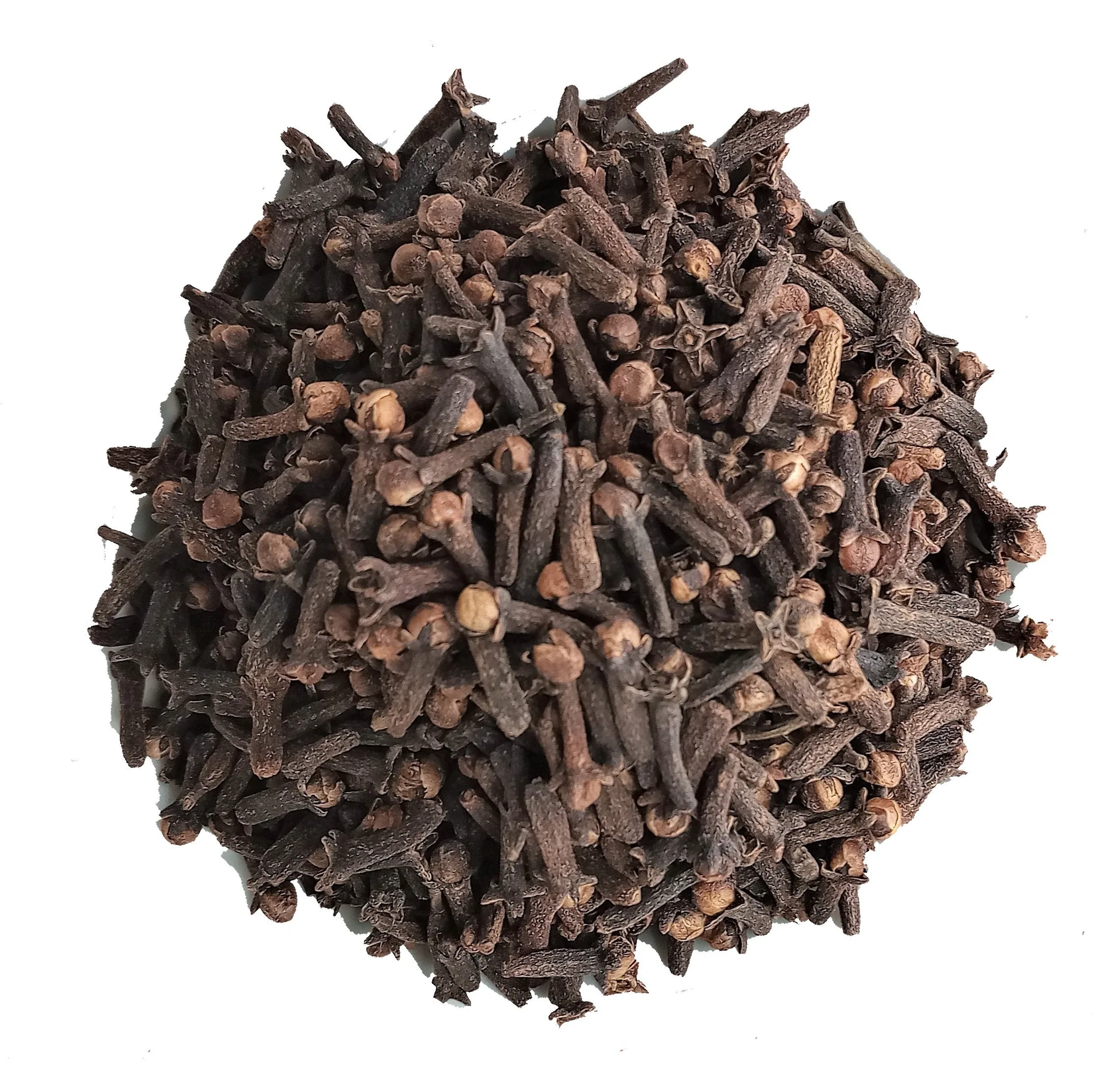
Organic Cloves
-
Organic Cloves: The listing notes cloves are used in herbal remedies and cooking, and that a tea strainer should be used when making tea. A strainer is the practical way to keep whole buds out of your cup.
-
Organic Cloves: The listing warns cloves can be a choking risk and should be removed before serving dishes. Whole cloves do not soften enough to eat safely, so plan to fish them out.
Clove tea vs juniper tea at a glance
- Flavor direction: Cloves: sweet, pungent, warming. Juniper: piney, resinous, tart. The clove listing describes traditional use in remedies and cooking; it does not give a flavor profile. The juniper character is general knowledge, not a catalog claim.
- Form for tea: Organic Cloves are whole buds and the listing says to use a tea strainer. Juniper berries are whole berries; the listing does not specify a tea preparation method.
- Brewing guidance in the listing: Cloves: strainer recommended. Juniper: no brewing instructions supplied, so you will need to experiment or consult a reliable recipe.
- Safety notes in the listing: Cloves: choking risk, remove before serving; educational disclaimer and check with a health practitioner if pregnant or concerned. Juniper: no specific safety notes in the supplied record.
- Best for: Cloves suit a sweet, spicy cup or a blend with black tea and citrus. Juniper suits a bracing, savory cup or a blend with rosemary and lemon.
How to brew whole cloves for tea
The Organic Cloves listing does not give a ratio or steeping time. A safe starting point is a small number of whole buds per cup, steeped in hot water and strained. Because the buds are strong, begin with less and add more next time.
Use a tea strainer as the listing advises. Remove the buds before drinking, and remember the choking warning if you serve clove tea to others.
How to approach juniper berry tea
The juniper berry listing in this comparison does not supply brewing instructions. Whole juniper berries are hard and resinous; many tea drinkers crush them lightly before steeping to release flavor. Since the listing is silent, treat any ratio or time as your own experiment, not a manufacturer instruction.
If you want a guided starting point, look for a tested recipe from a reliable source. The key is to taste as you go: juniper can turn bitter if oversteeped.
Which one fits your tea shelf?
Choose Organic Cloves if you want a sweet, penetrating warmth for chai-style blends, black tea, or a simple strained cup. The 30g pack suits occasional use; the 100g pack makes sense if you cook with cloves often.
Choose juniper berries if you prefer a piney, savory note and are comfortable experimenting without listing guidance. They pair well with lemon and rosemary in winter blends.
You can keep both: cloves for sweetness, juniper for bite. Just label them clearly and store them away from light and heat.