The Horten Ho 229: Separating Legend from History
The Horten Ho 229 is one of the most talked-about aircraft of WWII. Its flying wing shape, jet propulsion, and rumored stealth capabilities have fueled decades of speculation. With the COBI Horten Ho 229 set #5757, you can build a detailed 1:32 scale model of this mysterious machine. But how much of what you've heard is supported by historical evidence? This article examines the key claims against the available facts.
Myth: The Ho 229 Was Completely Invisible to Radar
A common belief is that the Horten Ho 229 was a stealth aircraft that could fly undetected. The supplied evidence tells a more nuanced story. Electromagnetic tests at a secret range showed that in 1945 the aircraft would have been detectable by a British radar station at a range of 130 km, which was 80% of the detection range of a Bf-110 fighter (160 km). So while the Ho 229 had a reduced radar signature compared to conventional fighters of the time, it was not invisible. Its design did make it harder to detect, but it was still a detectable aircraft.
Fact: The Flying Wing Design Was Ahead of Its Time
The Horten brothers' aircraft is sometimes considered the forerunner of the American B-2 Spirit, which was created over 40 years later. The flying wing shape was genuinely innovative. The COBI model faithfully reproduces this distinctive silhouette with an impressive span of 52.5 cm. The model's wings replicate the unique shape that made this aircraft stand out, as noted in the product description. For exact dimensions, please refer to the supplied product instructions.
What the Set #5757 Evidence Confirms
-
COBI Horten Ho 229 Fighter/Bomber Jet : Set #5757: Electromagnetic tests showed detection range of 130 km, 80% of a Bf-110's 160 km range. This confirms the Ho 229 was stealthier than conventional fighters but not invisible, grounding the stealth myth in real data.
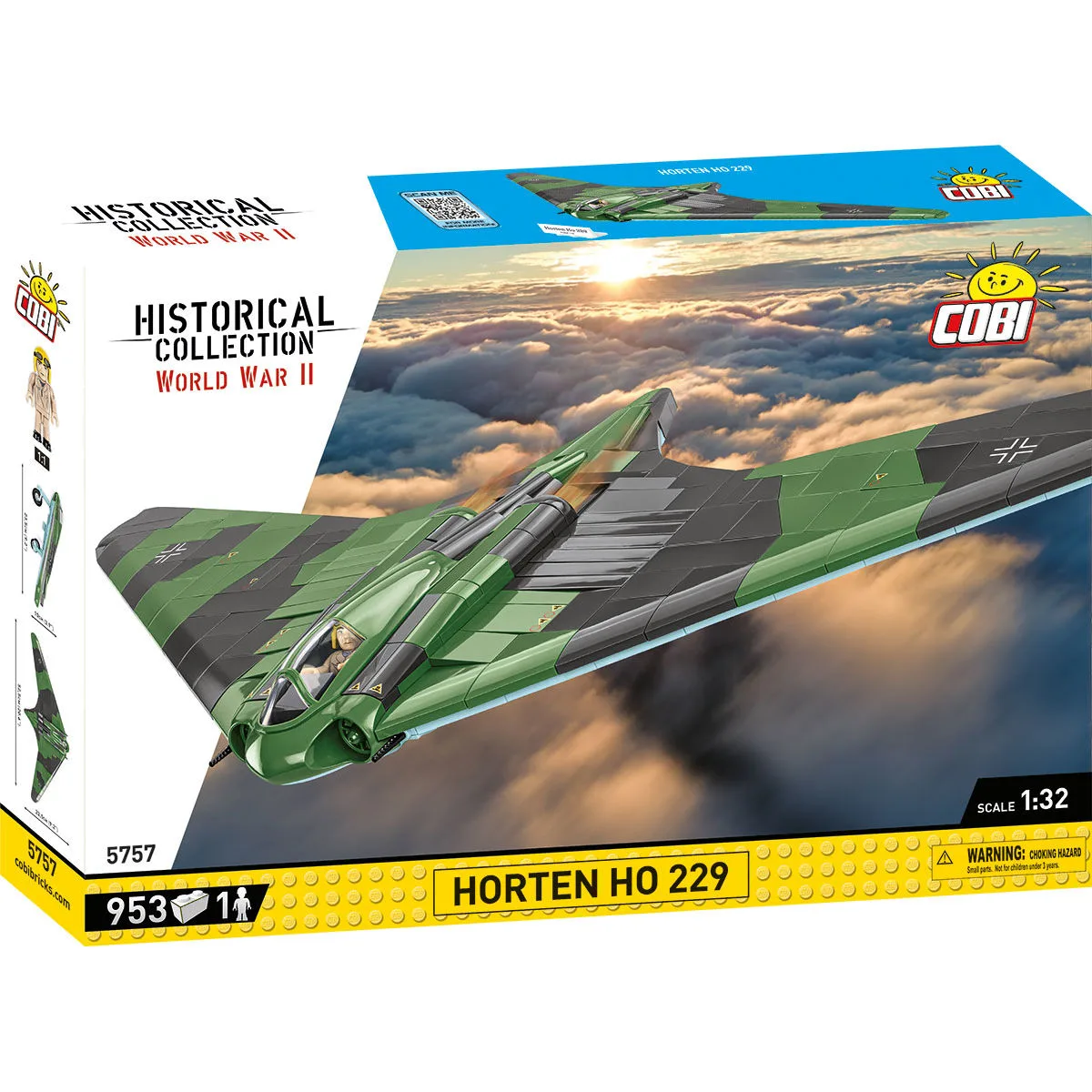
COBI Horten Ho 229 Fighter/Bomber Jet : Set #5757
-
COBI Horten Ho 229 Fighter/Bomber Jet : Set #5757: The aircraft is considered a forerunner of the American B-2 Spirit, created over 40 years later. This supports the claim that the design was ahead of its time, a key reason for its historical significance.
-
COBI Horten Ho 229 Fighter/Bomber Jet : Set #5757: The model has an impressive wingspan of 52.5 cm (20.6") in 1:32 scale. The large wingspan makes it a striking display piece, accurately capturing the flying wing's proportions.
Myth: The Ho 229 Was a Fully Operational Wonder Weapon
The Ho 229 is often called a 'Wunderwaffe' (wonder weapon) that could have changed the war. The supplied evidence indicates the project was still in development when the war ended. The first test of the prototype took place in January 1945, and only two examples were captured by American intelligence: one in the process of assembly (Ho 229 V3) and an older glider model (Horten Ho IX V1). The war ended before the design could be fully developed, so it never saw combat. The set's description accurately calls it 'a machine that was ahead of its time' rather than a battle-ready aircraft.
What the Set Includes and How It Reflects History
The COBI Horten Ho 229 set #5757 contains 954 bricks and special dedicated elements to reproduce the aircraft's distinctive nose, cockpit, and engine air intakes. It also includes a pilot figure with two headgear options and a nameplate. The model uses 100% prints, no stickers, and the prints are designed not to scratch, smear, or fade during play or under temperature influence. This attention to detail helps builders appreciate the real aircraft's unique features, from its flying wing shape to its historical markings.
Key Claims vs. Evidence
- Stealth (invisible to radar): Claim: The Ho 229 was invisible to radar. Evidence: Detection range was 130 km (80% of Bf-110). It was stealthier but not invisible.
- Operational wonder weapon: Claim: It was a fully operational war-winning weapon. Evidence: Only prototypes existed; first flight in January 1945; war ended before development.
- Ahead of its time: Claim: The design influenced later stealth bombers. Evidence: Considered a forerunner of the B-2 Spirit, created over 40 years later. Supported.
- Flying wing shape: Claim: The flying wing was unique. Evidence: The model's 52.5 cm wingspan reproduces the distinctive shape, confirming its unique design.
Why This Set Appeals to Builders and History Fans
The COBI Horten Ho 229 set offers a chance to engage with a real historical puzzle. The aircraft's blend of myth and fact makes it a fascinating subject for both builders and history enthusiasts. The set is fully compatible with other brands of construction blocks, and the intuitive instructions make it accessible even for less advanced builders, as stated in the product evidence. Whether you're interested in the stealth controversy or the flying wing engineering, this model provides a tangible connection to one of WWII's most intriguing aircraft.