What Makes Cocoshine Different from Standard Toothpaste
When you pick up a tube of toothpaste, the ingredient list can look similar from brand to brand. Cocoshine Whitening Toothpaste takes a different approach. It's dentist-designed and uses 3% active nano hydroxyapatite (nHA) as its key whitening ingredient, rather than peroxide or abrasives. Standard toothpastes often rely on fluoride for cavity protection and silica for polishing, but Cocoshine skips fluoride entirely. This comparison looks at the real differences in ingredients, whitening claims, and what the supplied evidence supports.
Cocoshine Whitening Toothpaste at a Glance
-
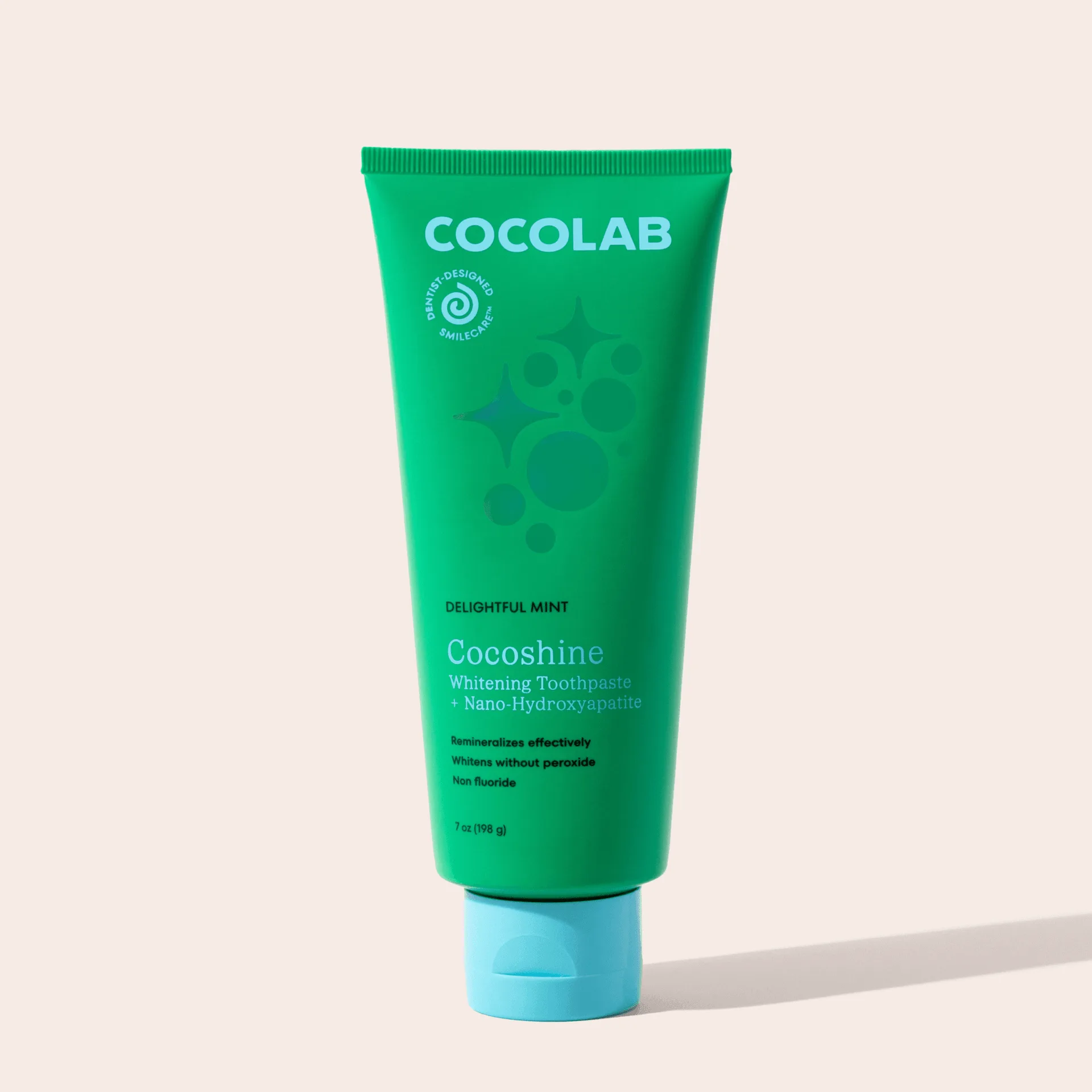
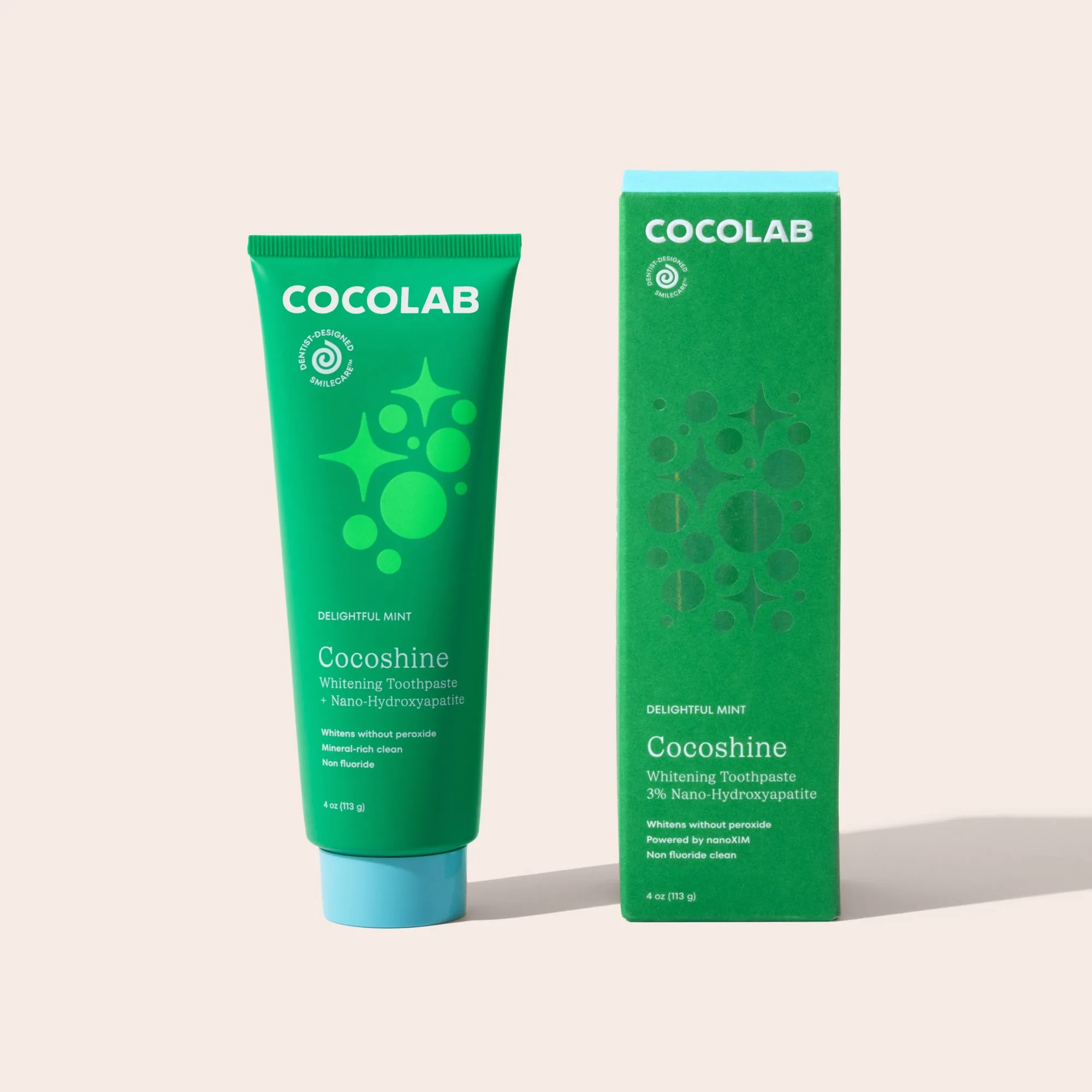
COCOLAB Cocoshine Whitening Toothpaste: Dentist-designed whitening toothpaste powered by 3% active nHA. Size: 4 oz (113 g). Formulated with 19.35% NanoXIM® CarePaste that yields 3% active nHA. This tells you the active ingredient is nHA, a mineral compound that can help remineralize enamel and whiten without peroxide.
COCOLAB Cocoshine Whitening Toothpaste
-
COCOLAB Cocoshine Whitening Toothpaste: Whitens in 1 week* and clinically tested to respect the oral microbiome.* Low-abrasion polish (RDA 37). The low RDA means it's gentle on enamel. The clinical testing on microbiome is a point standard toothpastes rarely address.
-
COCOLAB Cocoshine Whitening Toothpaste: No added fluoride, peroxide, parabens, sulfates, triclosan, propylene glycol, or artificial dyes. If you avoid certain additives, this formula is straightforward. The absence of fluoride is a deliberate choice, not an omission.
Cocoshine vs Standard Toothpaste: Key Differences
The table below summarizes the main differences based on supplied information for Cocoshine and general knowledge of standard toothpastes.
- Active Whitening Ingredient: Cocoshine uses 3% active nHA (nano hydroxyapatite). Most standard whitening toothpastes use hydrogen peroxide or carbamide peroxide, which can cause sensitivity. nHA is a mineral that bonds to enamel and can help reduce sensitivity over time.
- Fluoride: Cocoshine contains no added fluoride. Standard toothpastes almost always include fluoride (typically 1000–1500 ppm) for cavity prevention. If you rely on fluoride for decay protection, Cocoshine may not be a direct replacement.
- Whitening Evidence: Cocoshine states it whitens in 1 week, based on a clinical test showing up to 1.96 VITA® tooth shades after one week of brushing a single tooth. Standard toothpastes often claim whitening via abrasion or peroxide, but many lack published shade-change data. The Cocoshine evidence is specific and supplied.
- Abrasiveness (RDA): Cocoshine has an RDA of 37, which is very low. Many standard whitening toothpastes have RDA values above 100, which can wear down enamel over time. The low RDA makes Cocoshine a gentler option for daily use.
- Added Ingredients: Cocoshine includes certified organic aloe vera, xylitol, and coconut oil. Standard toothpastes typically contain artificial sweeteners, preservatives, and foaming agents like SLS. Cocoshine is sulfate-free and free of parabens and artificial dyes.
- Flavor Options: Cocoshine comes in Delightful Mint, Lychee Breeze, Piña Colada, Wild Strawberry, and more. Standard toothpastes usually offer mint or spearmint. The variety may appeal to those who find mint boring or overwhelming.
What the Evidence Supports and What It Doesn't
The supplied information confirms that Cocoshine whitens teeth measurably and respects the oral microbiome, based on clinical testing. It also shows the formula is low-abrasion and free of common irritants. However, the evidence does not claim that Cocoshine prevents cavities or replaces fluoride for cavity protection. If cavity prevention is your primary concern, you may want to continue using a fluoride toothpaste or discuss with your dentist. The choice between Cocoshine and a standard toothpaste depends on your priorities: gentle whitening and clean ingredients versus fluoride-based cavity protection.