What the supplied information covers—and what it doesn’t
This FAQ is based strictly on the product details supplied for the COCOTTE / 24CM / CROSS / STAUB / BLACK. The catalog describes a black cast iron cocotte with a Buster + Punch T-bar handle featuring diamond-cut cross knurling for enhanced grip and control. It is a Staub collaboration, refined by hand, and available with steel or brass handle finish.
No care instructions, seasoning steps, oven-safe temperatures, or compatibility details (such as stovetop types) are included in the supplied information. Rather than guess, each answer below explains what is confirmed and flags where you should check the manufacturer’s documentation or the physical product before proceeding.
What the catalog confirms about this cocotte
-
COCOTTE / 24CM / CROSS / STAUB / BLACK: Black cast iron cocotte with a signature Buster + Punch T-bar handle with diamond-cut cross knurling. Confirms the material (cast iron) and the handle design, which are central to any care or use question.
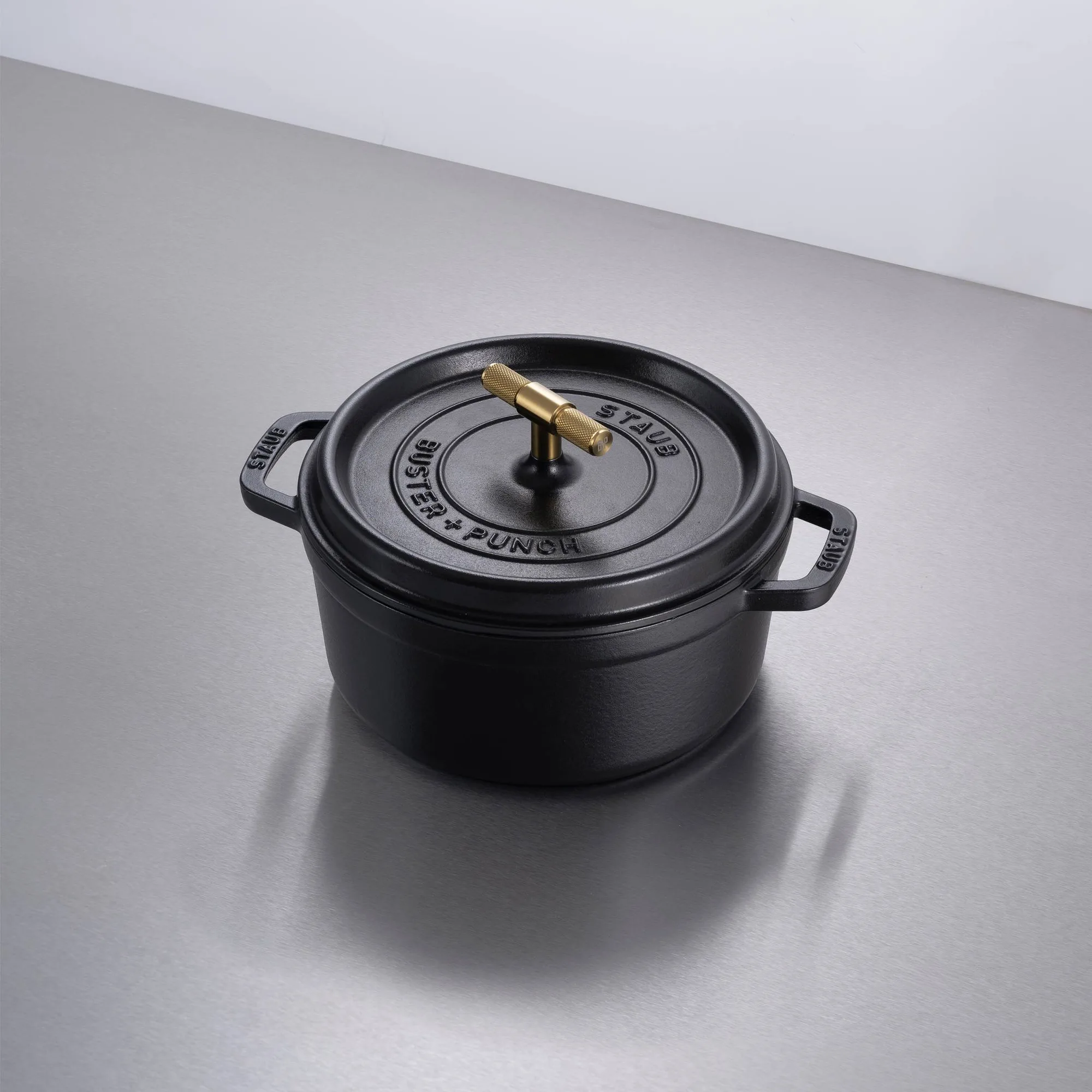
COCOTTE / 24CM / CROSS / STAUB / BLACK
-
COCOTTE / 24CM / CROSS / STAUB / BLACK: Available in steel and brass finishes for the handle detail. Finish choice may affect how you clean or maintain the handle area, though specific care for each finish is not supplied.
-
COCOTTE / 24CM / CROSS / STAUB / BLACK: A Staub collaboration product, refined by hand. Signals that the base cocotte is made by Staub, a known cast iron cookware maker, while the handle is a Buster + Punch design.
Cleaning and seasoning questions
How should I clean the Staub cocotte 24cm?
The supplied information does not include cleaning instructions. For cast iron cocottes, common practice is to hand wash with warm water and a mild detergent, then dry thoroughly. However, because this is a Staub collaboration, check the care leaflet that comes with the cocotte or Staub’s official guidance for the enameled interior (if applicable). Do not assume dishwasher suitability unless the manufacturer states it.
Does the black cast iron cocotte need seasoning?
The catalog does not state whether the interior is raw cast iron or enameled. Staub cocottes typically have an enameled interior that does not require seasoning, but this is not confirmed in the supplied details. If the interior is enameled, follow the maker’s cleaning advice; if it is raw cast iron, seasoning may be needed. Check the product documentation before applying any oil or heat treatment.
Can I use metal utensils in the cocotte?
Not confirmed by the supplied information. If the interior is enameled, metal utensils can scratch the surface; silicone, wood, or plastic are safer choices. For raw cast iron, metal is generally acceptable but may wear the seasoning over time. Since the interior type is not specified, err on the side of caution and use non-metal utensils unless the manufacturer says otherwise.
How do I care for the Cross handle?
The handle is described as having diamond-cut cross knurling for enhanced grip. No specific care instructions are provided. To preserve the finish (steel or brass), avoid abrasive cleaners that could dull the knurling. Dry the handle after washing. For brass, some owners prefer to let a patina develop; for steel, a quick wipe with a soft cloth is usually enough. Always follow any care notes included with the product.
Cooking and handle-use questions
What is the cocotte cross handle use?
The T-bar handle with diamond-cut cross knurling is designed to give you a secure, controlled grip when lifting or moving the cocotte. The knurling adds texture to reduce slip. Use it as you would any pot handle—with a dry cloth or oven mitt, as cast iron can become very hot. The catalog does not specify a maximum weight capacity or heat resistance for the handle, so lift with care and support the pot with both hands if needed.
Is the cocotte oven-safe, and at what temperature?
The supplied information does not state oven-safety or temperature limits. Cast iron cocottes are generally oven-safe, but the handle material and finish (steel or brass) may have specific limits. Brass, for example, can tarnish or discolor at high heat. Check the manufacturer’s documentation for both the cocotte and the handle before using it in the oven. Do not assume a safe temperature without confirmation.
Can I use it on an induction cooktop?
Not confirmed by the supplied information. Cast iron is typically induction-compatible, but the base design and any enamel coating can affect performance. Staub cocottes are often induction-ready, but since this is a collaboration, verify with the product manual or the retailer before use. If you cannot find confirmation, test carefully on a low setting first.
What size is the 24cm cocotte good for?
The catalog lists the diameter as 24cm but does not provide capacity in liters or quarts. As a rough guide, a 24cm cocotte is often used for 4–6 servings of stew or soup, but actual capacity depends on the depth and shape. Without a stated volume, use the 24cm measurement as your primary reference and check the product’s full specifications if serving size is critical.
How to decide if this cocotte fits your kitchen
Because the supplied details focus on design and materials rather than performance limits, your decision should rest on what is confirmed: you are getting a black cast iron cocotte made in collaboration with Staub, with a distinctive Buster + Punch handle available in steel or brass. If you need specific care instructions, oven-safe temperatures, or compatibility with your cooktop, ask the retailer for the manufacturer’s documentation before you buy.
If you already own the cocotte, treat the absence of care details as a prompt to locate the included leaflet or contact Staub directly. Do not improvise harsh cleaning or high-heat methods without confirmation—cast iron and its finishes can be forgiving, but the handle’s brass or steel detail deserves a cautious approach.