Perfecting your morning brew isn't just about having the best beans—it's about understanding the science behind the cup. The coffee brewing ratio, or coffee to water ratio, is the single most important variable you can control to achieve consistent, delicious results. Whether you're a pour over enthusiast, an espresso purist, or a French press devotee, getting the brew ratio right transforms good coffee into great coffee.
In this guide, we'll break down the ideal coffee to water ratio for every popular brewing method. You'll learn how to measure like a pro, adjust ratios to suit your taste, and avoid common mistakes that lead to weak or bitter coffee. By the end, you'll have the confidence to dial in your perfect cup every time.
What Is a Coffee Brewing Ratio and Why Does It Matter?
A coffee brewing ratio is simply the weight of ground coffee compared to the weight of water used during extraction. It's most commonly expressed as a ratio like 1:16, meaning one part coffee to 16 parts water. This ratio directly affects the strength, flavor balance, and mouthfeel of your final cup. Too much coffee relative to water can lead to over-extraction, resulting in bitter, harsh flavors. Too little coffee can cause under-extraction, leaving you with a weak, sour brew.
The Specialty Coffee Association (SCA) recommends a golden ratio of 1:18 for filter coffee, but many baristas and home brewers prefer a range between 1:15 and 1:17 for a balanced, flavorful cup. For espresso, the ratio is much tighter—typically between 1:2 and 1:3—because of the concentrated nature of the brew. Understanding and controlling your brew ratio is the first step toward coffee mastery.
- Use a digital scale for accuracy—volume measurements like tablespoons are inconsistent.
- Always measure coffee and water in grams for precision.
- Start with a standard ratio and adjust by 1-2 grams to fine-tune to your taste.
Pour Over Ratio: The Gold Standard for Filter Coffee
Pour over methods like the Hario V60, Chemex, or Kalita Wave shine when you use a precise coffee to water ratio. The most commonly recommended pour over ratio is 1:16 (for every 1 gram of coffee, use 16 grams of water). This yields a clean, bright cup with enough body to satisfy without being heavy. For a stronger pour over, try 1:15; for a lighter, tea-like brew, go up to 1:17.
For example, if you're brewing a single 250ml cup, you'd use about 15.6 grams of coffee with 250 grams of water. A larger 500ml batch would require 31.25 grams of coffee. Consistency is key—always weigh your dose and water. If you're using a single-origin like Fazenda Mió - Brazil, a 1:16 ratio will highlight its natural sweetness and balanced acidity beautifully.
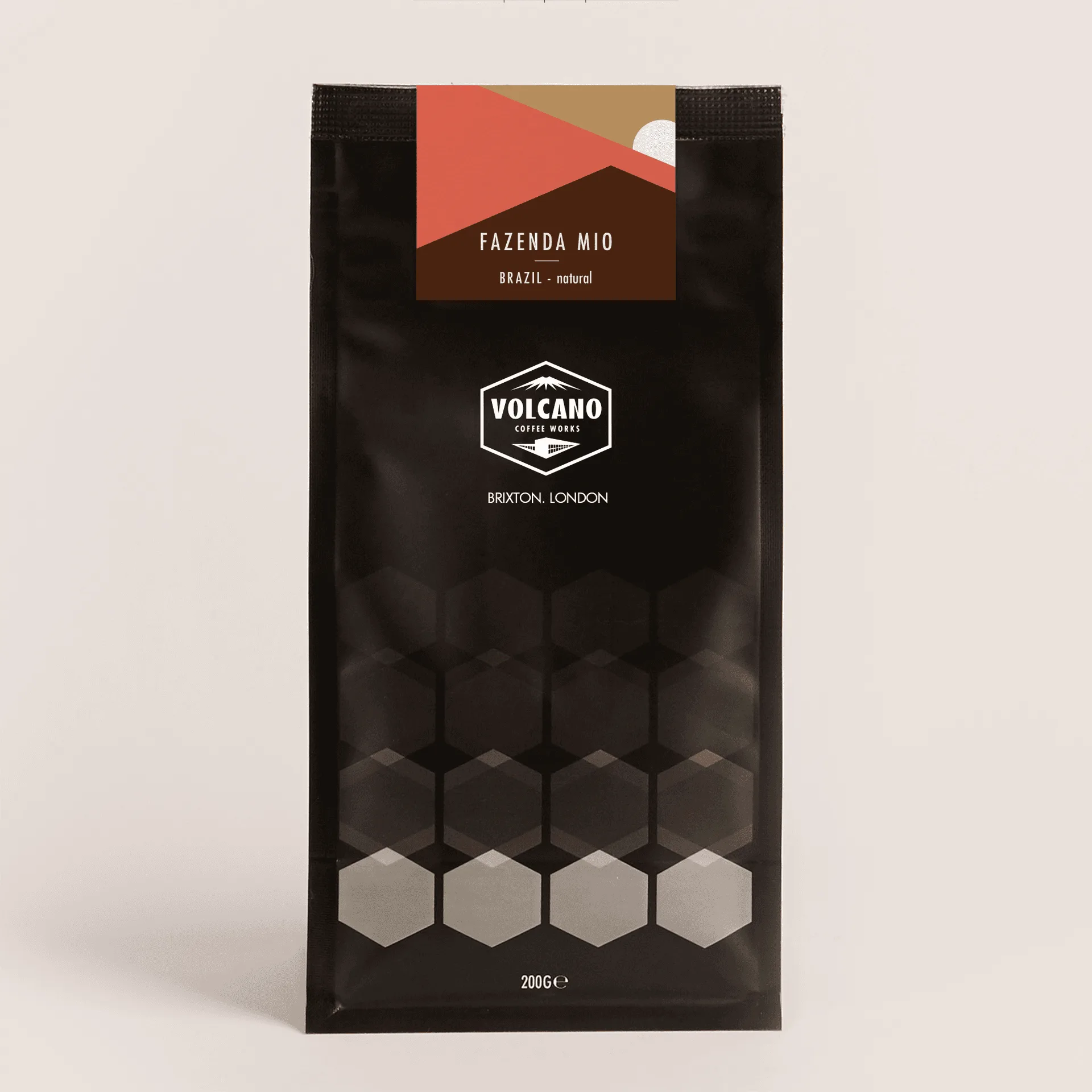
Fazenda Mió - Brazil
- Bloom your coffee with twice the weight of water, then wait 30 seconds before pouring the rest.
- Pour in slow, concentric circles to ensure even extraction.
- Total brew time for pour over should be 2.5 to 4 minutes depending on grind size.
Espresso Ratio: The Art of the Concentrated Shot
Espresso is a different beast entirely. Because it's a concentrated brew, the coffee to water ratio is much lower—typically between 1:2 and 1:3. A standard double espresso uses 18 grams of coffee to yield 36–54 grams of liquid espresso (a 1:2 to 1:3 ratio). This tight ratio extracts intense flavors, body, and crema in just 25–30 seconds.
Adjusting your espresso ratio is one of the most powerful ways to dial in a shot. A 1:2 ratio (18g in, 36g out) produces a balanced, classic espresso. A 1:2.5 ratio (18g in, 45g out) will be slightly longer and lighter, often revealing more acidity and fruit notes. A 1:3 ratio (18g in, 54g out) is considered a lungo and can be great for milk-based drinks. For best results, pair your espresso ratio with a quality single-origin or blend. The sombra-subscription-132464">Sombra Subscription offers a rich, chocolatey profile that works beautifully at a 1:2.5 ratio.
- Use a dosing funnel to prevent mess and ensure even distribution in the portafilter.
- Tamp with consistent pressure—about 30 pounds—for even extraction.
- Time your shot: aim for 25–30 seconds from the moment you start the pump.
French Press and Immersion Brewing Ratios
Immersion brewers like the French press, AeroPress, or Clever Dripper extract coffee differently because the grounds are fully submerged in water for the entire brew time. For French press, a ratio of 1:15 is a great starting point. This produces a full-bodied, rich cup with more oils and sediment than filter methods. For a 500ml French press, use 33 grams of coffee and 500 grams of water.
Steep for 4 minutes, then press slowly. If you prefer a stronger brew, try 1:14; for a lighter cup, 1:16. The AeroPress is more versatile—you can use ratios from 1:10 for a concentrated shot to 1:16 for a standard cup. Experiment with your favorite beans, such as the House Brazil Coffee, which offers nutty, chocolate notes that shine in immersion brewing.
- Grind coarsely for French press to avoid over-extraction and sludge.
- Stir the grounds after adding water to ensure even saturation.
- Press the plunger slowly and steadily—never force it.
Cold Brew Ratio: Slow and Strong
Cold brew is unique because it uses cold water and a long steep time (12–24 hours), resulting in a smooth, low-acid concentrate. The standard cold brew ratio is 1:8 (coffee to water) for a concentrate that you'll dilute with water or milk later. For a ready-to-drink cold brew, use a 1:15 ratio and steep for 16 hours.
To make a concentrate, combine 100 grams of coarsely ground coffee with 800 grams of cold water. Steep at room temperature or in the fridge, then filter through a fine-mesh sieve or paper filter. Dilute the concentrate with equal parts water or milk before serving. This method works wonderfully with bold blends like the Rise Up Blend Subscription, which brings out deep cocoa and caramel notes even when cold.
- Use a coarse grind to prevent bitterness and cloudiness.
- Store cold brew concentrate in the fridge for up to two weeks.
- Experiment with steeping time: 16 hours is a good baseline, but 20 hours yields a stronger concentrate.
How to Adjust Brew Ratios for Your Taste
While standard ratios are a great starting point, the perfect coffee ratio is ultimately personal. If your coffee tastes too bitter or astringent, you may be over-extracting. Try using a slightly coarser grind or reducing your brew ratio (use less coffee relative to water). If your coffee tastes sour or weak, you're likely under-extracting—try a finer grind or a higher coffee to water ratio.
Keep a brewing journal to track your ratios, grind sizes, and tasting notes. Over time, you'll develop an intuition for how different beans and roast levels respond to ratio adjustments. Lighter roasts often benefit from a slightly higher ratio (1:17) to extract enough sweetness, while darker roasts can handle a tighter ratio (1:15) without becoming bitter.
- Change only one variable at a time (ratio, grind, or temperature).
- Taste your coffee at different temperatures as it cools—flavors evolve.
- Use filtered water for the best flavor; tap water can introduce off-notes.
Mastering your coffee brewing ratio is the key to unlocking consistently delicious coffee at home. Whether you prefer a bright pour over, a concentrated espresso, or a smooth cold brew, the right coffee to water ratio makes all the difference. Start with the guidelines above, then tweak until your cup sings. For a truly elevated experience, explore our collection of single-origin and blended coffees—like the House Brazil Coffee—and pair them with the perfect ratio for your favorite brew method. Happy brewing!