Quick answer
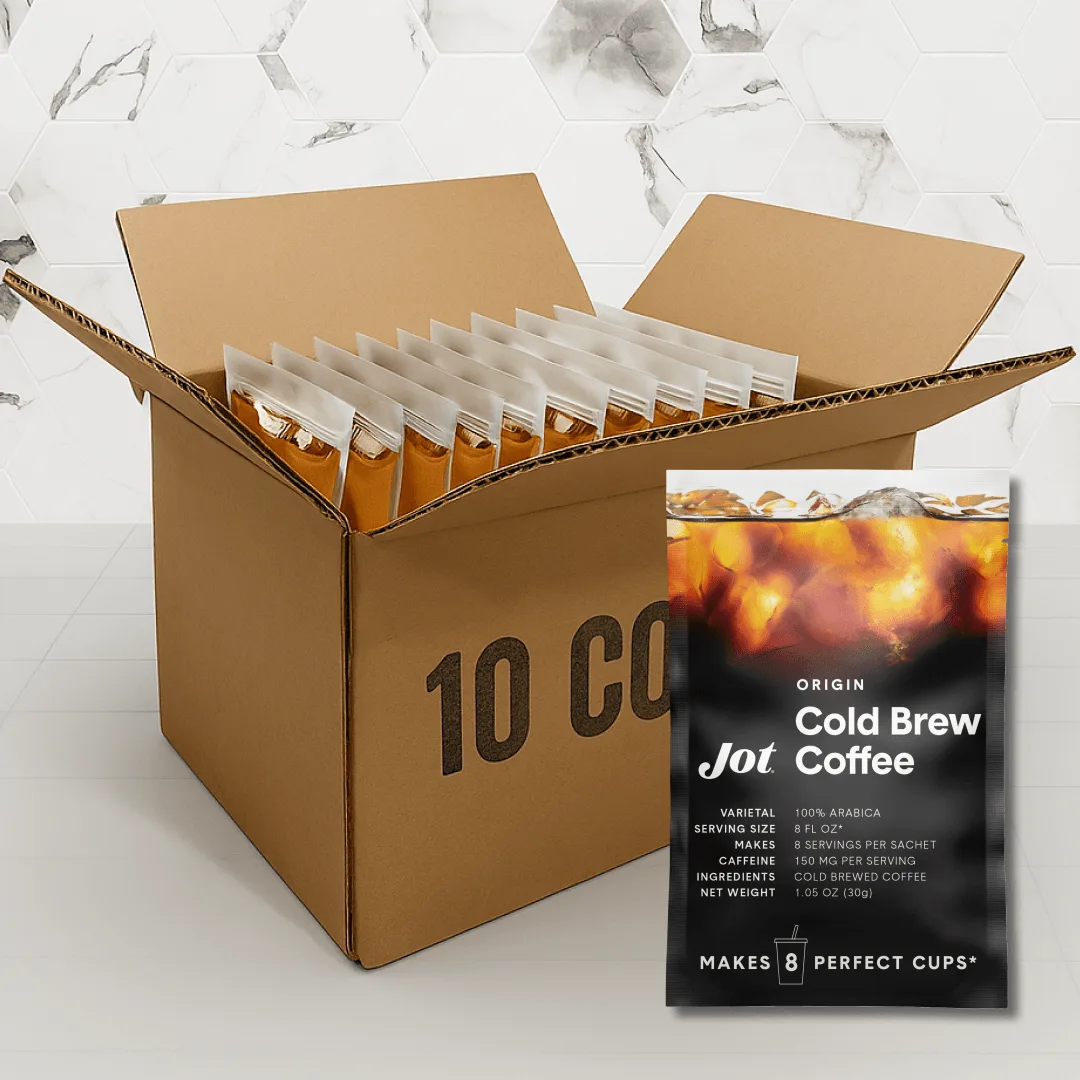
For a cafe cold brew program that needs to scale without equipment or staff training, Jot's Cold Brew Soluble Coffee is the stronger fit: one sachet premixes eight servings in a half-gallon pitcher, and each box makes up to 80 cold brews. Choose Jot Coffee Concentrate instead when you want a single tablespoon to build hot or cold drinks on demand, with 14 cups per bottle and no pitcher prep.
The core difference: pitcher prep vs. per-cup dosing
Soluble cold brew is a batch format. You stir one sachet into a half-gallon pitcher of cold water, which yields eight servings at once. That single step replaces the grind, steep, and filter cycle that normally defines cold brew, so a foodservice coffee solution can go from box to service without a brewer, a Toddy, or a training session. The trade-off is that you commit to a batch size; once the pitcher is mixed, you are pouring from it rather than making drinks to order.
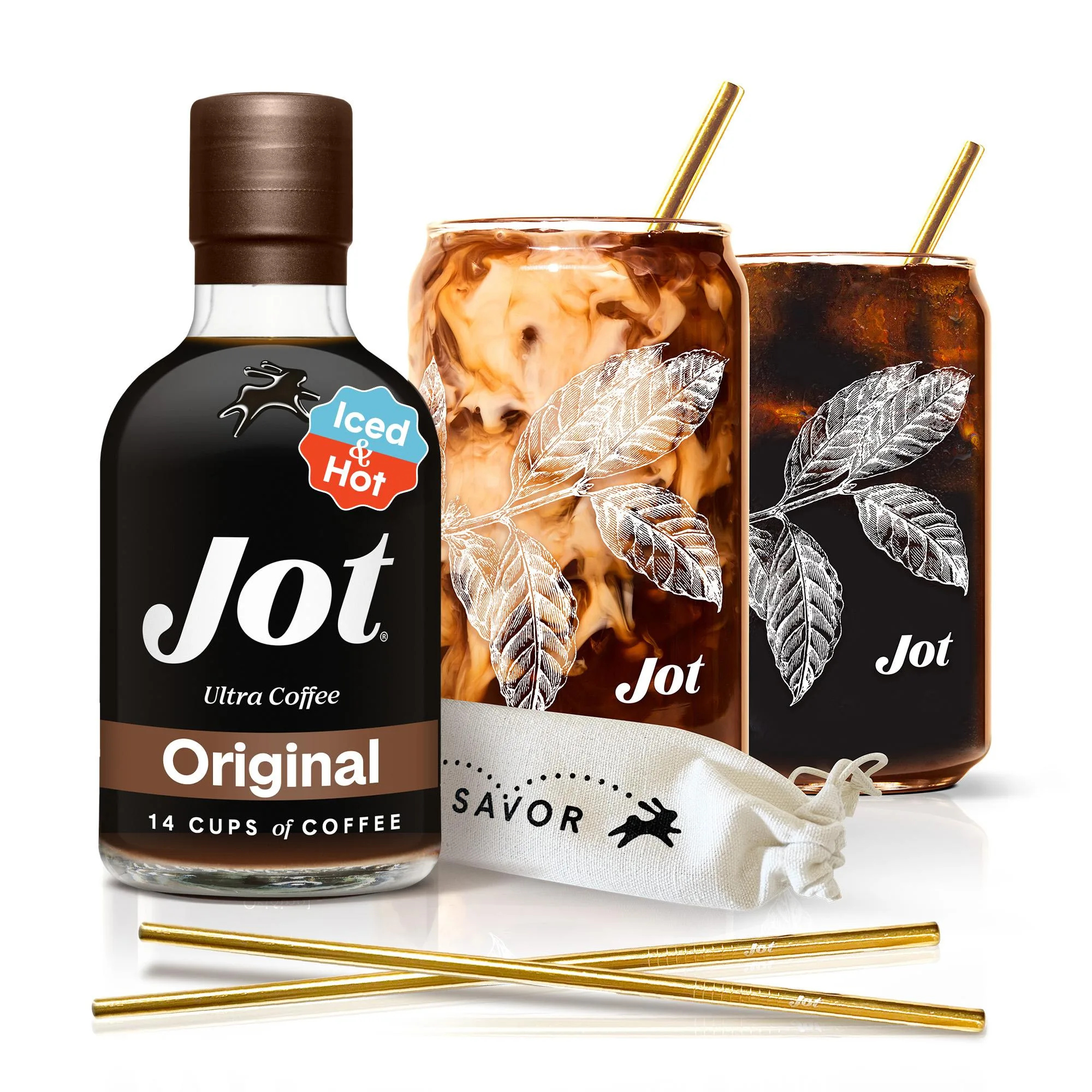
Liquid concentrate is a per-cup format. One tablespoon of Jot Coffee Concentrate makes a cup, and each bottle yields 14 cups. That means no pitcher to mix, no batch to finish, and no leftover cold brew at the end of a slow shift. The trade-off is that every drink is a separate measurement, which is simple but still a step per cup rather than a pour from a ready pitcher.
Volume and staffing: which format matches your counter
A high-volume counter with a predictable rush benefits from the soluble format because the batch is made once and poured repeatedly. A half-gallon pitcher of eight servings covers a morning window without anyone stopping to measure. For operations where cold brew is one item among many and volume is unpredictable, the concentrate's per-cup dosing avoids holding a batch that may not sell through.
Neither format requires specialized equipment or barista training, which is the shared advantage. The decision is really about where you want the labor: up front in a single batch, or distributed across each drink.
Menu range: cold brew only, or hot and cold
The soluble product is built around cold service. The catalog describes it as a cold brew program solution for cold brew, iced lattes, and more, and the preparation is cold water only. If your menu is iced-focused, that focus is an asset rather than a limitation.
The liquid concentrate is explicitly dual-temperature. Jot describes it as making iced or hot coffee in seconds, with a single tablespoon building cold brew, iced coffee, latte, cappuccino, espresso, and more. If you need one SKU to cover both a hot bar and a cold bar, the concentrate removes the need for a second coffee format.
Cost per cup and storage footprint
At the catalog price of USD 68.04, the soluble box makes up to 80 cold brews, which spreads the cost across a large number of servings and suits operations that go through cold brew steadily. The concentrate bundle at USD 43.80 makes 14 cups per bottle, so it carries a higher cost per cup but a lower entry price and less commitment if cold brew is a smaller part of your menu.
Storage differs too. Sachets are dry, shelf-stable, and light, which is convenient for a back bar with limited refrigerator space. Bottled concentrate is a liquid and takes up more room per serving, but it is ready to pour with no mixing vessel.
Trade-offs at a glance
- Soluble: batch commitment: You mix a half-gallon pitcher, so you need to sell through eight servings before quality or freshness becomes a concern. Choose it when cold brew volume is steady and staffing is thin.
- Concentrate: per-cup labor: Every drink needs a tablespoon measured, which is quick but repeated for each order. Choose it when volume is unpredictable or you want no leftover batch.
- Menu flexibility: Concentrate covers hot and cold drinks; soluble is designed around cold service. If your menu is iced-only, soluble keeps things simple; if it is mixed, concentrate avoids a second SKU.
Product facts
- Cold Brew Soluble Coffee | Easy Cold Brew Coffee Program Solution | No Equipment, No Training, Makes up to 80 Cold Brews, Iced Lattes, & More: Premix 8 servings at a time by stirring one sachet into a half gallon pitcher of cold water; each box makes up to 80 cold brews, iced lattes, and more, with no equipment or training required. Best for cafes that want a ready-to-pour cold brew batch and predictable cost per serving across high volume.
- Jot Coffee Concentrate Bundles - 14+ Cups Per Bottle - Make Iced or Hot Coffee in Seconds - 150mg Caffeine, Fresh-Brewed, Specialty Coffee: One tablespoon makes a cup; each bottle makes 14 cups; 150mg caffeine per serving; makes iced or hot coffee, latte, cappuccino, and espresso. Best for operations that need one format for both hot and cold drinks and prefer per-cup dosing over batch prep.
Which format fits your operation
Best for
- Cafes and foodservice counters with steady cold brew volume that want a ready-to-pour batch
- Operators who want no equipment, no training, and a low cost per serving across up to 80 drinks
- Iced-focused menus where cold brew, iced lattes, and similar drinks are the priority
Not for
- Operations that need one product to make both hot and cold coffee drinks
- Low-volume or unpredictable counters that cannot sell through an eight-serving batch
- Anyone who wants to avoid measuring a batch and prefers dosing each cup individually