Quick Answer
Daily collagen supplementation can support joint health by providing the building blocks for cartilage and connective tissue. While individual results vary, many people notice improvements in joint comfort and mobility within 8–12 weeks of consistent use. For best results, choose a high-quality collagen peptide supplement and take it daily as part of your routine.
Joint health is a top concern for many adults, whether due to aging, active lifestyles, or everyday wear and tear. Collagen, the most abundant protein in the body, plays a crucial role in maintaining the structure and function of joints. Supplementing with collagen peptides may help support joint comfort and mobility, but what can you realistically expect?
In this FAQ-style guide, we answer common questions about collagen for joint health, including how it works, how long it takes to see results, and how to choose the right supplement. We'll also highlight some Vital Proteins products that may fit your needs.
How Does Collagen Support Joint Health?
Collagen is a key component of cartilage, the rubbery tissue that cushions joints and allows them to move smoothly. As we age, our natural collagen production declines, which can contribute to joint discomfort and stiffness. Supplementing with collagen peptides provides the amino acids your body needs to support cartilage maintenance and overall joint function.
Type II collagen is particularly relevant for joint health, as it's the primary collagen type found in cartilage. Some collagen supplements also include additional ingredients like hyaluronic acid and chondroitin sulfate, which are known to support joint lubrication and structure.
- Collagen peptides are easily absorbed and can be added to your daily routine in various forms.
- Look for supplements that specify their collagen type and any added joint-supporting ingredients.
How Long Does It Take for Collagen to Work for Joints?
Consistency is key when it comes to collagen supplementation. While some people report feeling improvements in as little as 4–6 weeks, clinical studies often show noticeable benefits after 8–12 weeks of daily use. Factors such as your age, overall health, and the severity of joint issues can influence the timeline.
To maximize results, take your collagen supplement every day, preferably at the same time. Some people find it easier to remember by adding it to their morning coffee or smoothie. Remember that collagen is a supportive nutrient, not a quick fix, so patience and consistency are essential.
- Set a daily reminder to take your collagen supplement consistently.
- Track your joint comfort and mobility over time to notice gradual changes.
What Results Can You Expect from Daily Collagen Supplementation?
Many users report reduced joint discomfort, improved flexibility, and better mobility after consistent collagen use. Others notice benefits like healthier skin, hair, and nails as a bonus. However, individual results vary, and collagen is not a substitute for medical treatment of joint conditions.
It's also important to pair collagen supplementation with a balanced diet and regular exercise to support overall joint health. Staying hydrated and maintaining a healthy weight can further reduce stress on your joints.
- Keep a journal of your joint symptoms to track progress.
- Combine collagen with a healthy lifestyle for the best outcomes.
Frequently Asked Questions
Can collagen help with joint pain?
Collagen provides amino acids that support cartilage maintenance, which may help reduce joint discomfort over time. While not a cure, many users report improved joint comfort with daily supplementation. Consistency is key; give it at least 8 weeks.
What type of collagen is best for joints?
Type II collagen is most prevalent in cartilage, so supplements rich in Type II collagen, like Cartilage Collagen, may be particularly beneficial for joint health. Look for Type II collagen or blends that include it.
Should I take collagen with food?
Collagen peptides can be taken with or without food. Some people prefer mixing them into beverages or meals for convenience. There's no strong evidence that food timing significantly affects absorption. Choose a routine that works for you.
Are capsules as effective as powder for joints?
Both forms provide collagen peptides, but capsules offer convenience and precise dosing. Powders may allow for higher doses per serving. Choose based on your lifestyle and preferences. Both can be effective; pick the form you'll stick with.
Vital Proteins Products for Joint Support
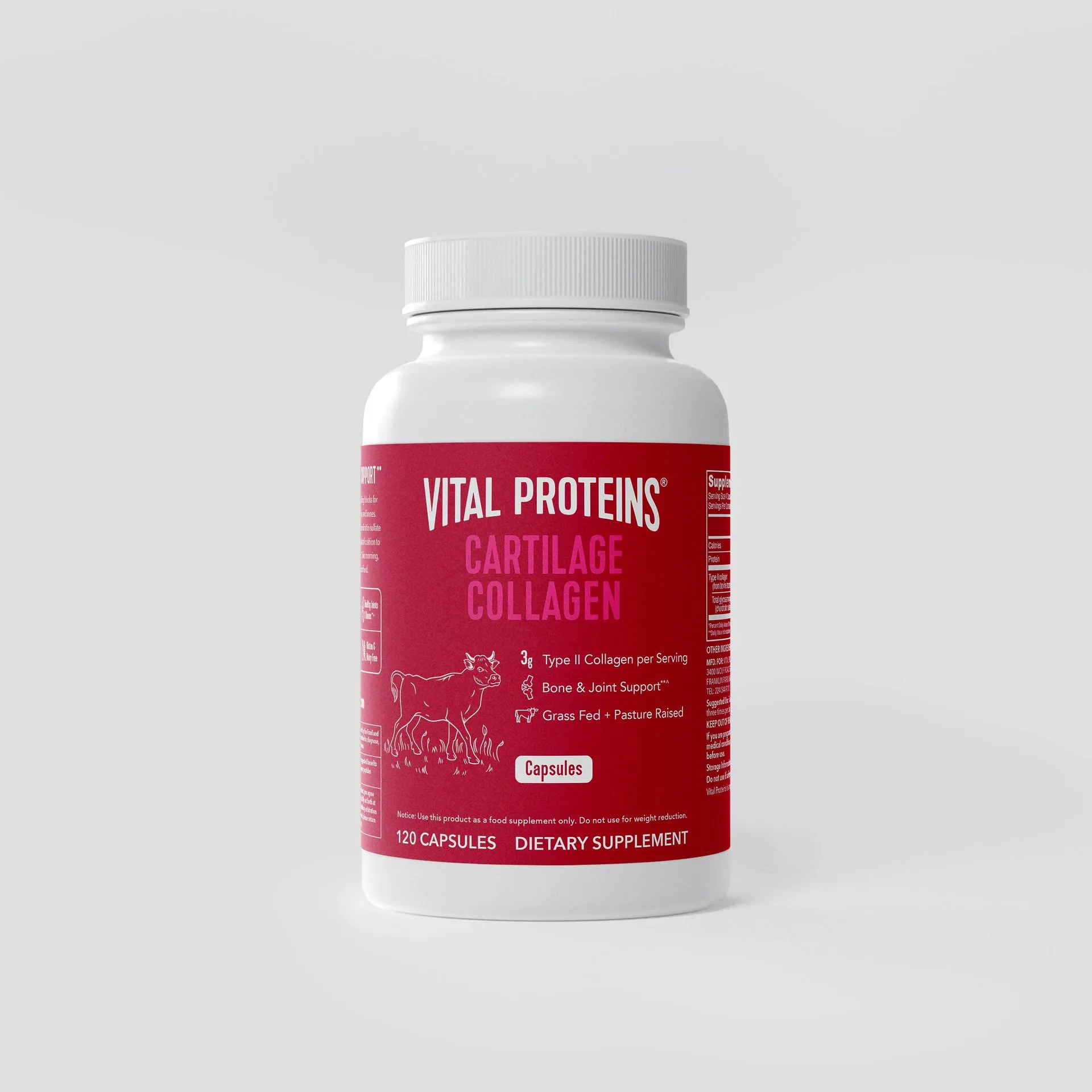
- Cartilage Collagen - Capsules: Vital Proteins' Cartilage Collagen is rich in Type II Collagen Peptides and Glycosaminoglycans, including naturally occurring Chondroitin Sulfate. Type II collagen and chondroitin sulfate are specifically associated with joint health, making this formula a targeted option for those focusing on joint support.
- Enhanced Collagen Complex: Vital Proteins® Enhanced Collagen Complex Capsules with clinically studied BioCell Collagen® is a convenient, premium, powerhouse blend comprised of collagen, chondroitin sulfate, and hyaluronic acid designed to support skin health, joint health and mobility from the inside out. This comprehensive blend combines collagen with joint-supporting ingredients like chondroitin sulfate and hyaluronic acid, offering a multi-faceted approach to joint and skin health.
Daily collagen supplementation can be a valuable addition to your joint health routine, offering support for cartilage and connective tissue. While results take time, many people notice improvements in comfort and mobility within a few months. Explore Vital Proteins' range of collagen products, such as the Enhanced Collagen Complex, to find the right fit for your needs and start your journey toward better joint health today.