Two Eras, Two Profiles
Infinity Cutting Tools offers two router bits that both draw on historical furniture detail, but they come from different design moments. The 1/2" Shank 17th-Century Router Bit, Double D, reflects the late 1600s British taste for curved classical shapes in moldings. The 1/2" Shank Colonial Period Router Bit, Large Furniture Detail, is inspired by Colonial Williamsburg furniture of the 17th and 18th centuries and is part of a seven-bit family for period moldings.
Choosing between them is less about which is better and more about which profile fits the furniture or millwork you are building. The Double D bit produces a specific historical curve, while the Colonial bit is intended for broader period furniture and architectural details. Below, we break down the supplied specifications and design intent so you can match the bit to your project.
Key specifications at a glance
-
Infinity Tools 1/2" Shank 17th-Century Router Bit, Double D: 1/2" shank; cutter diameter 2-1/4"; cutter height 3/4"; overall length 1-3/16"; profile: 17th Century; Double D bit. These dimensions tell you the cutting envelope and shank size, which affect the router you need and the scale of molding the bit can produce.
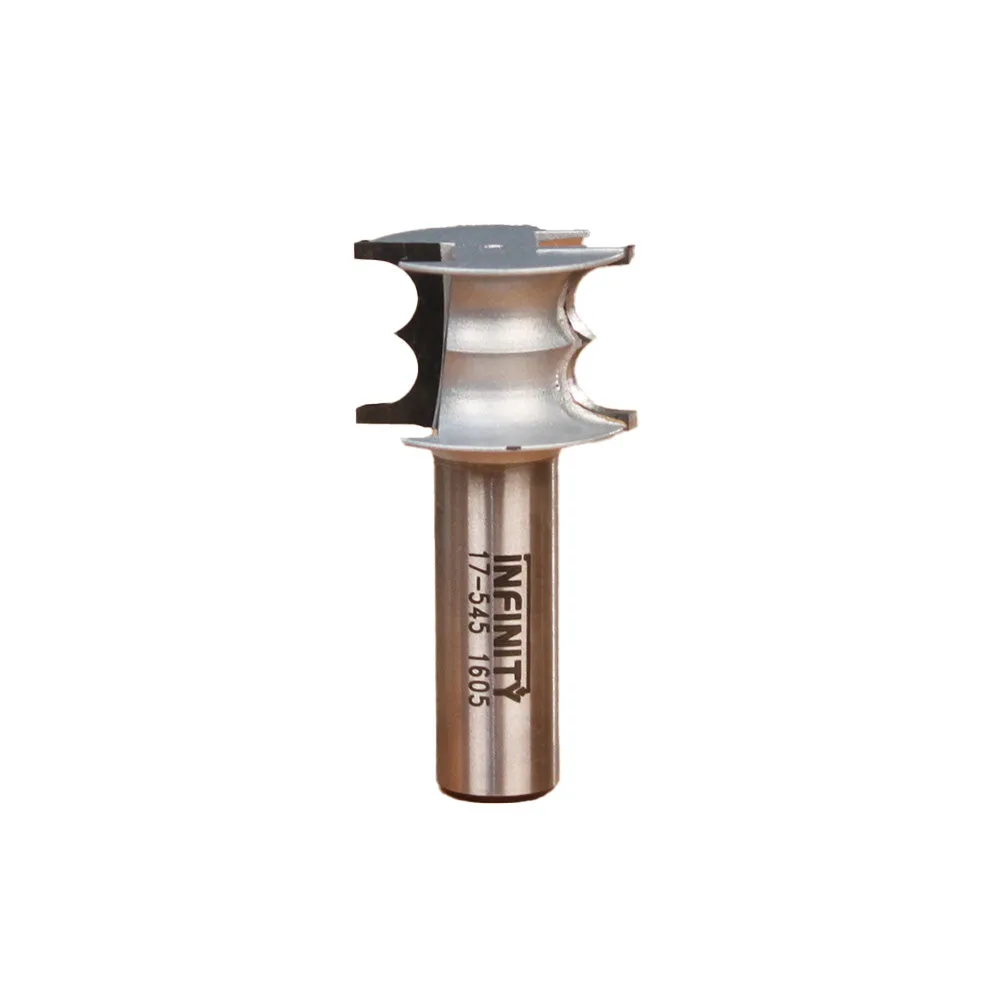
Infinity Tools 1/2" Shank 17th-Century Router Bit, Double D
-
Infinity Tools 1/2" Shank Colonial Period Router Bit, Large Furniture Detail: 1/2" shank; part of a seven-bit series inspired by Colonial Williamsburg furniture; intended for period furniture molding, panel molding, waist moldings, and more. This identifies the bit as one option in a larger system for Colonial-style work, useful if you plan to match multiple moldings.
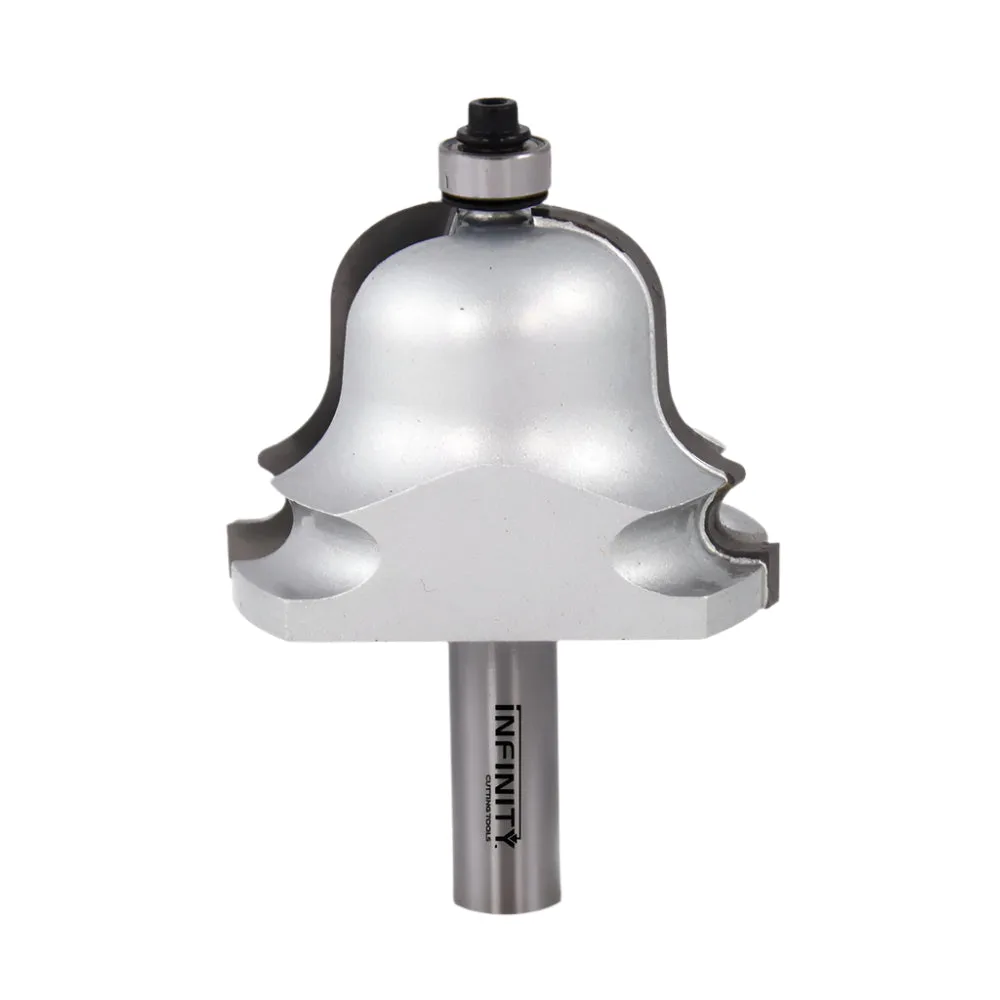
Infinity Tools 1/2" Shank Colonial Period Router Bit, Large Furniture Detail
The Double D Bit: A Specific 17th-Century Curve
The Double D bit is named for its profile, which echoes the curved classical rounded shapes that became popular in late 17th-century Britain. According to the product record, makers such as Garret Johnson and Grinling Gibbons incorporated these shapes into furniture moldings, sacrificing strength for style. The profile evolved from classical Greek and Roman forms used by architects like Christopher Wren and William Kent.
If your project calls for a historically informed British Baroque or late Stuart detail, this bit gives you that specific curve. The 2-1/4" cutter diameter and 3/4" cutter height mean it can cut a relatively wide molding in a single pass, but the exact depth of cut will depend on your router and setup. The record does not supply recommended speeds or feed rates, so consult your router manual and test on scrap.
The Colonial Bit: A Family of Period Details
The Colonial Period bit is one of seven bits inspired by Colonial Williamsburg furniture and architectural millwork. The product record states these profiles take inspiration from several design periods, with roots as far back as 17th-century American furniture and the Baroque period, continuing into Queen Anne and Neoclassical/Federal periods. The bit is described as ideal for period furniture molding, panel molding, waist moldings, and more.
This bit is a good fit when you are reproducing or evoking American Colonial details and want a profile that belongs to that vocabulary. Because it is part of a series, you can buy individual bits or the entire set, which includes a complimentary wooden box for storage. The supplied record does not list cutter diameter, cutter height, or overall length for this bit, so if those dimensions are critical to your project, verify them before ordering.
How to choose between them
- Design period and style: Choose the Double D bit for late 17th-century British/Baroque curves. Choose the Colonial bit for American Colonial and related periods (Queen Anne, Federal) where the profile matches that furniture tradition.
- Scale of the molding: The Double D bit has a 2-1/4" cutter diameter and 3/4" cutter height, making it suited to larger, sweeping curves. The Colonial bit's dimensions are not supplied, so compare its profile to your intended molding before committing.
- Project scope: If you need multiple matching moldings for a period room, the Colonial bit is part of a seven-bit series that can be purchased individually or as a set. The Double D bit is a single, specific profile.
- Shank compatibility: Both bits have a 1/2" shank, so they require a router with a 1/2" collet. If your router only accepts 1/4" shanks, you will need an adapter or a different bit.
What the records do not tell you
The supplied information for these bits does not include recommended router speeds, feed rates, depth-of-cut limits, or safety instructions. It also does not confirm whether the Colonial bit has a bearing or is meant for freehand or table-mounted use. Treat these as unknowns to resolve through the manufacturer's documentation or by contacting Infinity Cutting Tools directly. Do not assume that because a bit is described for a certain style, it is safe for any particular routing technique.
For the Double D bit, the record gives cutter diameter and height but no recommended RPM. For the Colonial bit, even basic dimensions are absent from the supplied record. When a specification is missing here, it means only that it is not in the provided evidence, not that the manufacturer lacks it.
A note on historical accuracy
Both bits are inspired by historical profiles, but they are modern router bits intended to reproduce those shapes efficiently. The Double D bit's record notes that original makers sacrificed strength for style, and that these profiles evolved from classical sources. The Colonial bit's record notes that similar moldings were originally made with scratch stocks or molding planes. Using a router bit speeds up the process, but the result will still reflect your setup, stock, and finishing. For historically sensitive work, compare test cuts to reference photos or surviving examples.