What the Combat Filet Arctic Storm gives you to care for
The Combat Filet from Half Face Blades is a fixed-blade cutting tool with a 4-inch blade and an 8.5-inch overall length. Its handle combines Arctic Storm Carbon Fiber scales with a textured grip and Allen bolts, while the blade carries an Armor Black Cerakote finish over S45VN American steel. A Kydex sheath is included for carry and storage.
Because the handle, blade finish, and hardware each behave differently, the most reliable approach is a short, material-specific routine rather than one all-purpose cleaning method. The steps below stay within what the supplied product record supports; where a detail is not confirmed, the guide says so instead of guessing.
Build details that shape the care routine
-
Combat Filet- Arctic Storm Carbon Fiber, Armor Black Cerakote, Allen Bolts, Textured Grip: Handle: Textured grip with Arctic Storm Carbon Fiber scales and Allen bolts for a secure, solid feel. The textured carbon fiber surface and exposed bolt heads are the two handle areas most likely to collect debris, so they set the cleaning priorities.
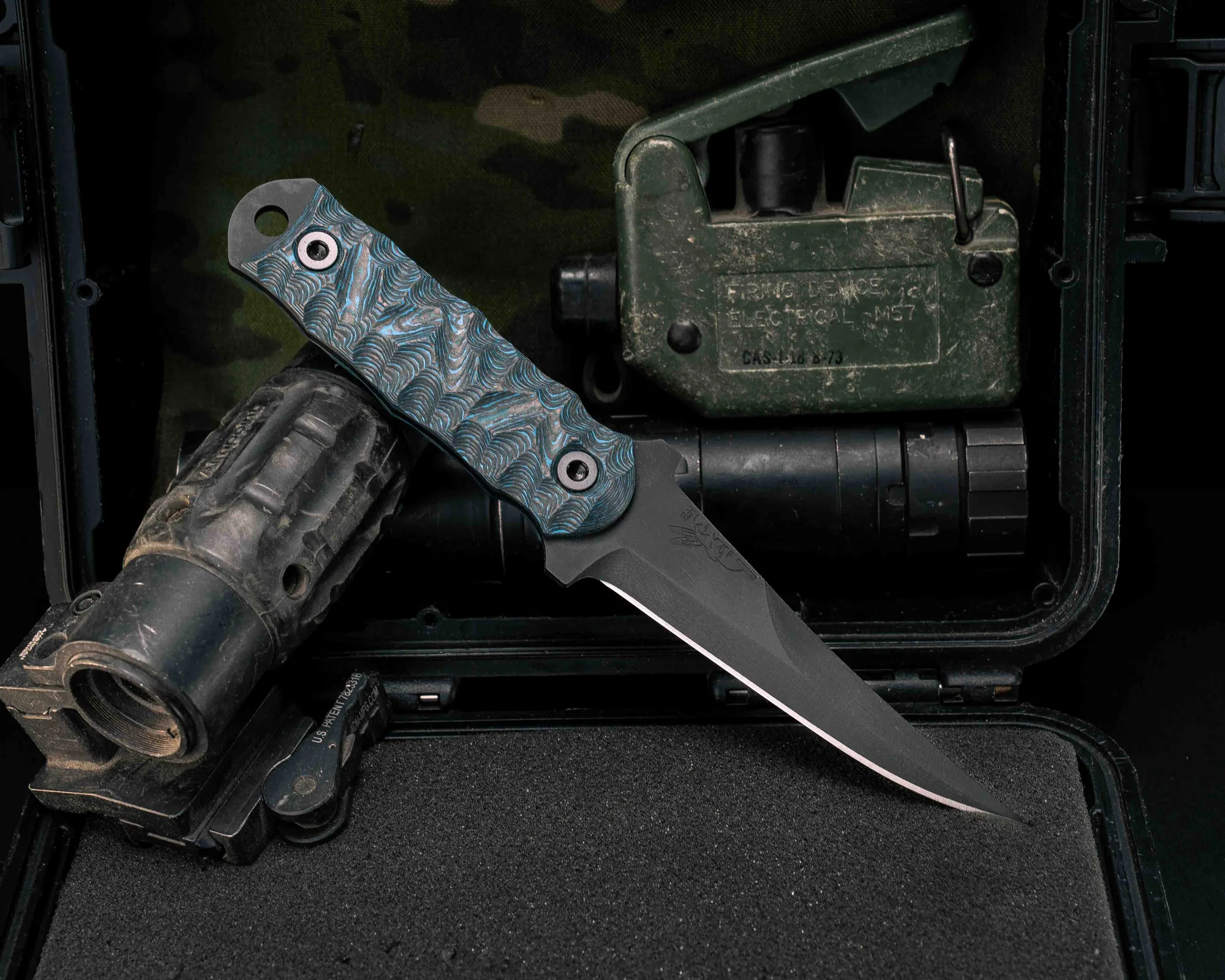
Combat Filet- Arctic Storm Carbon Fiber, Armor Black Cerakote, Allen Bolts, Textured Grip
-
Combat Filet- Arctic Storm Carbon Fiber, Armor Black Cerakote, Allen Bolts, Textured Grip: Finish: Armor Black Cerakote for a durable, low-glare surface. Cerakote is a coating, not bare steel, so blade cleaning should protect the finish rather than treat it like uncoated metal.
-
Combat Filet- Arctic Storm Carbon Fiber, Armor Black Cerakote, Allen Bolts, Textured Grip: Blade steel: S45VN American steel for reliable edge retention and toughness. Knowing the steel helps you separate edge maintenance from finish care; the two are not the same task.
-
Combat Filet- Arctic Storm Carbon Fiber, Armor Black Cerakote, Allen Bolts, Textured Grip: Includes a Kydex sheath for safe carry and storage. The sheath is part of the knife's care environment, so keeping it clean and dry matters as much as wiping the blade.
A supported cleaning sequence for the textured carbon fiber handle
Work from the least aggressive action to the most, and stop if a step does not remove the debris. The supplied record does not name specific cleaners, solvents, or brush types, so test any product on a small, inconspicuous area first and avoid soaking the handle.
- Clear loose debris from the texture: Use a soft dry brush or cloth to lift dust and grit out of the textured grip before introducing any moisture. This keeps abrasive particles from being rubbed across the carbon fiber scales.
- Wipe the scales with a damp cloth: A cloth dampened with water is the gentlest way to remove surface residue. Wipe along the texture rather than scrubbing across it, and follow with a dry cloth so no moisture sits around the Allen bolts.
- Clean around the Allen bolts: The bolt heads create small recesses where debris collects. Use a dry cloth or soft brush around them, and dry the area thoroughly afterward. The supplied record does not specify bolt torque or thread treatment, so do not loosen or tighten the bolts as part of routine cleaning.
- Dry and inspect: Let the handle air-dry fully before sheathing the knife. Check that the texture is free of grit and that no moisture remains near the bolts or the blade junction.
Carbon fiber handle cleaning: what to avoid
Carbon fiber scales are a composite, and the textured grip depends on that surface staying intact. The supplied information does not confirm compatibility with abrasive pads, strong solvents, or prolonged soaking, so treat those as unverified rather than recommended. A damp cloth and a soft brush cover the routine case; anything more aggressive is a decision the record does not support.
The same caution applies to oiling the handle. No handle oil or conditioner is specified for this model, so adding one is an untested choice rather than a maintenance requirement. If you want to use a product, test it first and keep it away from the blade finish.
Armor Black Cerakote blade maintenance after use
The blade is S45VN steel with an Armor Black Cerakote finish. Clean and dry it before storage, and keep the cleaning action gentle enough that the coating is not abraded. The supplied record does not list a sharpening angle, sharpening method, or coating-specific cleaner, so those choices remain yours to verify.
- Rinse or wipe away cutting residue promptly: Remove blood, food residue, or other material soon after use with a damp cloth, then dry the blade completely. Prompt removal limits the time residue sits against the Cerakote.
- Dry the blade before sheathing: Moisture trapped in a Kydex sheath has nowhere to go. Dry the blade fully, including the spine and the area near the handle, before the knife goes back in.
- Keep the edge maintained separately: Edge upkeep is distinct from finish care. Because the record gives no sharpening specification, follow a method you trust for S45VN steel and avoid letting abrasive work contact the Cerakote flat more than necessary.
Kydex sheath and storage habits
The included Kydex sheath protects the knife and the edge, but it also holds anything that goes in with the blade. Shake out debris and check that the interior is dry before sheathing. Store the knife clean and dry, and avoid leaving it in a damp environment where moisture can sit against the steel or the handle hardware.
- Check the sheath before every carry: Grit or moisture inside the Kydex can scratch the blade finish or promote corrosion. A quick shake and visual check takes seconds.
- Do not store a wet knife: Dry the blade and handle first. The record does not specify a storage oil or long-term preservative, so rely on cleanliness and dryness rather than an unverified product.
Where the supplied information stops
This guide covers what the product record confirms: the materials, the blade dimensions, the Cerakote finish, the textured carbon fiber grip with Allen bolts, and the included Kydex sheath. It does not include manufacturer cleaning agents, bolt torque values, sharpening angles, or handle-conditioning products. For those details, check the documentation that came with your knife or contact Half Face Blades directly rather than assuming a generic knife-care rule applies.