Quick answer
Choose a combined colander and salad spinner if you want to save counter space and streamline washing and drying greens. The Dreamfarm Spina is a top pick for its clever in-sink design and dual functionality.
Why combine a colander and salad spinner?
A 2-in-1 colander and salad spinner eliminates the need for two separate tools. You rinse greens in the colander mode, then switch to spinner mode to dry them — all without transferring produce between bowls. This saves counter space and cuts cleanup time.
The main trade-off is that combined models often have a smaller drying capacity than standalone spinners. If you regularly prep large batches of greens for a crowd, a dedicated spinner may still be better. For everyday use, the convenience of a single tool usually wins.
Key features to compare
Look at how the tool converts between colander and spinner modes. Some models require a separate lid or basket swap; others, like the Spina, transform in place. The mechanism should be smooth and secure.
Drying efficiency depends on the spinner design. An in-sink model uses the sink as a bowl, so you don't need a separate outer container. This also means the spinner won't take up cabinet space. However, it requires a sink with enough depth and clearance to spin freely.
Durability matters: check that the colander basket is sturdy and the spinner mechanism is well-built. Plastic parts should be BPA-free and dishwasher-safe for easy cleaning.
Decision rules for choosing a combined colander and salad spinner
- Space priority: If you have limited counter or cabinet space, choose a model that works in the sink (like Spina) rather than one with a separate outer bowl.
- Batch size: For small to medium batches (1-2 heads of lettuce), a combined spinner works well. For large batches (3+ heads), consider a larger standalone spinner.
- Conversion ease: Pick a model that switches from colander to spinner without extra parts. Fewer pieces mean faster cleanup and less chance of losing components. Check that the conversion mechanism feels solid and doesn't wobble.
- Sink compatibility: Measure your sink depth and clearance. An in-sink spinner needs enough room to spin without hitting the faucet or sides. If your sink is shallow or has a low faucet, a countertop combined spinner may be a better fit.
- Drying performance: Test the spin mechanism: a smooth pull-cord or crank action dries greens faster. Avoid models that require awkward hand-cranking or have a weak spin.
Product facts
-
Spina: Spina combines a straining colander and an in-sink salad spinner in one tool. You rinse and dry greens in the same device without extra bowls, saving counter and storage space.
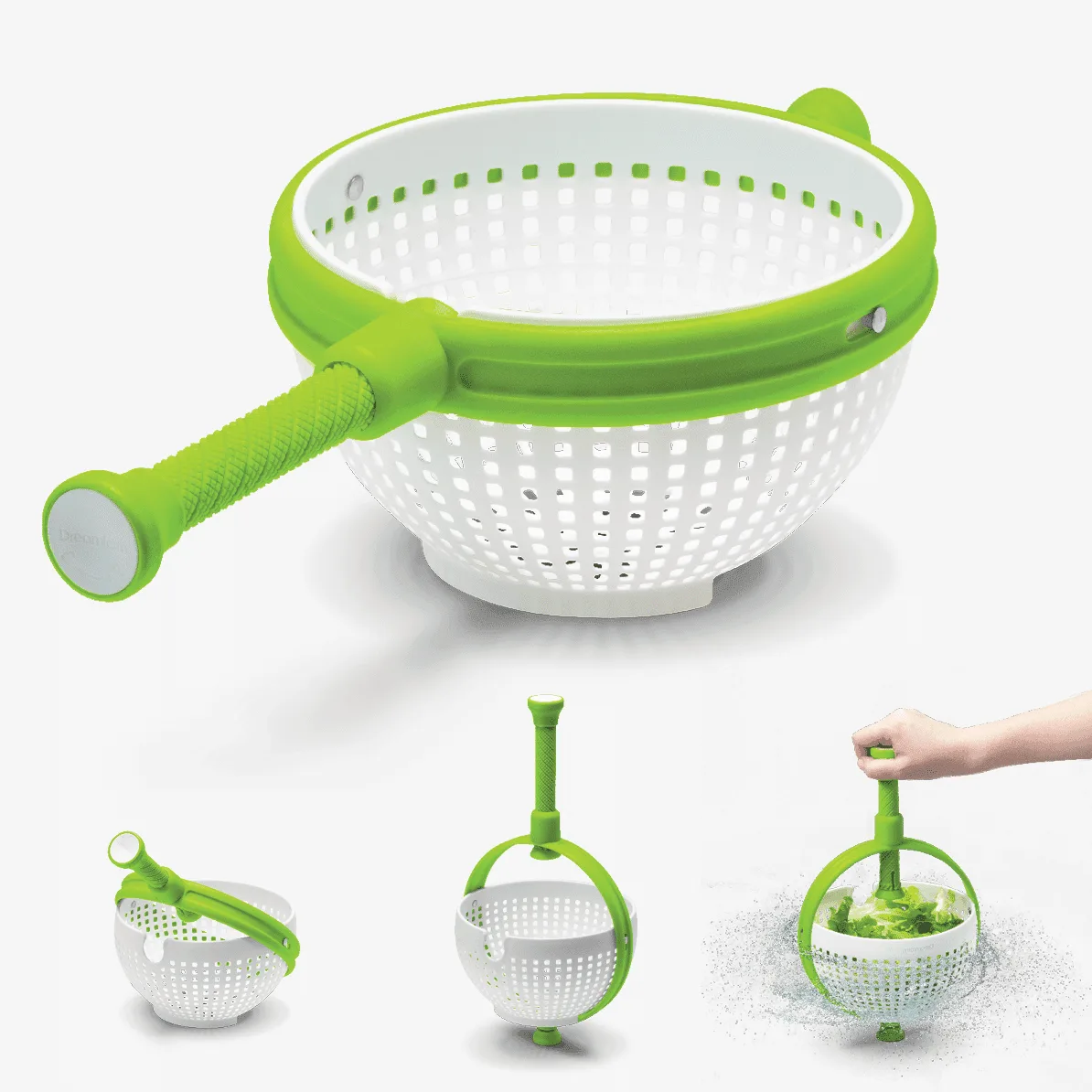
Spina
Who should buy a combined colander and salad spinner?
Best for
- Home cooks with limited kitchen storage who want one tool instead of two
- Anyone who regularly washes and dries small to medium batches of greens or herbs
Not ideal for
- Heavy users who need to dry large quantities of greens at once (3+ heads)
- Kitchens with very shallow sinks or low faucets that prevent in-sink spinning