Why a coarse grater slips in the first place
A coarse cheese grater slipping is usually a grip problem, not a blade problem. Hard cheese needs steady pressure, and a paddle-shaped hand grater only works when the handle and the grating surface stay aligned with your hand. When the handle feels slick or the grater rocks, you compensate with a tighter squeeze, and the tool starts to wander.
The fix starts with identifying which part of the grip is failing: the handle, your hand position, or the surface you are grating over. The Home Series Coarse Cheese Grater with Comfort Grip Handle is designed around that first part, so it is a useful reference point for what a more secure grip looks like.
Diagnose the slip before you change technique
Work through these checks in order. Each one points to a different part of the grating setup.
- The handle rotates or slides in your palm: If the grater twists as you push, the handle material or shape is not giving you enough purchase. A soft-touch surface with a molded plastic overlay and subtle ribbing is intended to reduce that movement.
- Your knuckles or fingertips drift toward the blade: This is a hand-position issue. Rehearse the stroke with the grater off the food before adding pressure.
- The grater rocks because the grating surface is small: A narrow surface forces you to balance the tool instead of driving it. A broad grating surface gives you more room to work efficiently.
- The grater slides across the cutting board or counter: Check what the grater is resting on and whether your grip keeps the tool level. The supplied product information does not include a non-slip base or countertop anchoring feature, so stability depends on how you hold the grater and what it rests against.
What a comfort grip handle actually changes
The comfort grip grater handle on the Home Series combines a soft-touch material with an overlay of stronger, molded plastic. The subtle ribbing is there for a more secure grip, and the updated handle design is intended to provide greater comfort, stability, and durability. In practice, that means less force needed to keep the grater from rotating, which is exactly the correction most slipping problems need.
It is worth being precise about what the handle can and cannot do. A better grip reduces the chance of the tool twisting in your hand. It does not replace a stable grating motion, and the supplied product information does not describe a suction base, clamp, or other countertop locking mechanism. If your grater slides across the board rather than rotating in your hand, the handle is not the part to change first.
Home Series Coarse Cheese Grater: grip and surface evidence
-
Home Series Coarse Cheese Grater with Comfort Grip Handle: The handle design combines a comfortable, soft-touch material with an overlay of stronger, molded plastic with subtle ribbing for a more secure grip. This is the direct answer to a grater that rotates or slides in your palm during a hard-cheese stroke.
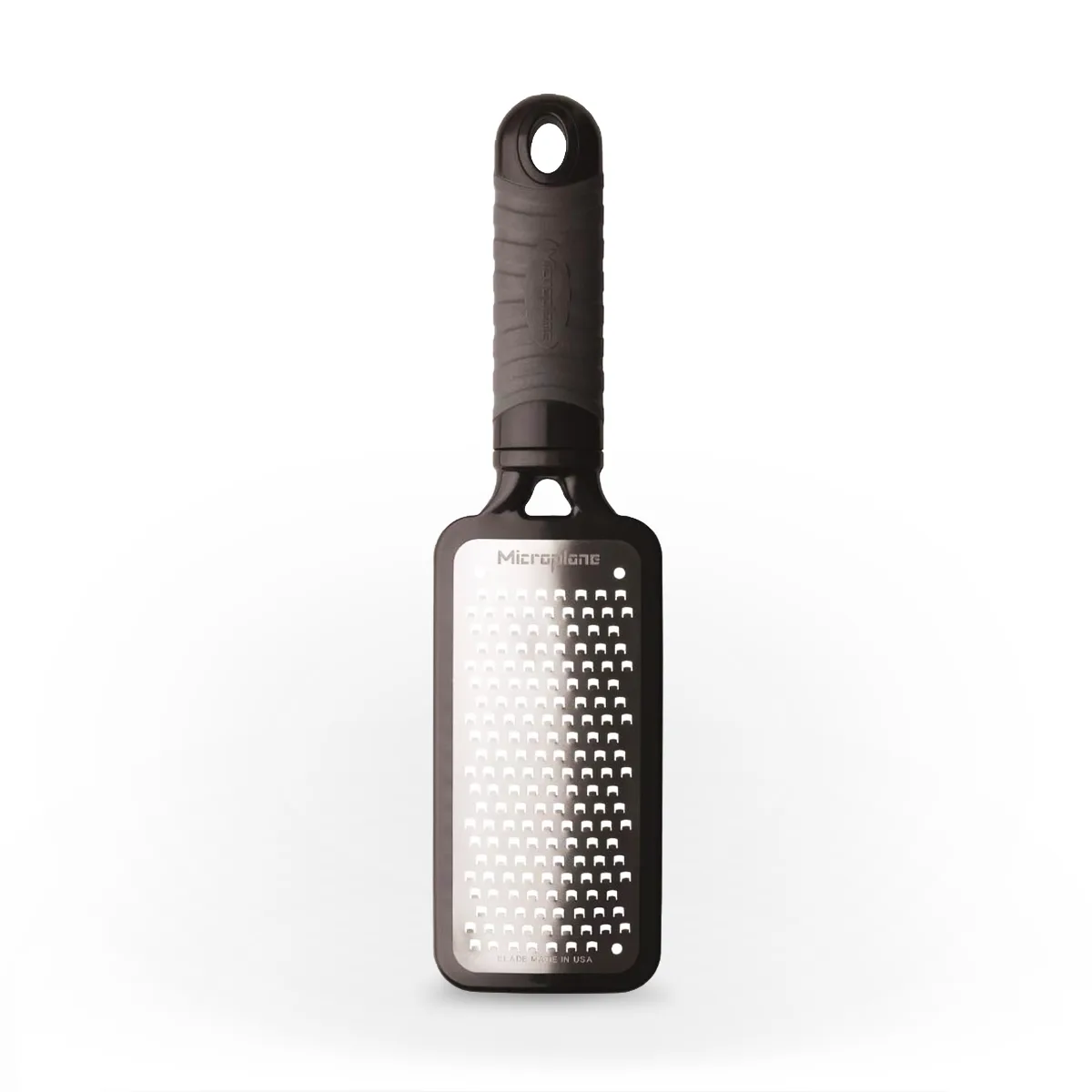
Home Series Coarse Cheese Grater with Comfort Grip Handle
-
Home Series Coarse Cheese Grater with Comfort Grip Handle: The Home Series is a refreshed paddle-shaped, hand-held Cheese Grater with an updated handle design that provides greater comfort, stability, and durability. Explains why the handle, rather than the blade, is the stability feature to evaluate when diagnosing a slipping coarse grater.
-
Home Series Coarse Cheese Grater with Comfort Grip Handle: All Microplane® Home Series Cheese Graters offer a broad grating surface for more room to efficiently get the job done. A broader surface reduces the balancing act that makes a narrow grater rock and slip.
A safer grating stroke for hard cheese
Use these steps to keep the grater aligned and your hands clear. They describe general technique, not a manufacturer procedure, and the supplied information does not include operating instructions for this grater.
- Set the grater on a stable surface: Rest the far end of the paddle against a cutting board or counter edge so it cannot skate forward as you push.
- Grip the handle with your whole hand: Wrap your fingers around the ribbed handle rather than pinching it with your fingertips. A full grip uses the soft-touch material as intended.
- Keep the grater level and your wrist neutral: A tilted grater concentrates pressure on one edge and encourages rocking. Keep the grating surface parallel to the food.
- Move the cheese, not the grater: Hold the grater steady and draw the cheese across the coarse blade. This keeps the handle in one orientation and reduces the twisting that causes slips.
- Stop before your fingers reach the blade: The blades are described as razor-sharp surgical-grade stainless steel. Keep fingertips back and finish the last piece by hand or with a safer tool.
Match the food to the coarse blade
Slipping is more likely when the food does not suit the blade. The Home Series Coarse Cheese Grater is intended for carrots, chocolate, coconut, and hard cheeses, and the results will be small gratings. Hard cheese is the most grip-demanding of those because it requires consistent pressure. Softer foods need less force, so a slipping problem often shows up first on Parmesan-style cheeses.
If you are grating chocolate or coconut, expect the same small-grating texture and use the same steady stroke. The coarse blade is not a fine zester, and forcing a soft food against it with extra pressure is a common cause of an unstable grip.
Cleaning and color options
- Home Series Coarse Cheese Grater with Comfort Grip Handle: All are dishwasher-safe and feature razor-sharp surgical-grade stainless steel blades. Dishwasher-safe cleaning removes the need to scrub near the blade by hand, which is when many grip-related hand injuries happen.
- Home Series Coarse Cheese Grater with Comfort Grip Handle: Available in Black and Red. Color is the only listed option, so the grip and blade are the same across variants; choose on color rather than expecting a handling difference.
When the handle is not the problem
If the grater still slips after you have corrected your grip and hand position, the issue may be the food or the work surface rather than the tool. Very hard, aged cheese requires more pressure than the coarse blade is comfortable with, and a cutting board that shifts under the grater will undermine even a secure handle.
The supplied product record does not include care instructions, safety warnings, or a non-slip accessory, so treat those as open questions rather than assuming a feature exists. What the record does confirm is the grip design, the broad grating surface, the dishwasher-safe construction, and the intended foods. Those are the facts to weigh when deciding whether this coarse cheese grater solves your slipping problem or whether you need to change how you set up the task.