Why a harness that once fit can stop fitting
A harness that fit perfectly a few months ago can become uncomfortable as your dog's body changes—whether from growth, muscle gain, or a shift in coat thickness. The Comfort Walk Air Harness is designed with updated sizing and increased overlap between sizes, but even the best fit needs periodic checking. The signs below help you decide whether your dog has outgrown the current harness or simply needs an adjustment.
Pay attention to changes in behavior during walks, not just how the harness looks when your dog is standing still. Discomfort often shows up in motion: a reluctance to move forward, frequent shaking, or a sudden dislike of the harness going on.
Physical signs the harness is too small
Check your dog after a walk, when the harness has been sitting against the skin for a while. These are the most reliable indicators that the current size is no longer adequate.
- Chafing under the front legs or armpits: Redness, hair loss, or visible rubbing where the harness straps sit under the front legs is a clear sign of friction. This often happens when the chest strap is too tight or the harness has shifted out of position.
- Strap marks that don't fade quickly: It's normal for a harness to leave a temporary impression after a walk, but marks that persist for more than a few minutes suggest the straps are pressing too hard.
- Gaps or slack when the dog pulls: If you can fit more than two fingers under any strap, the harness may be too loose—but if the straps are tight enough to leave marks, it's too small. The goal is a snug fit with room for movement.
- The neck opening is difficult to manage: The Comfort Walk Air Harness has an aluminum fitting that lets you open and close the neck strap, which helps dogs that dislike having a harness pulled over their head. If you're struggling to close the fitting comfortably, the neck size may be too small.
- The harness shifts or rotates during walks: A harness that twists to one side or rides up the back is often too small in the chest or too loose in the girth. Check whether the straps stay in place when your dog trots or changes direction.
Behavioral clues your dog is uncomfortable
Dogs can't tell us a harness pinches, but their behavior changes. If your dog used to walk eagerly and now balks at the door, or if they freeze or try to back out of the harness when you put it on, discomfort is a likely cause. Other signs include excessive scratching at the chest area, reluctance to sit or lie down while wearing the harness, or a change in gait—such as a shortened stride or unusual head carriage.
These behaviors can also have other causes, so rule out the harness by checking for physical marks and doing a fit check before assuming the size is wrong.
Fit features of the Comfort Walk Air Harness
-
Comfort Walk Air™ Harness: The easy-to-use aluminum fitting allows you to open and close the neck strap—convenient for dogs that prefer not to have a harness pulled over the head. If your dog resists having the harness pulled over their head, this feature can make fitting easier and reduce stress for both of you. It also lets you check neck fit without forcing the harness over the ears.
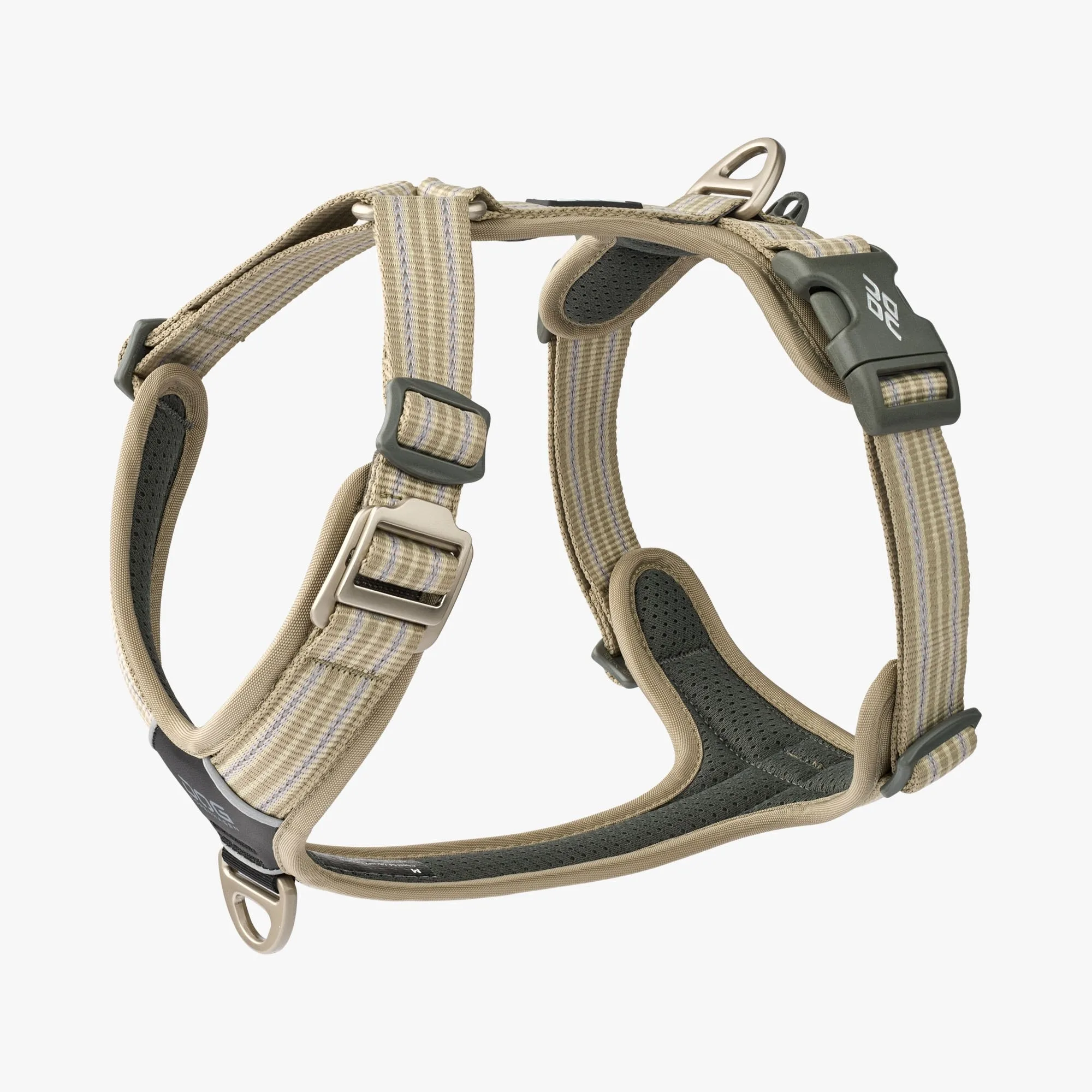
Comfort Walk Air™ Harness
-
Comfort Walk Air™ Harness: Updated sizing with increased overlap between sizes. This means you may have more adjustment range within a single size, so a dog that is between sizes might still fit comfortably. It also means that if you're near the edge of a size, sizing up could give you more room without being excessively large.
-
Comfort Walk Air™ Harness: Soft breathable padding and durable stain- and water-resistant materials. Padding reduces friction, but if the harness is too small, even soft padding can cause chafing. The materials are designed for everyday use, so you can check for wear and fit without worrying about damaging the harness during adjustments.
How to do a simple fit check at home
Before you decide to size up, confirm whether the current harness can be adjusted to fit better. These steps help you assess the fit objectively.
- With the harness on your dog, check the two-finger rule: You should be able to slide two fingers under each strap—at the chest and behind the front legs—without forcing. If you can't, the harness is too tight.
- Watch your dog move: Walk your dog on a leash and observe whether the harness stays centered on the chest and back. If it slides to one side or bunches up, the fit is off.
- Look for red marks immediately after removing the harness: Check under the front legs and along the chest. Temporary indentations are normal; persistent redness or hair thinning is not.
- Try adjusting the straps before sizing up: The Comfort Walk Air Harness has adjustable straps. If you've already loosened them as far as they go and the harness still leaves marks, it's time for a larger size.
When to size up versus when to adjust
If your dog is at the upper limit of the current size's adjustment range and you're seeing signs of tightness, sizing up is the right call. The increased overlap in the updated sizing means the next size up may not be dramatically larger, so you can maintain a secure fit without excessive bulk. However, if your dog is still growing or your harness is relatively new, first try loosening the straps evenly and rechecking the fit after a few walks.
Keep in mind that a harness that is too large can also cause problems—it may slip, rub in different places, or allow a dog to back out. Always aim for a snug fit with room for two fingers under the straps.
How to transition to a new size
When you move up a size, introduce the new harness gradually. Put it on your dog for short periods at home before using it for a full walk. Check for any new rubbing points, since a larger harness will sit slightly differently. The aluminum neck fitting makes it easy to put on and take off without pulling over the head, which can help if your dog is sensitive about harnesses.
After a few walks, recheck the fit. Straps can loosen over time, so a final adjustment ensures comfort and security.