Why Bridal Alteration Myths Persist
Wedding dress alterations are one of the most anxiety-producing parts of bridal shopping, partly because so much conflicting advice circulates online and in dressing rooms. A myth can sound reasonable until you hold it up against a specific gown's construction. This article examines common claims using the supplied information for two Bo & Luca gowns—the Nina Gown and the Rose Gown—so you can separate what is confirmed from what is not.
What the Nina Gown and Rose Gown Records Tell Us
-
Nina Gown: The Nina Gown features a halter neck with a satin pussy bow closure, an open back, hand-beaded flowers on the bodice, and an invisible zip at the centre back. The combination of an open back, hand-beading, and an invisible zip means that alterations to the bodice or back are not straightforward—beadwork may need to be reworked, and the zip length may limit how much the back can be taken in.
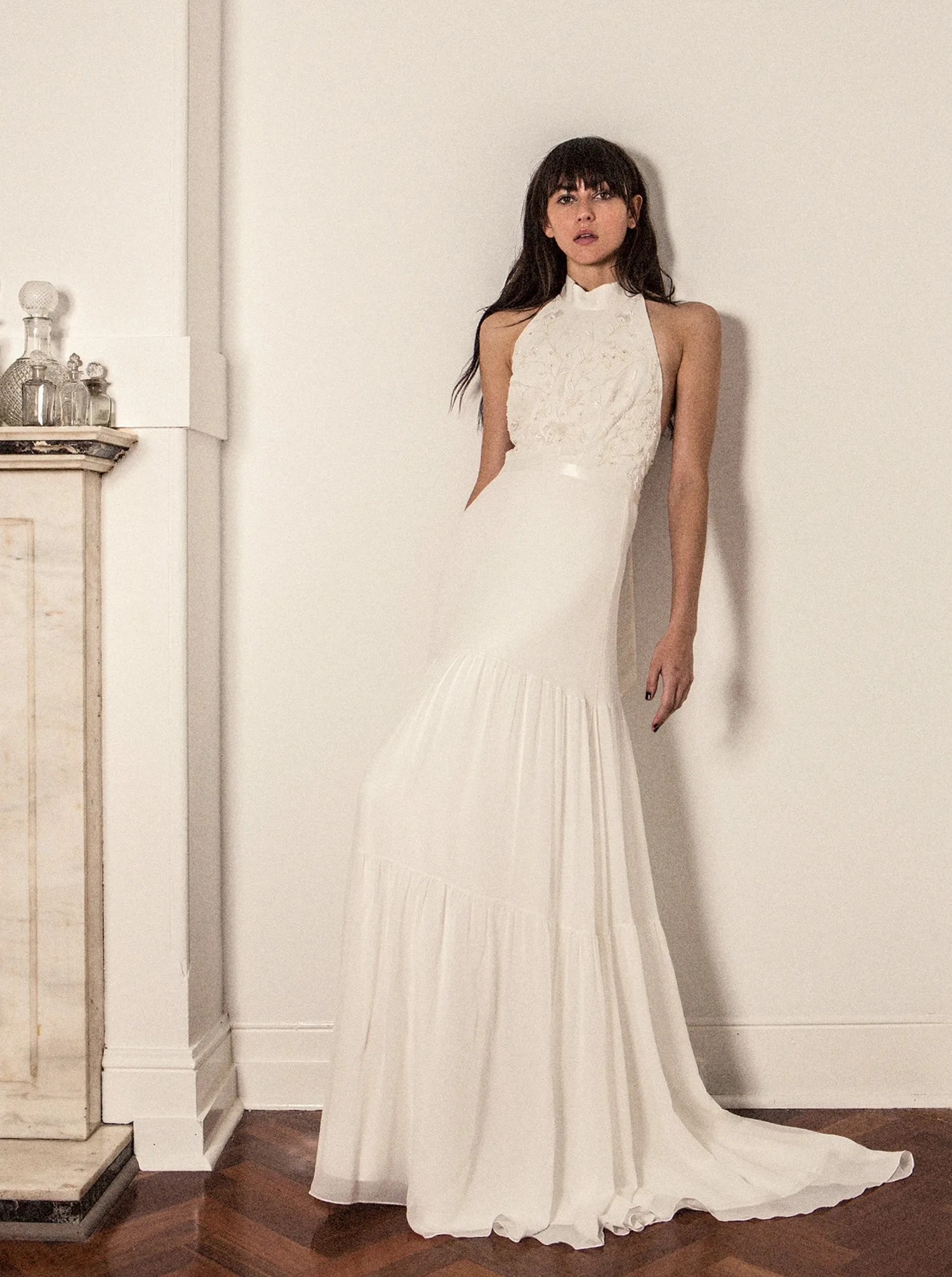
Nina Gown
-
Rose Gown: The Rose Gown has a keyhole front, open back, angel sleeves, and an A-line skirt, secured with an invisible zip. The keyhole detail and open back create fixed points that cannot be easily moved. The A-line skirt is more forgiving for hem adjustments, but the sleeve and neckline alterations require careful planning.

Rose Gown
Common Myths and What the Evidence Suggests
The following myths are examined using the available product records. Absence of evidence does not mean a claim is false—it means the supplied information does not confirm it.
- Myth: Any wedding dress can be taken in several sizes.: The supplied records for the Nina Gown and Rose Gown show size options from 6AU to 16AU, but they do not specify how much the seams can be let out or taken in. The invisible zip at the centre back and the hand-beaded bodice on the Nina Gown suggest that taking in more than one size could disrupt the beadwork pattern or the zip placement. Without manufacturer alteration guidelines, a safe assumption is that significant resizing is not guaranteed.
- Myth: Hand-beaded gowns cannot be altered at all.: The Nina Gown's bodice is hand-beaded with faux pearls, sequins, and glass beads. While beadwork does add complexity, the supplied information does not state that alterations are impossible. A skilled bridal seamstress can often move or replace beads, but the record does not confirm that Bo & Luca offers this service or that the beadwork is designed for easy reworking. This myth is partly true: alterations are possible but require specialist skill and may add cost.
- Myth: A-line skirts are always easy to hem.: The Rose Gown has an A-line skirt, which generally has a straight hem that is simpler to shorten than a trumpet or mermaid silhouette. However, the supplied record does not include fabric type or hem finish details. The Nina Gown has a tiered skirt that cascades gently, so hemming it would involve adjusting multiple tiers. The evidence supports that A-line is often easier, but each gown's construction matters.
- Myth: Open-back gowns cannot be altered in the back.: Both the Nina Gown and Rose Gown have open backs. The Nina Gown's open back is framed by the halter neck and invisible zip; the Rose Gown's open back is secured at the neck with a covered button. The supplied information does not specify whether the back opening can be narrowed or the depth changed. Alterations to the back are possible in theory, but the fixed design elements (bow, button, zip) create constraints that the record does not address.
What the Supplied Information Does Not Settle
The product records for the Nina Gown and Rose Gown do not include manufacturer alteration guides, seam allowances, or recommended alteration limits. They do not state whether Bo & Luca offers in-house tailoring or recommends specific alteration specialists. They also do not provide fabric content, which affects how a gown responds to being taken in or let out. When a myth cannot be confirmed or refuted by the available evidence, the honest answer is that more information from the brand or a trusted seamstress is needed. Use the gown details you have—construction features, beadwork, closures—to ask better questions during your fitting.