Quick answer
For small spaces, focus on a cat tree that is tall but has a small footprint, includes a private condo for retreat, and offers scratching posts to save your furniture. The Tangkula Small Cat Tree fits this profile well.
Why size and footprint matter
In a compact apartment, every square inch counts. A cat tree that is too wide can dominate a room, while one that is too short may not satisfy your cat's climbing instincts. Look for a model that is tall enough for exercise but has a base that fits in a corner or against a wall.
Scratching posts save your furniture
Cats need to scratch to mark territory and maintain claw health. A cat tree with natural sisal rope wrapped posts encourages appropriate scratching behavior. This is especially important in small spaces where furniture is close together.
Private spaces reduce stress
Even in a small home, cats appreciate a hideaway. A private cat condo provides a quiet retreat where your cat can relax undisturbed. This can help reduce stress in busy households.
Your decision rules for a small-space cat tree
- Measure your available floor space: Use a tape measure to find a corner or wall area that can accommodate the base of the cat tree. Aim for a footprint under 2 feet square if possible. Write down the maximum width and depth you can spare.
- Prioritize vertical height over width: Choose a cat tree that is at least 3 feet tall to allow climbing and perching, but keep the base narrow. A tall, slim design maximizes activity without crowding the room. Look for models with multiple levels stacked vertically rather than spread out.
- Check for integrated scratching surfaces: Ensure the cat tree has at least one sisal rope post. This satisfies your cat's scratching instinct and prevents damage to sofas and curtains. Avoid trees with only carpet-covered posts, as cats often prefer sisal.
- Look for a private condo or hideaway: A covered cubby provides a quiet retreat, reducing stress in a small, busy home. It also gives your cat a sense of ownership over their space. Verify the condo entrance is large enough for your cat to enter comfortably.
Product highlights
-
Tangkula Small Cat Tree, Green Cat Tower with Private Cat Condo, Plush Top Perch, Hanging Pompom & Spring Toy: The Tangkula Small Cat Tree includes a private cat condo with a padded cushion for comfortable lounging. In a small space, this private spot gives your cat a secure place to retreat without taking up extra floor area.
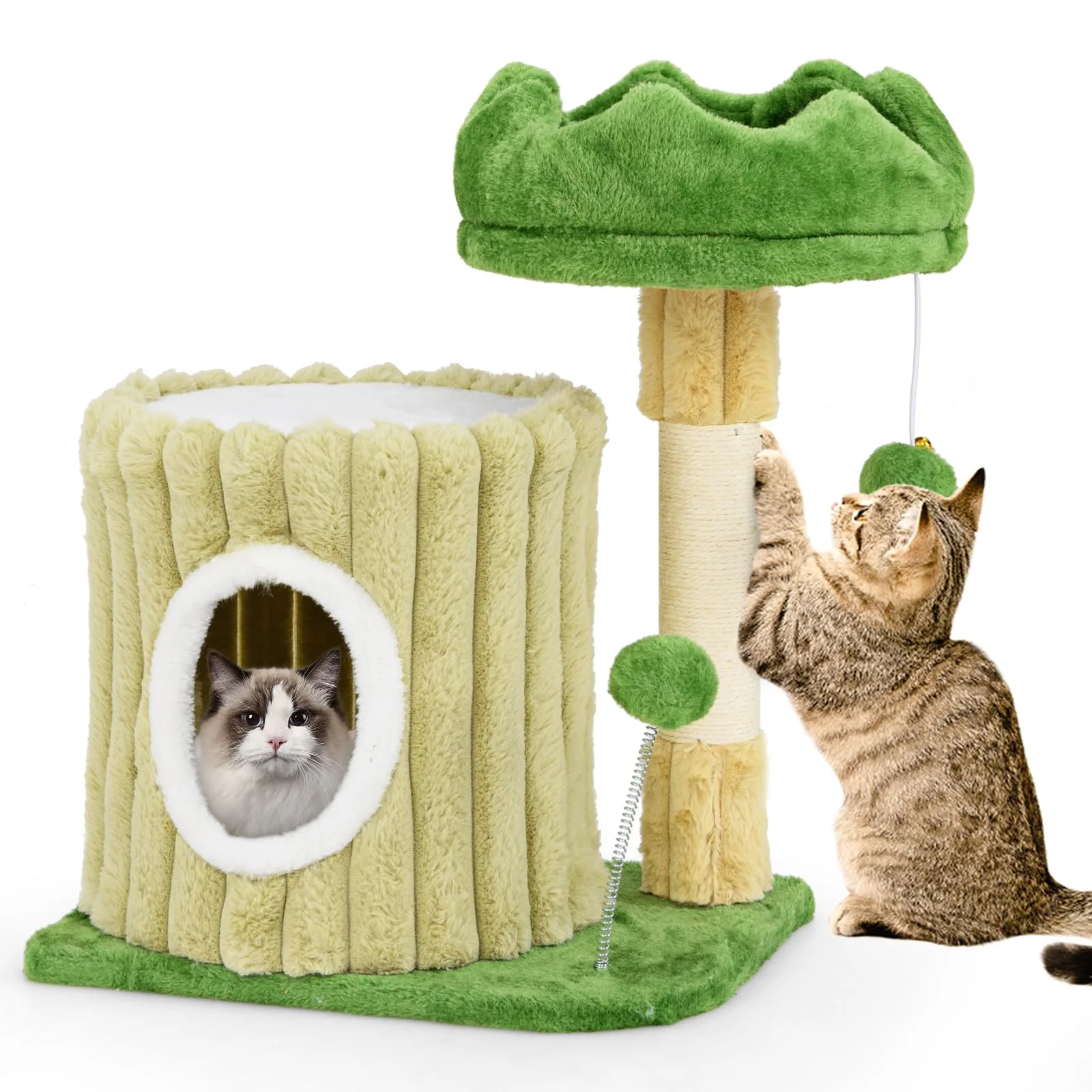
Tangkula Small Cat Tree, Green Cat Tower with Private Cat Condo, Plush Top Perch, Hanging Pompom & Spring Toy
-
Tangkula Small Cat Tree, Green Cat Tower with Private Cat Condo, Plush Top Perch, Hanging Pompom & Spring Toy: It features a scratching post wrapped in natural sisal rope, along with a hanging pompom and spring toy. This encourages healthy scratching and play, protecting your furniture and keeping your cat entertained in a compact setup.
Who this works best for
Best for
- Apartment dwellers with limited floor space who want a functional cat tree
- Owners of single small-to-medium cats that enjoy climbing and hiding
Not for
- Households with multiple large cats that need multiple perches and sturdy construction
- Owners who prefer a cat tree with a wide base for extra stability