What Makes an Eye Health Vitamin Worth Considering?
When you start looking for eye health vitamins, the label can feel overwhelming. Many products promise to support vision, but the real question is which ingredients are backed by enough evidence to matter for your daily routine.
The most commonly cited nutrients are lutein and zeaxanthin—two antioxidants that accumulate in the macula of the eye and are linked to visual performance, glare sensitivity, and blue-light protection. Vitamins C and E, zinc, and copper often appear alongside them because they play supporting roles in maintaining eye tissue and fighting oxidative stress.
Key Ingredients to Prioritize
Lutein and zeaxanthin are the star players. Look for a formula that includes both, as they work together. Some supplements also add saffron, a carotenoid that may offer additional support.
Vitamins C and E are antioxidants that help protect the eyes from free radicals. Zinc and copper are minerals that support the action of those antioxidants and are commonly included in comprehensive formulas.
Not all eye vitamins contain all of these. If you spend a lot of time on digital devices, a formula with lutein, zeaxanthin, and a broad antioxidant base is a practical starting point.
What a Clinical-Strength Formula Looks Like
-
Force Factor Complete Eye Health, Clinical Strength Eye Vitamins with Lutein & Zeaxanthin to Support Vision, Eye Function, and Blue-Light Protection, Eye Health Supplements for Adults, 60 Capsules: Force Factor Complete Eye Health contains 10 mg lutein, 2 mg zeaxanthin, 20 mg saffron extract, 600 mg vitamin C, 200 mg vitamin E, 80 mg zinc, and 2 mg copper per two-capsule serving. These amounts are within ranges commonly studied for visual performance and blue-light protection, making it a straightforward choice for someone who wants a multi-benefit formula.
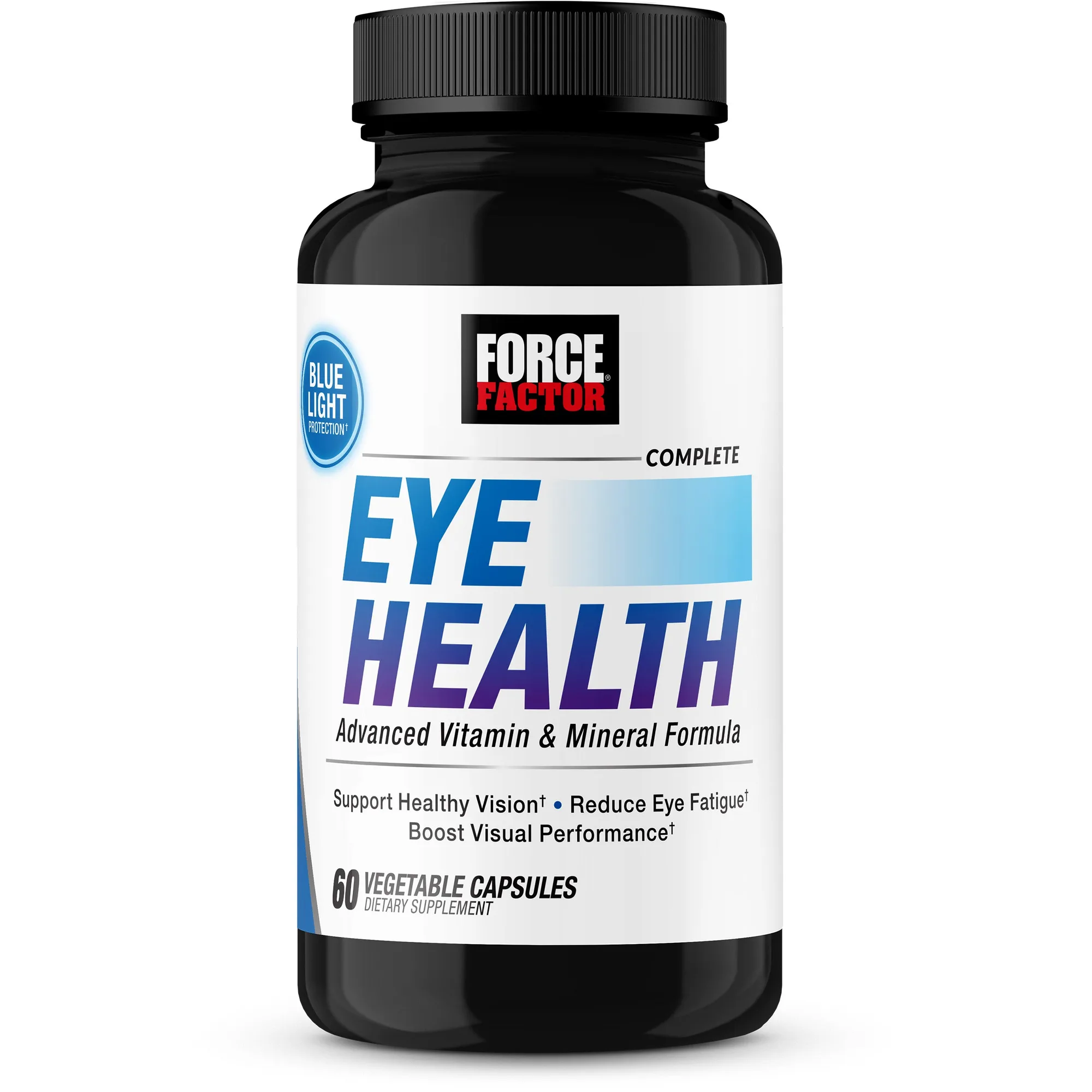
Force Factor Complete Eye Health, Clinical Strength Eye Vitamins with Lutein & Zeaxanthin to Support Vision, Eye Function, and Blue-Light Protection, Eye Health Supplements for Adults, 60 Capsules
-
Force Factor Complete Eye Health, Clinical Strength Eye Vitamins with Lutein & Zeaxanthin to Support Vision, Eye Function, and Blue-Light Protection, Eye Health Supplements for Adults, 60 Capsules: The formula is free from artificial dyes, flavors, sweeteners, gelatin, and preservatives. If you avoid certain additives or follow a specific diet, this removes common concerns about supplement purity.
What the Label Doesn't Tell You (and Why That's Okay)
No supplement label can guarantee that a product will prevent or treat any eye condition. The FDA does not evaluate dietary supplements for disease treatment. What the label can tell you is the amount of each ingredient per serving, and whether those amounts are backed by scientific literature.
For example, the lutein and zeaxanthin amounts in Force Factor Complete Eye Health are within ranges that have been used in clinical studies for visual function, but individual results vary. The label also notes that Daily Values are not established for lutein, zeaxanthin, or saffron, which is standard for these ingredients.
How to Match a Formula to Your Screen Time
If you're a working professional, student, or gamer who spends hours on digital devices, blue-light protection is a practical concern. Lutein and zeaxanthin are the only nutrients that naturally filter blue light in the macula. A supplement that provides both, along with antioxidants that combat oxidative stress from screen exposure, addresses that need directly.
For someone who already eats a diet rich in leafy greens and colorful vegetables, an eye health vitamin may still be useful because the body's ability to absorb and concentrate lutein from food can vary. A supplement provides a consistent, measurable dose.
Practical Trade-Offs to Consider
One trade-off is the number of capsules per serving. Force Factor Complete Eye Health recommends two capsules daily. If you prefer a single pill, you may need to look for a different product, though it may have lower amounts of each ingredient.
Another consideration is cost. The catalog price for a 60-serving bottle (30 days at two capsules per day) is USD 16.74, which is competitive for a multi-ingredient formula. Compare that to buying separate lutein, zeaxanthin, and antioxidant supplements, which often costs more and adds complexity to your routine.
Finally, not every eye health vitamin includes saffron. If you're interested in that ingredient specifically, check the label before purchasing.