Teething is a milestone that every parent navigates, often with sleepless nights and a lot of drool. The right teether can make a world of difference, offering safe relief for sore gums while keeping your baby engaged. But with so many shapes, materials, and claims on the market, how do you pick the best one?
This guide walks you through everything you need to know about choosing a baby teether. We’ll cover materials, shapes like pretzels and cats, safety considerations, and how to match a teether to your baby’s age and preferences. Whether you’re looking for a simple ring or a whimsical design, you’ll leave with the confidence to make a smart purchase.
Why Teether Shape Matters More Than You Think
The shape of a teether isn’t just about cuteness—it directly affects how well your baby can grip, chew, and soothe different parts of their gums. A well-designed shape allows little hands to hold it easily and reach molars, incisors, and everything in between. For example, a pretzel teether review often highlights how the twisted loops give babies multiple surfaces to gnaw on, which can target both front and back gums at once.
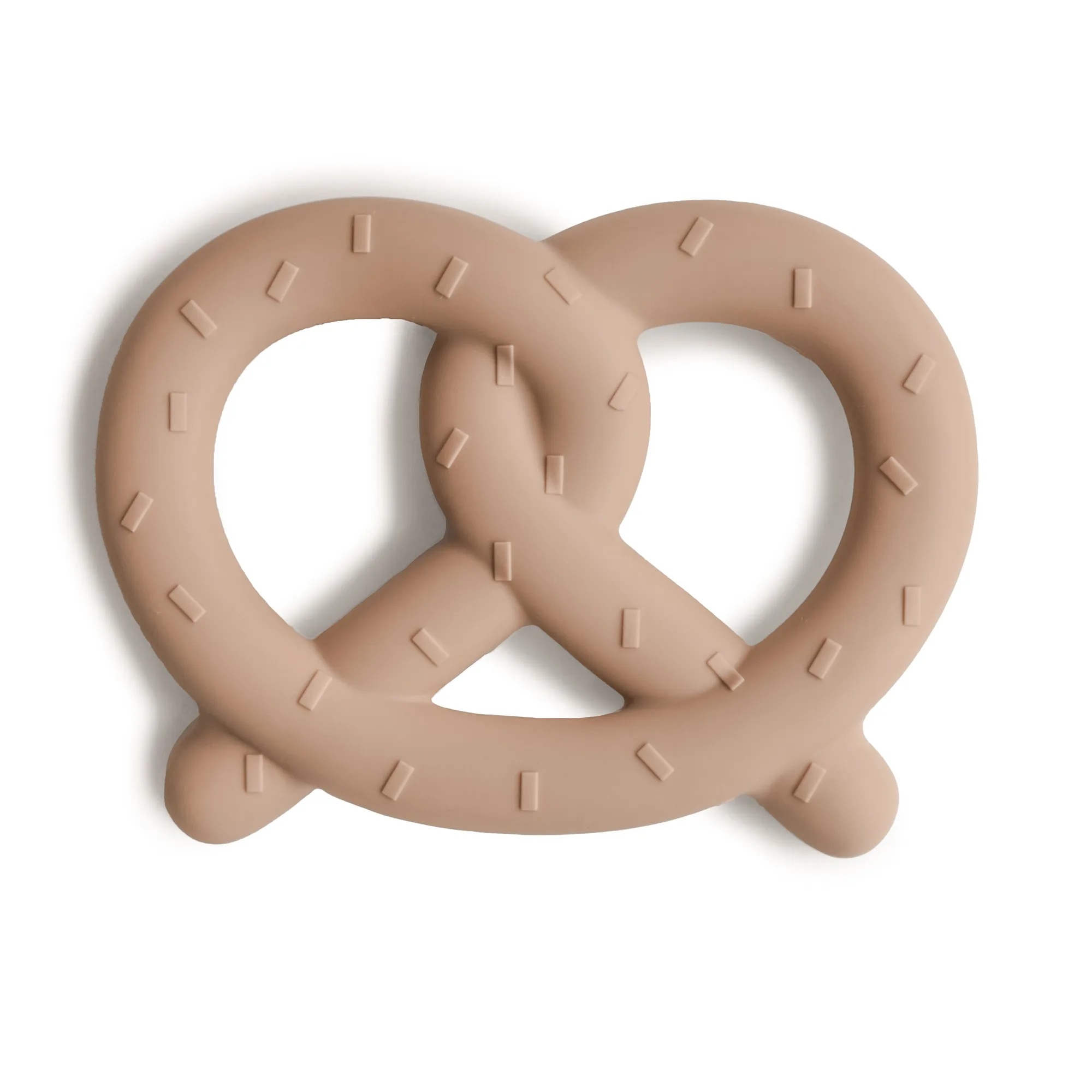
pretzel teether
Cat teether benefits include a similar multi-surface approach, with ears and a tail offering varied textures. These shapes also encourage fine motor skills as babies learn to rotate the toy to access different chewing spots. When evaluating any teether, look for contours that fit a baby’s mouth comfortably—avoid anything with sharp edges or small parts that could break off.
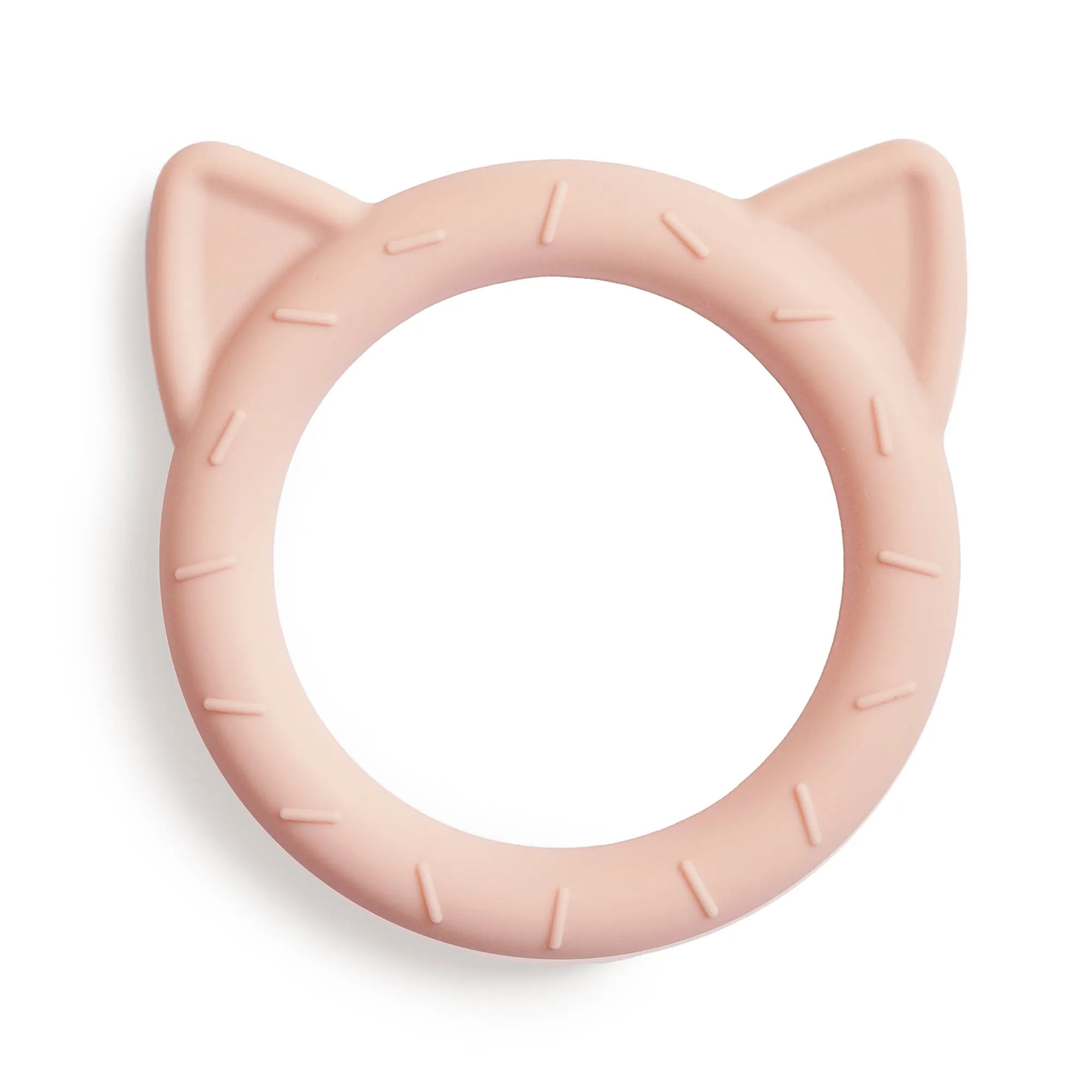
Cat teether
- Look for teethers with at least two distinct chewing surfaces (like a pretzel or cat shape) to maximize relief.
- Avoid teethers that are too bulky for a baby’s small hands—simple, ergonomic shapes are best.
Silicone Teether Shapes: Safety and Soothing in One
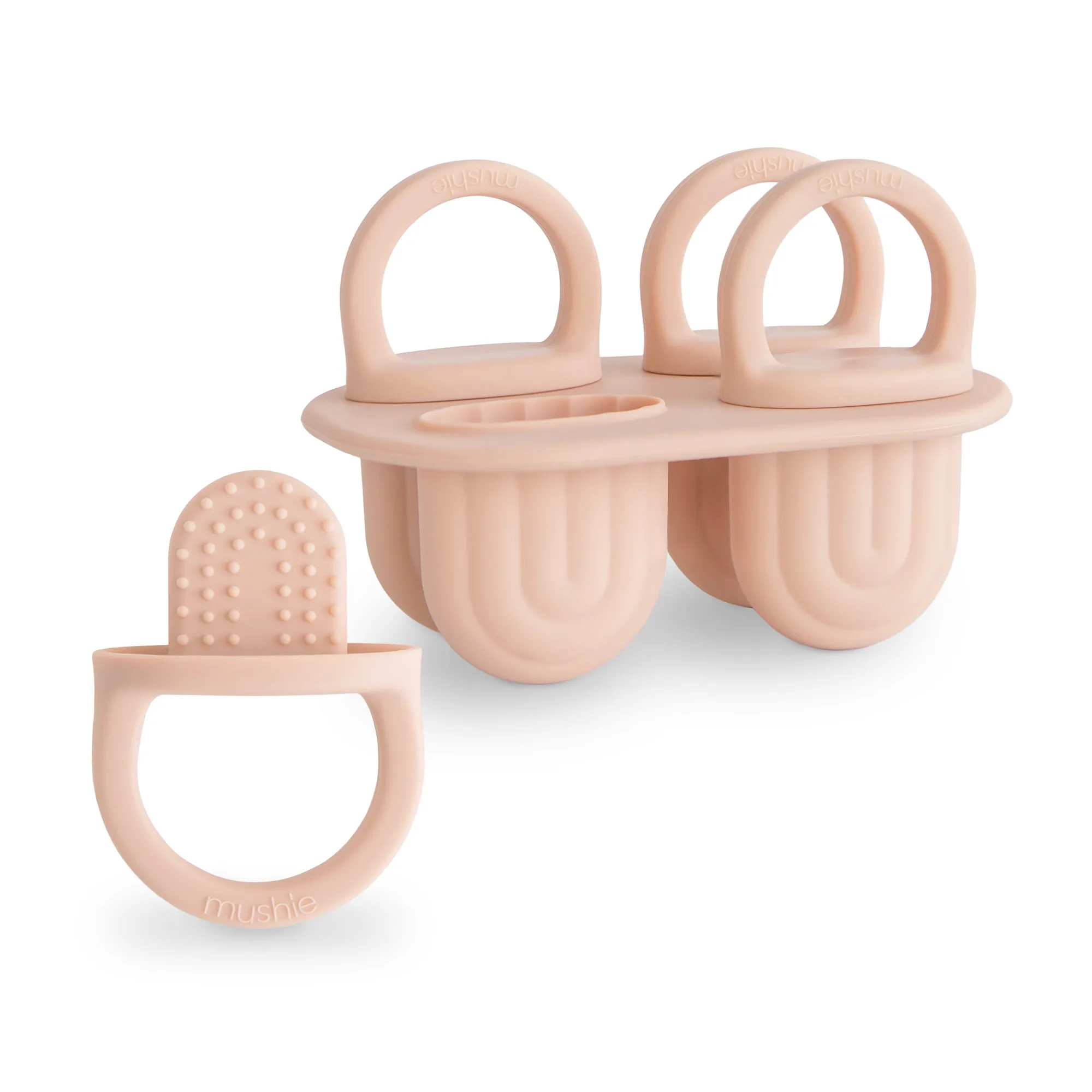
Silicone has become the gold standard for teethers because it’s soft, flexible, and free of BPA, PVC, and phthalates. Silicone teether shapes range from simple rings to elaborate animals, but the key is to choose one that’s easy to clean and durable enough to withstand constant chewing. A solid silicone teether won’t harbor bacteria if washed regularly, and it can be sterilized in boiling water or a dishwasher top rack.
One popular option is the Cloud Teether, which offers a gentle texture that babies love. Its rounded shape is ideal for early teethers who are just starting to explore mouthing. For babies who need more targeted relief, a Teething Ring provides a classic, no-fuss design that’s easy to grasp. Both are made from food-grade silicone and are safe for babies from three months onward.
- Always choose 100% food-grade silicone—avoid any teether that lists “silicone blend” without specifics.
- Check that the teether is one solid piece; hollow designs can trap moisture and mold.
Pretzel Teether Review: Why This Shape Stands Out
A pretzel teether review often praises its clever design: the intertwined loops create multiple nooks for babies to chew, which can soothe different areas of the gums simultaneously. This shape is especially helpful during the molars phase, when babies need to chew on a broader surface. The loops also make it easy for little fingers to hold, reducing frustration for both baby and parent.
Another advantage is that the pretzel shape stays cool in the refrigerator (but never the freezer, as frozen silicone can be too hard). A chilled pretzel teether provides extra numbing relief without being brittle. If you’re considering a pretzel design, look for one with smooth edges and a symmetrical shape so it’s easy to clean. The Elastic Shape Sorter is another silicone option that offers similar multi-texture benefits in a different form.
- Chill the teether in the fridge for 30 minutes before use—never freeze it.
- Inspect the pretzel loops regularly for any signs of wear or tearing.
Cat Teether Benefits: Playful Design Meets Practical Relief
Cat teether benefits go beyond their adorable appearance. The ears, head, and tail provide distinct textures and thicknesses, allowing babies to experiment with different chewing pressures. This can be especially soothing during the early teething stages when babies are exploring their new ability to hold and manipulate objects. The cat shape also encourages imaginative play as your child grows.
Many cat teethers are made from silicone and come in bright colors that stimulate visual development. Some designs, like the Daisy Rattle Teether, combine a teether with a gentle rattle sound, adding an extra sensory element. When choosing a cat teether, ensure the ears are wide and rounded (not pointed) and that the entire toy is easy to grip. A well-made cat teether can serve as both a soothing tool and a first toy.
- Look for cat teethers with ears that are at least 1 cm wide to avoid a choking hazard.
- If the teether has a rattle, make sure the sound is soft and not jarring for sensitive babies.
How to Choose the Best Teether for Teething by Age
Babies’ teething needs change as they grow, so it helps to match the teether to their developmental stage. For infants 0-6 months, a simple Teething Ring or a soft silicone shape like the Cloud Teether is ideal. These are easy to hold and gentle on emerging teeth. At this age, babies are still developing their grip, so lightweight teethers with a single handle work best.
For babies 6-12 months, when more teeth are coming in, consider a pretzel teether or a cat-shaped design. These offer multiple chewing surfaces and can reach back molars. Toddlers over 12 months may enjoy more complex silicone teether shapes or even wooden options like the Wooden Balance Blocks (though always supervise wooden teethers to prevent splinters). The key is to observe what your baby prefers and rotate teethers to keep them interested.
- Always follow the age recommendation on the packaging—some teethers have small parts not suitable for younger babies.
- Rotate between 2-3 teethers to keep your baby engaged and to allow each to dry thoroughly between uses.
Choosing the right baby teether doesn’t have to be overwhelming. Focus on safe materials like silicone, consider shapes like pretzels and cats that offer multiple chewing surfaces, and match the teether to your baby’s age and preferences. The best teether for teething is one that your baby actually wants to hold and chew—so don’t be afraid to try a couple of options. With the tips in this guide, you’re ready to pick a teether that brings relief and a little joy to your baby’s teething journey.