Why Odors Happen and How to Manage Them
A kitchen compost bin collects fruit peels, coffee grounds, and vegetable scraps before they go outside. That organic matter starts breaking down quickly, and without some simple habits, odors can build up. The good news is that a well-designed bin and a few care steps keep smells under control.
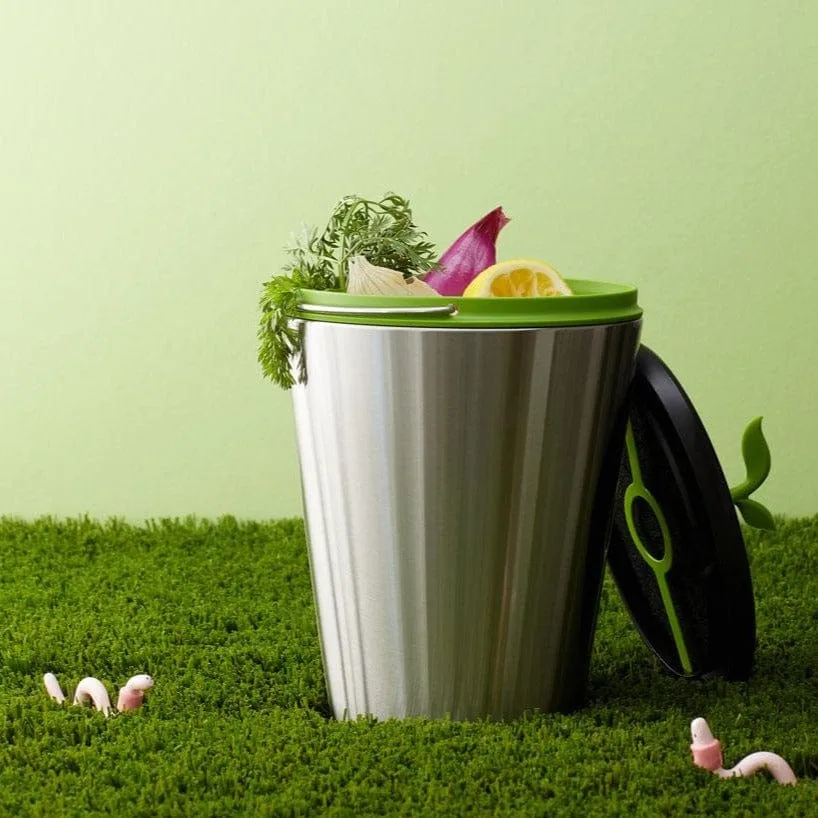
The Chef'n Stainless Steel Compost Bin is built with two parts: a sleek outer bucket and a removable inner bucket. That design alone helps because you can take the inner bucket outside without touching the outer container. But odor control also depends on how you use and clean it.
How the Chef'n Compost Bin Supports Odor Control
-
Stainless Steel Compost Bin: The bin has a modern design with a removable inner bucket, which makes taking compost outside a breeze. A removable inner bucket means you can empty the compost frequently without disturbing the outer bin, reducing the time odors linger in the kitchen.
Stainless Steel Compost Bin
-
Stainless Steel Compost Bin: The outer bucket can be wiped down, while the inner bucket is top-rack dishwasher safe. Easy cleaning prevents residue buildup that causes smells. The inner bucket can go straight into the dishwasher for a thorough clean.
Daily Habits to Keep Odors at Bay
Empty the inner bucket every day or two, especially in warm weather. Even a small amount of leftover food starts to decompose and create smells. Rinse the inner bucket with warm water between full washes to remove fresh residue.
Wipe down the outer bucket with a damp cloth as needed. Since it stays in the kitchen, a quick wipe keeps the exterior clean and prevents any transfer of odors from the inner bucket.
For a deeper clean, place the inner bucket on the top rack of the dishwasher. The outer bucket should be wiped by hand — avoid putting it in the dishwasher. Regular cleaning keeps both parts fresh and ready for daily use.
Placement and Usage Tips
Where you put the bin matters. Keep it on a counter or in a cabinet away from direct sunlight and heat sources, which speed up decomposition and odor production. A spot near your prep area makes it easy to toss scraps without walking across the kitchen.
If you notice smells, check whether the inner bucket is completely dry before adding fresh scraps. Moisture accelerates breakdown, so patting wet scraps with a paper towel can help. Also, avoid letting scraps sit for more than a day or two — regular emptying is the single most effective way to control odor.