Quick answer
Choose a 1/8-inch compression bit for small CNC spindles and fine detail in thin laminated material, a 3/8-inch compression spiral for larger routers that need faster cuts with less waste, and a 12mm compression bit with 1/2-inch shank for full-sheet metric cabinet production. Match the bit to your collet size and the scale of your cuts first.
Shank size decides what your router can hold
The shank is the part that goes into the collet, so it must match your router’s collet size. The 1/8-inch compression bit has a 1/4-inch shank, fitting routers with a 1/4-inch collet. The 3/8-inch and 12mm bits both use a 1/2-inch shank, requiring a 1/2-inch collet. If your router only has a 1/4-inch collet, the 1/8-inch bit is the only direct fit among these three. Using an adapter sleeve is not recommended for production work because it can reduce rigidity.
Cutting diameter vs. shank: why the 1/8-inch bit is different
The 1/8-inch bit has a 1/8-inch cutting diameter on a 1/4-inch shank, so it removes a narrow kerf and is suited to detailed work or small parts. The 3/8-inch bit has a 3/8-inch cutting diameter on a 1/2-inch shank, and the 12mm bit has a 12mm cutting diameter (about 0.47 inch) on a 1/2-inch shank. Larger diameters allow faster feed rates and fewer passes, but they demand more spindle power and a rigid machine. The 1/8-inch bit’s small diameter limits feed speed but gives access to tight curves and fine features.
Material and workflow trade-offs
All three bits are compression spirals, designed to give clean top and bottom edges in sheet goods. The 1/8-inch bit is aimed at double-sided melamine or laminated material where a small cut is needed. The 3/8-inch bit is for larger CNC routers and faster cuts with less waste, making it a good fit for plywood and other sheet goods when your machine can handle the larger diameter. The 12mm bit is built for metric cabinet production, with a 1/2-inch shank for rigidity in full-sheet nested workflows. If you work with metric-dimensioned materials and want to avoid conversion errors, the 12mm bit keeps your tooling consistent with your drawings.
Trade-offs at a glance
- 1/8-inch compression bit (1/4-inch shank): Best for small spindles and fine detail in double-sided melamine or laminated material. Trade-off: narrow cutting diameter limits feed speed and suits thinner stock; not ideal for fast waste removal in thick plywood. Check that your collet is 1/4-inch and your material is thin or detailed.
- 3/8-inch compression spiral (1/2-inch shank): Best for larger CNC routers that need faster cuts with less waste in plywood and sheet goods. Trade-off: requires a 1/2-inch collet and more spindle power; the larger diameter may not suit fine inside curves. Confirm your router has a 1/2-inch collet and enough rigidity for the larger cutter.
- 12mm compression bit (1/2-inch shank): Best for metric cabinet production and full-sheet nested workflows where clean top and bottom edges matter. Trade-off: 12mm diameter is close to 1/2 inch, so it may not fit projects designed around inch fractions; requires 1/2-inch collet. Use it when your drawings and material dimensions are metric to avoid conversion errors.
Product facts
-
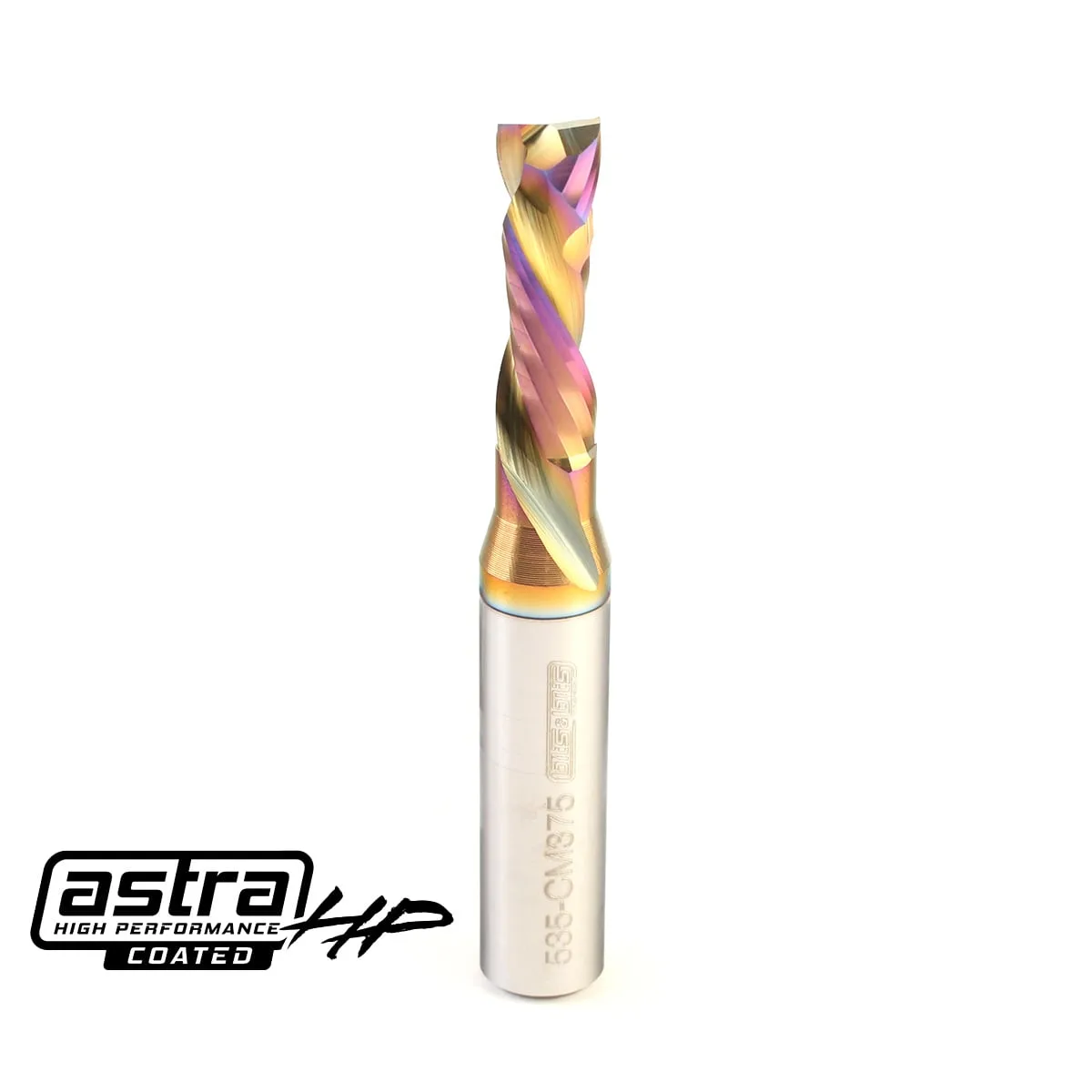
3/8″ Compression Spiral Bit – 1/2″ Shank – Router & CNC (AstraHP Coated): 3/8-inch cutting diameter with 1/2-inch shank and 1-1/4-inch length of cut. The larger diameter and 1/2-inch shank suit bigger routers that need faster feed rates and efficient material removal.
3/8″ Compression Spiral Bit – 1/2″ Shank – Router & CNC (AstraHP Coated)
-
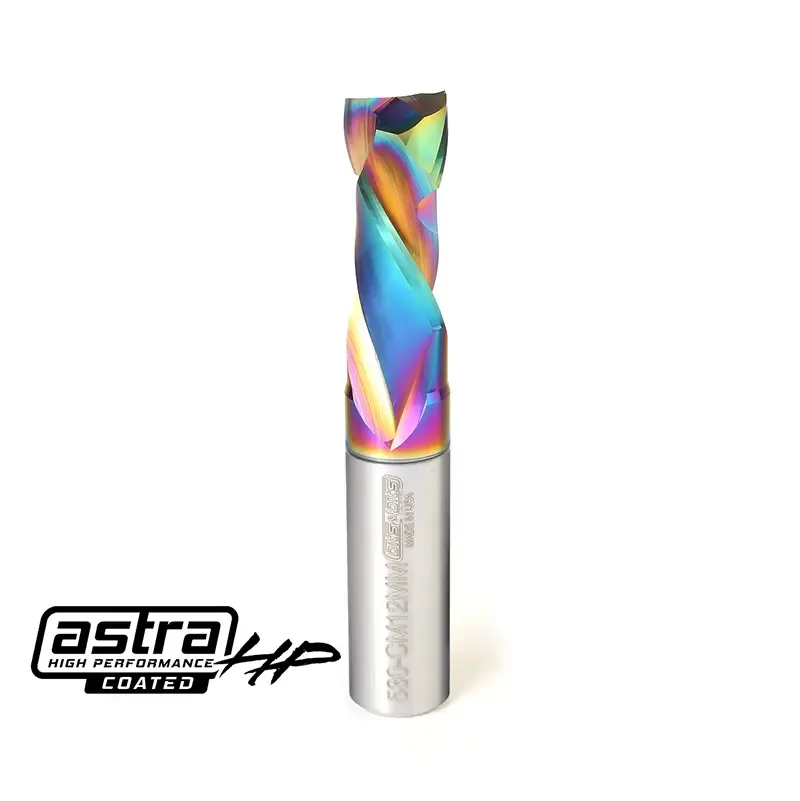
12mm Compression Spiral Bit – 1/2″ Shank (AstraHP Coated): True-metric 12mm compression spiral with 1/2-inch shank, designed for clean top and bottom edges in sheet goods. It matches metric cabinet workflows and provides a rigid setup for full-sheet nested production.
12mm Compression Spiral Bit – 1/2″ Shank (AstraHP Coated)
-
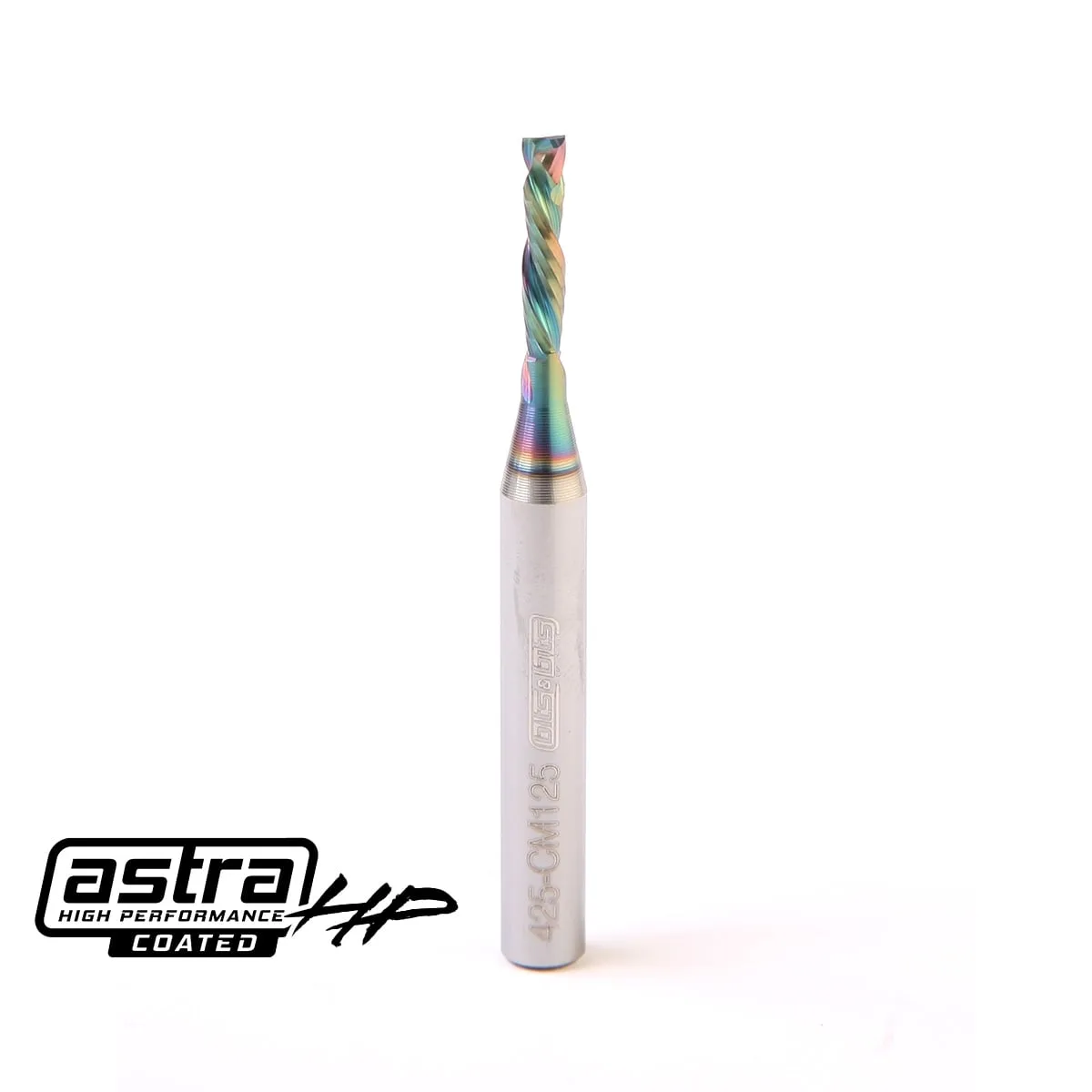
1/8″ Spiral Compression Bit (AstraHP Coated): 1/8-inch cutting diameter on a 1/4-inch shank, with 5/8-inch length of cut. It fits routers with a 1/4-inch collet and handles fine compression cuts in thin laminated material.
Which bit fits your setup?
Best for
- CNC routers with a 1/4-inch collet doing fine detail in thin laminated material
- Larger CNC routers with a 1/2-inch collet cutting plywood and sheet goods efficiently
- Metric cabinet production and full-sheet nested workflows
Not for
- Routers that only accept 1/2-inch shanks (the 1/8-inch bit won’t fit)
- Projects requiring a 1/4-inch shank for small details (the 3/8-inch and 12mm bits are too large)
- Non-metric workflows where inch-based dimensions are critical (the 12mm bit may not match)