Quick answer
Use Consepsis Scrub as a brief, controlled scrub on the prepared cavity after caries removal, then rinse and inspect before placing your restorative material. Keep it confined to the preparation and avoid pooling it in the mouth.
Why scrub instead of just rinsing
A rinse moves debris, but it does not mechanically disturb the surface. Consepsis Scrub is an antibacterial slurry designed to be worked against the preparation walls, so the clinician controls where it goes and how long it stays. That control matters most in deep or subgingival margins where excess material is hard to retrieve.
The trade-off is technique sensitivity: too much slurry or too long a scrub can leave residue that interferes with bonding or irritates soft tissue. Treat the scrub as a short, deliberate step, not a soak.
When to skip or modify the scrub
If the preparation is already clean and the patient has no history of post-operative sensitivity, a plain rinse may be enough. In cases with very shallow preparations near the gingiva, use a smaller amount and keep suction ready. If you are unsure about residual slurry, rinse again and dry with a gentle air stream before adhesive placement.
Step-by-step Consepsis Scrub routine
- Isolate the tooth: Place a rubber dam or adequate isolation before opening the slurry. Keep suction ready and protect the airway. Checkpoint: if isolation is poor, stop and improve it before scrubbing.
- Complete caries removal first: Remove caries with your chosen technique and confirm the preparation is free of soft dentin. Consepsis Scrub is an adjunct, not a caries removal agent. Common mistake: scrubbing over remaining caries instead of removing it.
- Dispense a small amount: Express only enough slurry to coat the preparation walls. Avoid filling the entire cavity or letting material sit in the sulcus. Checkpoint: if slurry pools, remove excess with suction before continuing.
- Scrub the walls briefly: Use a applicator or brush to work the slurry against enamel and dentin margins for a short, controlled time. Do not scrub beyond the preparation. Common mistake: scrubbing too long or too vigorously and spreading slurry onto soft tissue.
- Rinse and inspect: Rinse thoroughly with water and suction, then inspect for residual slurry. Dry with a gentle air stream, but do not desiccate dentin. Checkpoint: visible residue means rinse again before bonding.
- Proceed with restoration: Continue with your adhesive and restorative material only after the preparation is clean and dry. Do not leave slurry under the restoration. Common mistake: bonding over a wet or slurry-contaminated surface.
Product facts
-
Consepsis™ Scrub-Chlorhexidine Antibacterial Slurry: Consepsis Scrub is an antibacterial slurry intended to help reduce post-operative sensitivity. That makes it a practical step when sensitivity is a concern, but it does not replace proper caries removal or isolation.
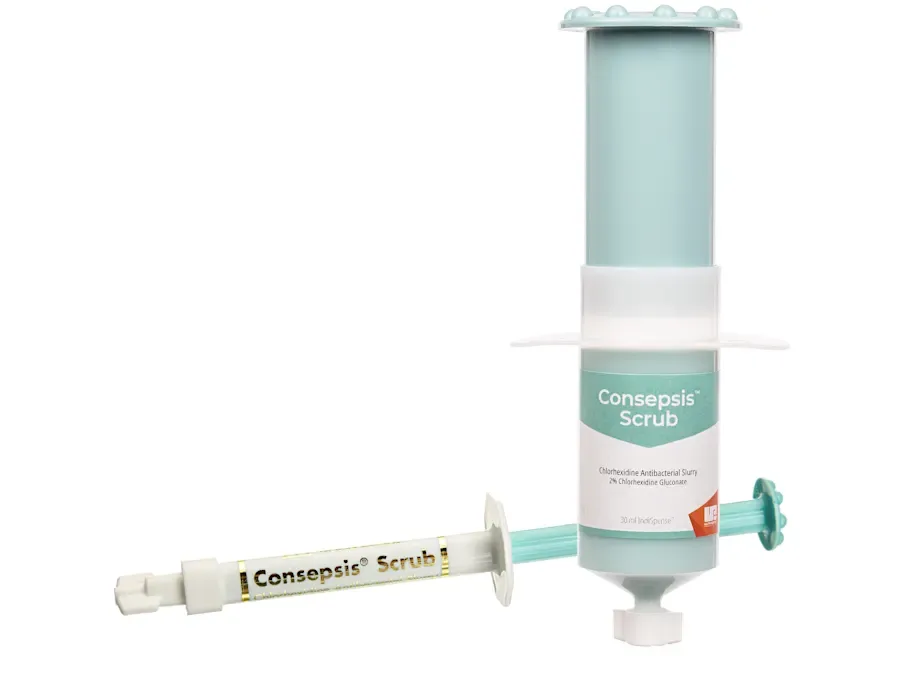
Consepsis™ Scrub-Chlorhexidine Antibacterial Slurry