Quick answer
If you want a single piece that adapts from seated sensory play to standing activities, choose a convertible activity table like the Aldar. If you prefer a fixed-height table for consistent Montessori work cycles, a standard Montessori table is the better fit.
How they differ in adjustability
A convertible activity table changes height and configuration as your child grows, often starting as a low sensory station with a cushioned seat and converting to a toddler-height table. A standard Montessori table has one fixed height, usually around toddler-chair level, and does not transform.
The Aldar Convertible Montessori Activity Table from Avenlur exemplifies this flexibility: it begins as a seated sensory station with built-in toys and a removable cushioned seat, then converts into a toddler activity table with a wooden roadway. This makes it suitable for children from early sensory exploration through preschool art and play.
A fixed Montessori table offers simplicity and stability for uninterrupted work cycles, but you may need to replace it as your child grows taller.
Sensory vs. minimalist design
Convertible activity tables often include integrated sensory elements like bead mazes, gears, or roadways that encourage tactile and visual exploration. Montessori tables are intentionally minimalist—a plain surface that does not distract from the activity placed on it.
The Aldar includes built-in sensory toys and a playful wooden roadway on the tabletop, which can engage a toddler during seated play but may be less ideal for open-ended Montessori work where the child chooses their own materials.
Long-term value and space considerations
A convertible table can serve multiple developmental stages in one footprint, making it a space-saving choice for smaller homes. A fixed Montessori table may require a separate sensory station or activity center, taking up more room over time.
However, the convertible table's added features (seat, toys, roadway) mean it has more parts to store or manage. If you prioritize a clean, uncluttered learning environment, a simple Montessori table paired with separate open-ended toys might suit you better.
Key trade-offs at a glance
- Convertible activity table: Adjusts from a low sensory station to a toddler table. Includes built-in sensory toys and a removable seat. Ideal for children who enjoy varied, guided play and families with limited space. Best if you want one piece that grows with your child through multiple play stages.
- Fixed Montessori table: Single-height table with a plain surface. Encourages independent, open-ended work cycles. Requires separate seating and may need replacement as the child grows. Best if you follow Montessori principles and prefer a distraction-free surface for child-led activities.
- Hybrid approach: Use a convertible table like the Aldar for sensory and guided play, and add a small low shelf for Montessori-style work trays. This gives you the best of both worlds without committing to one philosophy. Consider this if your child enjoys both structured sensory toys and open-ended exploration.
Product spotlight
-
Aldar Convertible Montessori Activity Table: The Avenlur Aldar Convertible Montessori Activity Table starts as a seated sensory station with built-in sensory toys and a removable cushioned seat, then converts into a toddler activity table with a playful wooden roadway. This means one piece of furniture supports both early sensory play and later creative activities, reducing the need to buy separate tables as your child grows.
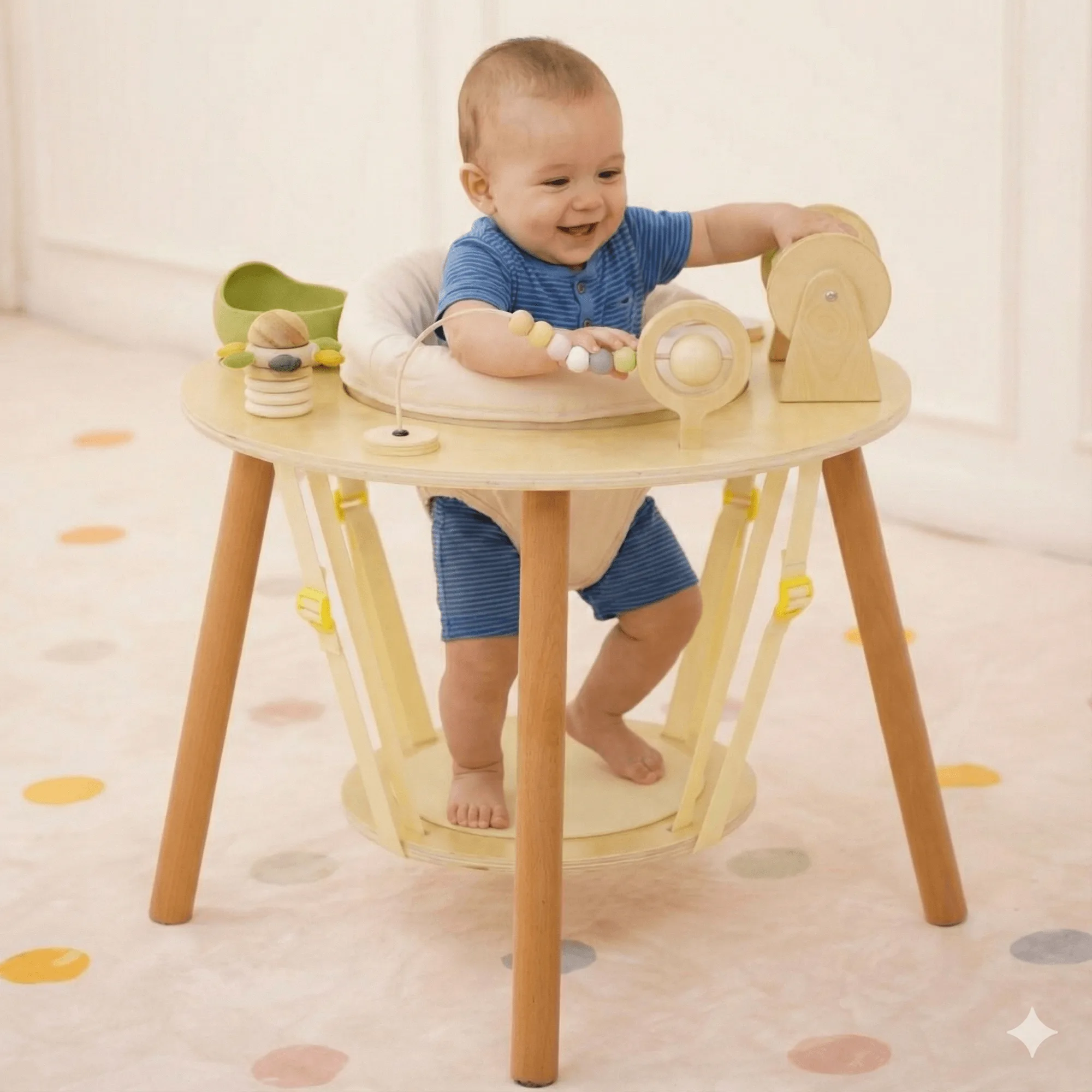
Aldar Convertible Montessori Activity Table
Which table fits your family?
Choose a convertible activity table if
- You have a toddler who enjoys sensory play and guided activities
- You want one piece of furniture that adapts as your child grows
- You need a space-saving solution that combines play and work surfaces
Choose a fixed Montessori table if
- You prefer a minimalist, distraction-free work surface for open-ended play
- You follow a strict Montessori approach and want a consistent work cycle setup
- You already have separate sensory toys and do not need built-in features