Quick answer
If your 1.5T Civic or Integra is pushing coolant out of the overflow tank, the cap, the tank itself, or a failing head gasket is usually the cause. Start with a pressure test and a new cap. If the tank is cracked, yellowed, or seeping at the seam, replace it with a coolant overflow tank upgrade that uses a proper sealed design and a higher-quality material.
You park your 1.5T Civic or Integra after a normal drive and spot a small puddle of orange or green coolant near the front passenger tire. The overflow tank looks full, maybe even above the MAX line, and there's crusty residue around the cap. This is the classic coolant overflow leaking symptom on these engines, and it rarely fixes itself.
The coolant overflow tank is not just a catch can for expansion. On a sealed system it helps control pressure, keeps air out of the cooling loop, and gives you a clear view of coolant level. When it fails, the engine can run hot, the heater can blow cold, and you risk a much bigger repair. This guide separates the symptom from the cause, tells you what to check first, and shows where a coolant reservoir replacement or upgrade actually solves the problem.
Why the factory overflow tank fails on 1.5T engines
Most 1.5T Civics and Integras use a plastic overflow tank with a molded seam and a spring-loaded pressure cap. Over years of heat cycles, that plastic becomes brittle. The seam can weep, the nipple for the overflow hose can crack, and the cap seal can lose tension. Once the cap cannot hold the rated pressure, coolant boils earlier and gets pushed into the tank faster than the system can recover it.
The 1.5T also runs hot by design for efficiency, and the turbo adds heat soak after shutdown. That extra thermal cycling is hard on any plastic tank. A coolant overflow tank upgrade made from aluminum or a thicker, more heat-resistant plastic resists warping and holds a consistent seal. It also gives you a more accurate level reading, so you catch a slow loss before it becomes a head gasket problem.
- Look for white or crusty residue around the cap, seam, and hose nipple.
- Check the tank when the engine is cold; the level should sit between MIN and MAX.
- A tank that is always full after cool-down can point to a cap that is not releasing pressure correctly.
Diagnose before you buy: cap, tank, or head gasket
A pressure test is the fastest way to separate a simple leak from a serious failure. If the system holds pressure and you only see seepage at the tank, the tank or cap is the likely culprit. If pressure drops and you see bubbles in the tank with the engine running, combustion gases may be entering the cooling system. That points to a head gasket or a warped head, and no overflow tank upgrade will fix it.
Also check the overflow hose for cracks and the radiator cap for a collapsed spring. A weak cap lets coolant escape to the tank too early and prevents it from being drawn back into the radiator as the engine cools. Replacing a cap is cheap and worth doing before you spend money on a tank. If the cap is new and the tank still seeps or cracks, the tank is the problem.
- Test the cap with a cooling system pressure tester; it should hold the rated pressure for at least a minute.
- Inspect the overflow hose where it bends near the tank neck; that is a common crack point.
- If you see constant bubbles at idle, stop and get a combustion leak test before buying parts.
What a coolant overflow tank upgrade actually changes
A good upgrade does three things: it seals reliably, it resists heat and UV damage, and it makes the coolant level easy to read. Aluminum tanks with a billet cap and a sight tube or a clear window are common. They also often add capacity, which gives the system more room to expand without pushing coolant out the cap. That matters on track days or in stop-and-go traffic where the 1.5T sees repeated heat spikes.
On a daily-driven 2023 Integra or Civic, the main benefit is not horsepower. It is keeping the cooling system closed. Air in the system causes hot spots, poor heater performance, and inconsistent temperature gauge readings. A sealed tank helps maintain the pressure the system was designed for, so the coolant boils at the intended temperature and the radiator can do its job.
- Choose a tank that reuses the factory mounting points when possible; it keeps installation simple.
- Look for a cap with a known pressure rating that matches your factory spec.
- If the tank has no sight tube, make sure you can still check level through a translucent section or a dipstick.
When to stop and choose another option
If a pressure test shows the system will not hold pressure and you have already replaced the cap and tank, stop. You may be looking at a head gasket, a cracked cylinder head, or a failing water pump. Those are engine-out or major service jobs, and an overflow tank will not solve them. Similarly, if the coolant is contaminated with oil or transmission fluid, the problem is internal and needs a different repair path.
If your car is under warranty and the tank is cracked from a defect, a dealer replacement may be the right first step. An aftermarket upgrade makes sense once the factory part is out of warranty or has already failed once. On a dedicated track car, a larger aluminum tank is a reasonable supporting mod, but it is not a substitute for a proper radiator, fan, and tune.
- Stop if you see oil in the coolant, white smoke from the exhaust, or a constantly rising temperature gauge.
- Stay stock if the car is under warranty and the failure is a known defect.
- Upgrade if you have replaced a plastic tank before or you regularly see high coolant temperatures.
Coolant overflow diagnosis checklist
- Symptom: puddle under the front passenger side: Coolant residue near the overflow tank, often with a sweet smell after the engine is shut off. Most likely the tank seam, hose nipple, or cap. Start with a pressure test.
- Symptom: tank stays full after cool-down: Coolant is not being drawn back into the radiator as the engine cools. Check the radiator cap and the overflow hose for a leak or blockage before replacing the tank.
- Symptom: bubbles in the tank at idle: Combustion gases are entering the cooling system, which raises pressure and pushes coolant out. Stop. This points to a head gasket or cylinder head issue, not a tank problem.
- Symptom: repeated tank cracks or seepage: The factory plastic tank has already failed once or shows heat damage. A coolant overflow tank upgrade with a sealed cap and heat-resistant material is the right next step.
Parts that support a reliable cooling system
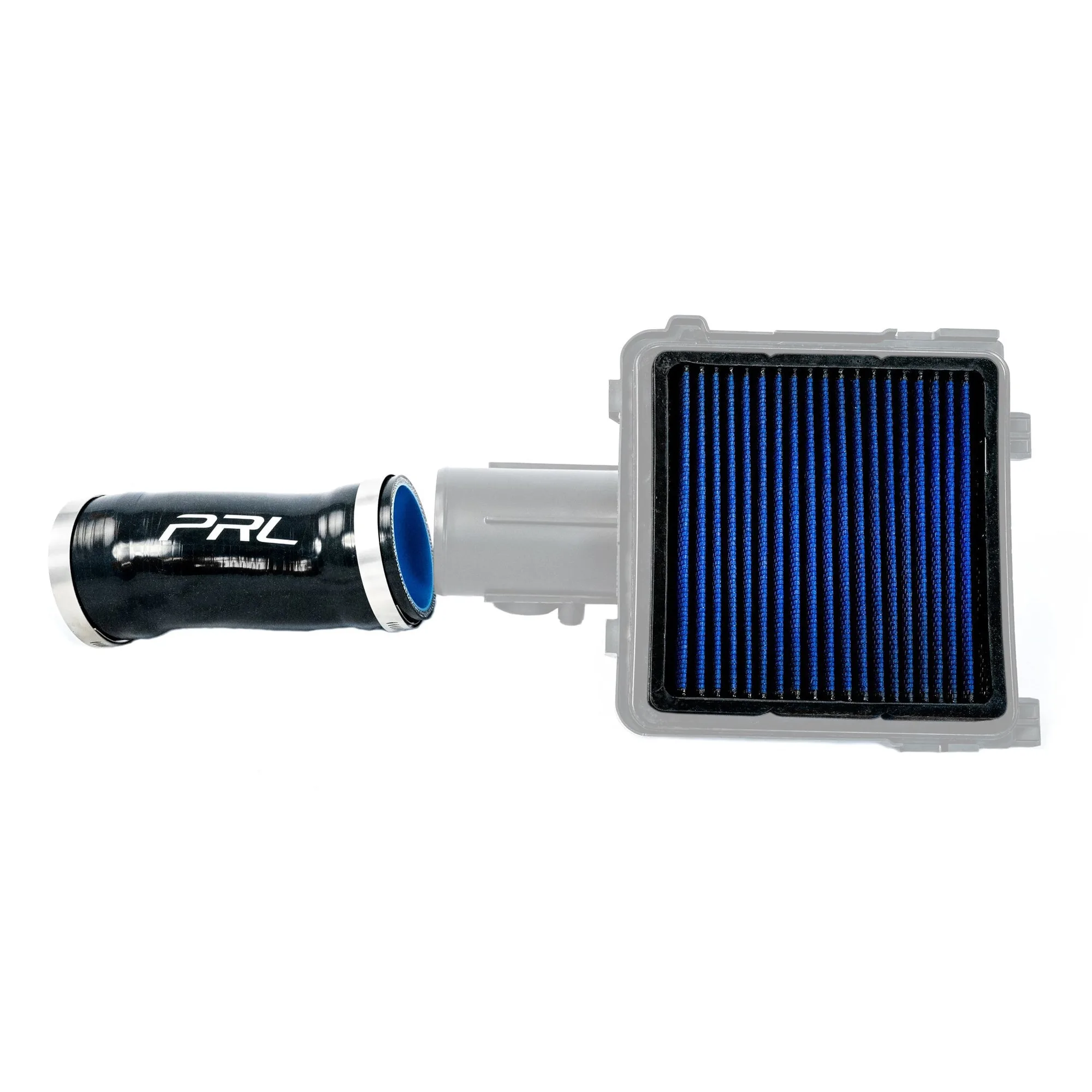
- 2023+ Acura Integra 1.5T Stage 1 Intake System: Fits all 2022+ Honda Civic 1.5T, all 2023+ Honda Accord 1.5T, and all 2023+ Acura Integra 1.5T, including Si, CVT, 6MT, RHD, and international models. No ECU calibration is required. If you are already addressing heat management on your 1.5T, this intake is a no-tune bolt-on that fits the same engine family. It does not fix a coolant leak, but it is a common companion mod when you are working under the hood.
- 2017-2021 Honda Civic Type-R FK8 "Throwback" Front Strut Bar: Fits all 2017-2021 Honda Civic Type-R FK8, 2016-2021 Honda Civic 10th Gen (1.5T and 2.0L), 2022+ Honda Civic 11th Gen (1.5T and 2.0L), and 2023+ Acura Integra (1.5T only), including RHD and international models. Chassis bracing is not part of the cooling system, but it is a popular add-on for 1.5T owners who want sharper front-end feel. If you are already spending time in the engine bay, it is a straightforward install.
A coolant overflow tank upgrade is a small part of a bigger system, but it is one of the easiest cooling fixes to get right. Diagnose first, replace the cap if it is weak, and upgrade the tank when the factory plastic has already let you down. If pressure testing points to the head gasket, stop and get a proper diagnosis before you spend another dollar on parts.