Common Myths About Chicken Treats
Many chicken keepers worry that store-bought treats are full of fillers or artificial ingredients. Others believe any treat will spoil their flock’s balanced diet. While some products deserve caution, not all chicken snacks are created equal. The key is looking at what’s actually inside the bag.
Coop Cookies are a good example. They’re compressed disk treats made with alfalfa, marigolds, and other natural botanicals. The ingredients list is straightforward, which makes it easier to separate fact from fiction.
What the Coop Cookies Label Shows
-
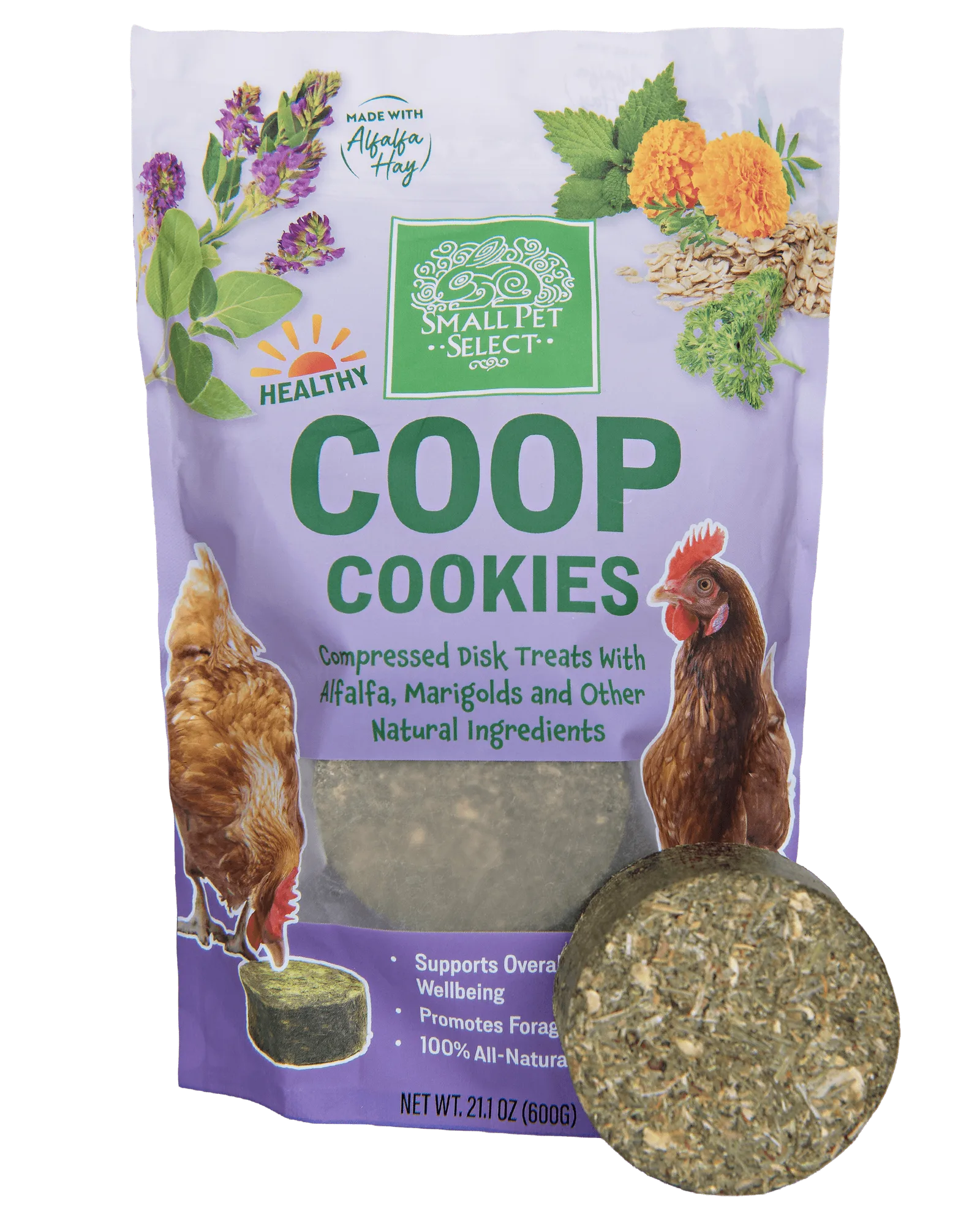
Coop Cookies - 600g Pouch: Coop Cookies are compressed disk treats made with alfalfa, marigolds and other natural ingredients. The base ingredient is alfalfa (47%), not grain or soy. This supports natural foraging behavior without introducing unnecessary fillers.
Coop Cookies - 600g Pouch
-
Coop Cookies - 600g Pouch: These premium botanicals are pressed under high pressure to form a hard cookie. The hard texture encourages pecking and chasing, extending entertainment time compared to soft treats.
-
Coop Cookies - 600g Pouch: Key Benefits: Supports Overall Wellbeing, Promotes Natural Foraging Behaviour, 100% All-Natural Ingredients, Extended Pecking Entertainment. These claims are directly supported by the ingredient list and the treat’s physical form, not just marketing language.
Myth: All Chicken Treats Are Full of Additives
Some chicken treats contain artificial colors, preservatives, or high levels of salt and sugar. But Coop Cookies rely on a simple recipe: alfalfa base (47%), marigold flowers (10%), naked oats, and herbs like nettle, lemon balm, spearmint, and oregano. No artificial additives appear in the supplied ingredient list.
That doesn’t mean every treat on the shelf is pure. Always check the label. If a treat lists more than a few recognizable whole-food ingredients, it’s probably closer to what your chickens would naturally forage.
Myth: Hard Treats Are Bad for Chickens’ Beaks
Chickens naturally peck at hard objects like stones, seeds, and tough plant stems. A compressed cookie is actually closer to their wild foraging experience than a soft, crumbly treat. The hardness encourages active pecking and keeps them occupied longer.
Coop Cookies are pressed under high pressure, not baked or extruded. That means they hold together well when scattered on the ground, giving your flock a chance to work for their snack. There’s no evidence in the supplied information that hard treats cause beak damage when fed as intended.
Coop Cookies vs. Typical Commercial Treats
- Ingredient transparency: Coop Cookies list specific botanicals and their percentages (e.g., 47% alfalfa, 10% marigold). Many generic treats only say “cereal grains” or “vegetable by-products.”
- Texture and engagement: The hard, compressed disk encourages pecking and chasing. Soft or crumbly treats are eaten quickly and offer less foraging enrichment.
- Artificial additives: Coop Cookies are labeled 100% all-natural. Some other treats contain added sugar, salt, or artificial flavors to increase palatability.
- Nutritional balance: Alfalfa and herbs provide fiber and nutrients, but these are treats, not a complete feed. Both types should be offered sparingly (no more than 10% of daily intake).
What the Supplied Information Confirms (and Doesn’t)
The product record confirms that Coop Cookies are made from natural ingredients, support foraging behavior, and are intended as treats. It does not provide specific feeding amounts, storage instructions, or safety warnings beyond what is listed. As with any treat, offer them in moderation alongside a balanced layer feed and fresh water.
If you’re looking for a treat that matches what chickens would naturally encounter—hard, plant-based, and varied—Coop Cookies fit that description. Just remember that no single treat replaces a complete diet.