Start with the feed, then set up the feeder
Copdock Mill Layers Pellets with Urtica Plus Dried Nettle is a complete feed for laying hens and all types of poultry, including ducks, geese and bantams. The bag gives a clear daily starting point: feed ad-lib, allowing a minimum of 120g per hen per day, from three weeks before point of lay. Because chickens graze throughout the day, the aim is a constant supply rather than one strict mealtime.
That makes your poultry feeder setup part of the feeding routine, not an afterthought. The feed needs to stay fresh and available, and the feeder needs checking every day.
A simple feeder routine for layers pellets
- Fill the feeder with the nettle layers pellets: Use Copdock Mill Layers Pellets with Nettle as the complete feed. The directions say to feed via feeders, so the pellets are intended to be offered from a feeder rather than scattered.
- Allow at least 120g per hen per day: The bag states a minimum of 120g per hen per day, fed ad-lib. Treat this as the daily allowance to work from, not a one-off portion.
- Top up daily: The supplied top tip is to check feeders every day to top up feed. A daily check keeps the constant supply the bag describes.
- Clean the feeder regularly: The same top tip says to clean regularly. The supplied information does not give a cleaning frequency or method, so follow your feeder's own instructions for that step.
- Check the food is fresh: The bag says to check the food is fresh and topped up. Look at the feed in the feeder during your daily check rather than assuming a full feeder means fresh feed.
What the bag tells you about the feed
-
Copdock Mill Range Layers Pellets With Urtica Plus Dried Nettle 20kg: Copdock Mill Layers Pellets with Urtica Plus Dried Nettle is described as a complete feed for chickens and all types of poultry, including ducks, geese and bantams. It confirms the feed is intended for a mixed flock, so one feeder routine can cover layers and other poultry.
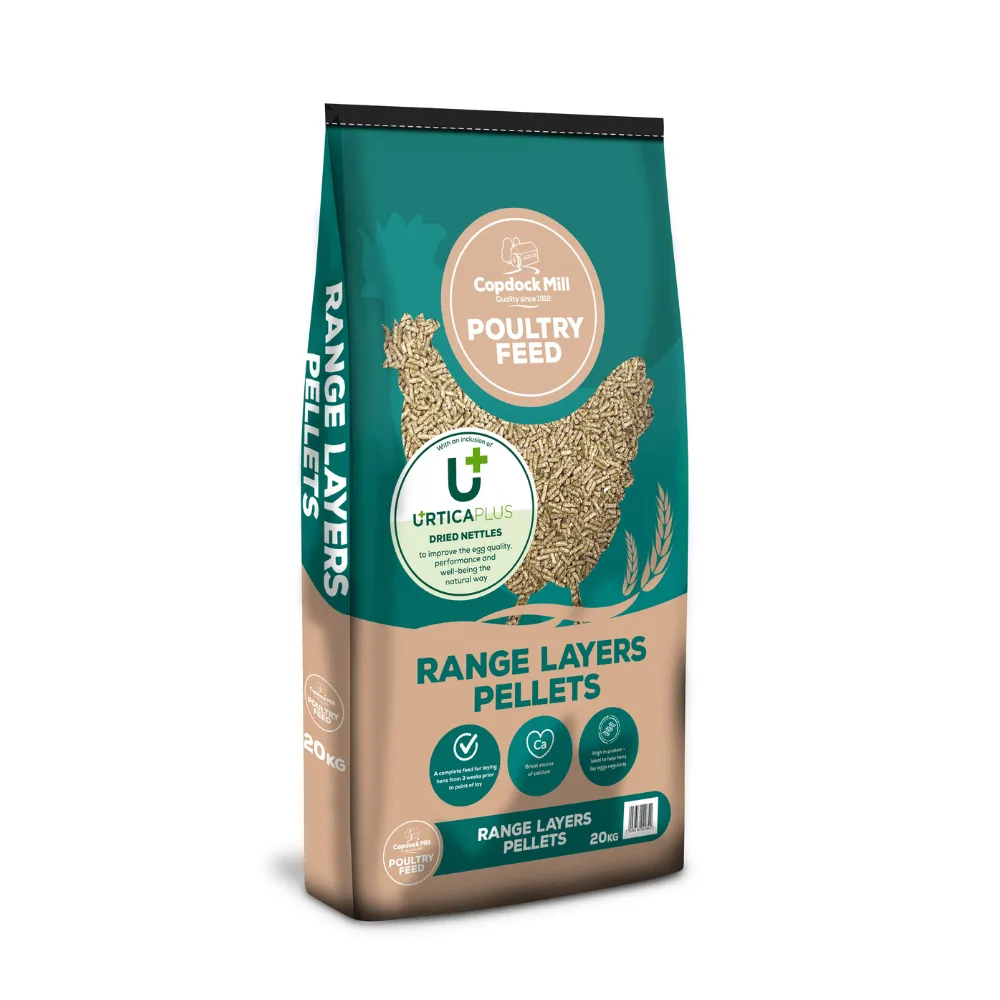
Copdock Mill Range Layers Pellets With Urtica Plus Dried Nettle 20kg
-
Copdock Mill Range Layers Pellets With Urtica Plus Dried Nettle 20kg: The directions say to feed around 120g per day to laying hens via feeders, from 3 weeks prior to point of lay. This gives you both the daily allowance and the starting window for the feed.
-
Copdock Mill Range Layers Pellets With Urtica Plus Dried Nettle 20kg: The bag says chickens graze throughout the day, so ensure a constant supply of food is available. It explains why topping up daily matters more than offering a single measured meal.
Why nettle is in the pellet
The Urtica Plus part of the name refers to 100% pure nettles. Copdock Mill says including nettles in the hens' diet helps improve egg quality and promotes performance and overall health the natural way. The pellets also list cereals, amino acids, vitamins and minerals, including a layers supplement, to support the flock's health and well-being.
These are the bag's own claims. The supplied information does not give a nettle percentage or a guaranteed analysis, so use the label as your reference point rather than assuming a specific nettle level.
Feeder checks that match the bag's instructions
- Is feed available all day?: The bag says to ensure a constant supply. A feeder that has run empty by midday works against that instruction.
- Is the feed fresh?: The top tip says to check the food is fresh and topped up. Old, stale or damp feed in the feeder is not what the bag describes.
- Has the feeder been cleaned regularly?: The supplied guidance says clean regularly. It does not specify how often, so set a routine you can keep and follow the feeder manufacturer's cleaning advice.
- Are you feeding at least 120g per hen per day?: The bag gives 120g minimum per hen per day. If your flock empties the feeder quickly, check that the total daily amount matches the number of hens.
What the supplied information does not cover
The bag gives a daily allowance and a starting window, but it does not provide a feeding schedule by age beyond three weeks before point of lay, a feeder height, a cleaning frequency, or storage instructions. Those details are not confirmed by the supplied information, so check the packaging or ask the manufacturer if you need them.
The bag also does not state a nettle percentage or a full nutritional breakdown. If you are managing a specific dietary issue, treat the bag's claims as a starting point and seek appropriate advice.